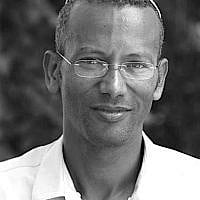
The Goldin family taught me what my brother Elad already knew

Like so many others in Israeli society, I beat my chest in remorse for not doing more on behalf of Hadar Goldin. I torment myself for not understanding what the Goldin family was saying when they pleaded with anyone who would listen to bring Hadar home. Only a few exceptional people understood what was at stake – primarily those who stood by them, in Hadar’s circle of support, including my brother Elad, until he himself was taken captive to Gaza on October 7th, and then murdered there.
I have become close with Ayelet, Hadar’s sister. She touched me deeply from the very first time we spoke, and she tells me that guilt and regret do not help. So over the past few days, since Hadar came home, I have been trying to avoid wallowing in guilt and sorrow, and instead recall the several profound conversations I had with Hadar’s mother Leah about what the family has learned over the past 11 years. I listened to every word of the family’s eulogies (Ayelet spoke of the honor they gave Hadar in the purification room, when, with bottomless humanity, they called him by name). And I read posts by people who worked with those responsible for bringing Hadar home.
In the throes of remembering and listening and reflecting, I realized something. From the time that Hamas took Hadar’s body captive in 2014, the State of Israel never demanded their return. Both the government and the army encouraged the Goldins to bury one of Hadar’s belongings, sit shiva, and move on. That is, the family was asked to accept the terms of a “fallen soldier whose place of burial is unknown.” But the Goldin family rightly refused to accept that definition when it came to Hadar. The Goldins are moral and wise people for whom Judaism is a home, a family of officers, no less. They knew Hadar was not “missing in action.” Judaism has clear guidelines for what constitutes “unknown”; Israelis are clear, too. And by taking this approach, the state betrayed the values the Goldins held dear – and all the more so because they had thought the state shared those same values.
Some people claimed, falsely, that in raising their voices for the return of Hadar and Oron, the Goldin family was willing to sacrifice living soldiers for the sake of retrieving fallen ones. Others claimed the families were too grief-stricken to think rationally – as if the only reason to bring their sons’ bodies home was irrational.
And I came to understand another important lesson from the Goldin family: no one has the right to abandon another person – not the government, nor society, nor family. Leadership has the task of protecting its people – and if the worst happens and it does not manage to protect the people, then it must return those it failed to their homes.
I’ll be the first to acknowledge that I didn’t understand what the Goldins were going through; I know I did not do enough. But the Israeli government also took great pains to ensure that the Israeli public would not understand their plight. As long as the public could be made to think that trying to bring the bodies home was pointless, we would surely come to see the enterprise as hopeless, and eventually conclude that the families themselves were delusional. It was surely the easier path – the one with no demands. And then when two mentally ill civilians accidentally entered Gaza (Avera Mengistu and Hisham al-Sayed, separately, about a year apart), to so little hue and cry, the implication was that the Israeli public should get comfortable with the idea of a black hole that swallows our people, just on the other side of the border.
But they all – Hamas, its cronies, and the Israeli government too – messed with the wrong family. Despite the codes of money, power, honor, status, control, and zero long-term planning that confronted the Goldins, they stood tall, like a lone moral lighthouse. They did so even though the system did not prioritize bringing Israelis home, regardless of whether they were alive or dead. What a difficult path the Goldin family walked, nearly alone. And again I remember Ayelet’s words, and I try not to flog myself. Better, I think, to follow her lead and try to move forward with understanding.
Suddenly everyone understood
So here is what I understand: on October 7, 2023, the number of civilians who were kidnapped into Gaza was staggering. The captives included babies, children, women, and elderly people. And it became impossible for Israelis to hide behind an assumption that “that can’t happen to me.” The mechanism by which people distance themselves psychologically from that which is horrific stopped working. And the nightmare that had already been home to the Goldin family became real, in some measure, for everyone. And suddenly everyone understood the travesty that was the absence of a plan by Israel’s government to demand the return of Hadar Goldin and Oron Shaul. Worse than failing to find them was the fact that the State of Israel had not been searching for them or demanding the release of their bodies.
The state long ago divested itself of the sacred task of redeeming captives – returning the kidnapped, whether alive or for burial. But worse, the current government worked hard to frighten and discourage those who have fought bravely to uphold that moral imperative.
And yet, this nation, in all its diversity – its soldiers and command-center volunteers; its protestors, builders, and those repairing civil society – together succeeded in raising awareness and increasing public pressure. That combined effort brought nearly all of the 251 people who were kidnapped on October 7 back to Israel – not without terrible suffering and death, but the demands of the people were made loud and clear. Leadership has the task of protecting its people. And if, with great misfortune, it does not manage to protect the people, then it must bring home those it failed.
Over the past 11 years, the governments of Israel, nearly entirely under the auspices of Benjamin Netanyahu as prime minister, failed to demand the return of Hadar, Oron, Avera, and Hisham. And since so many Israelis trust the country to pull off the impossible, the very fact that they took no measures that the public knew of to bring them home was a tacit message that doing so was not possible. The Israeli government even blamed those who protested this abandonment: “Because of you, protesting in the streets, they aren’t coming back.”
But the Goldins, the other families, and the members of Hadar’s circle refused to surrender to helplessness. They did not tolerate the degradation of humanity that would leave them there. And all of the people who fought to bring them back – they, and the army, and you and I – we are why they are home.
At the funeral, Edna Sarusi, Hadar’s fiancée, said: “Here is where you belong, and here is where you need to be. Without big words. Because that is how it should be. It’s just that simple.”
“Look at our family,” said Hemi, Hadar’s brother. “It’s the most beautiful there is.” And he meant his own family, to be sure, but also the people of Israel, for we are family.
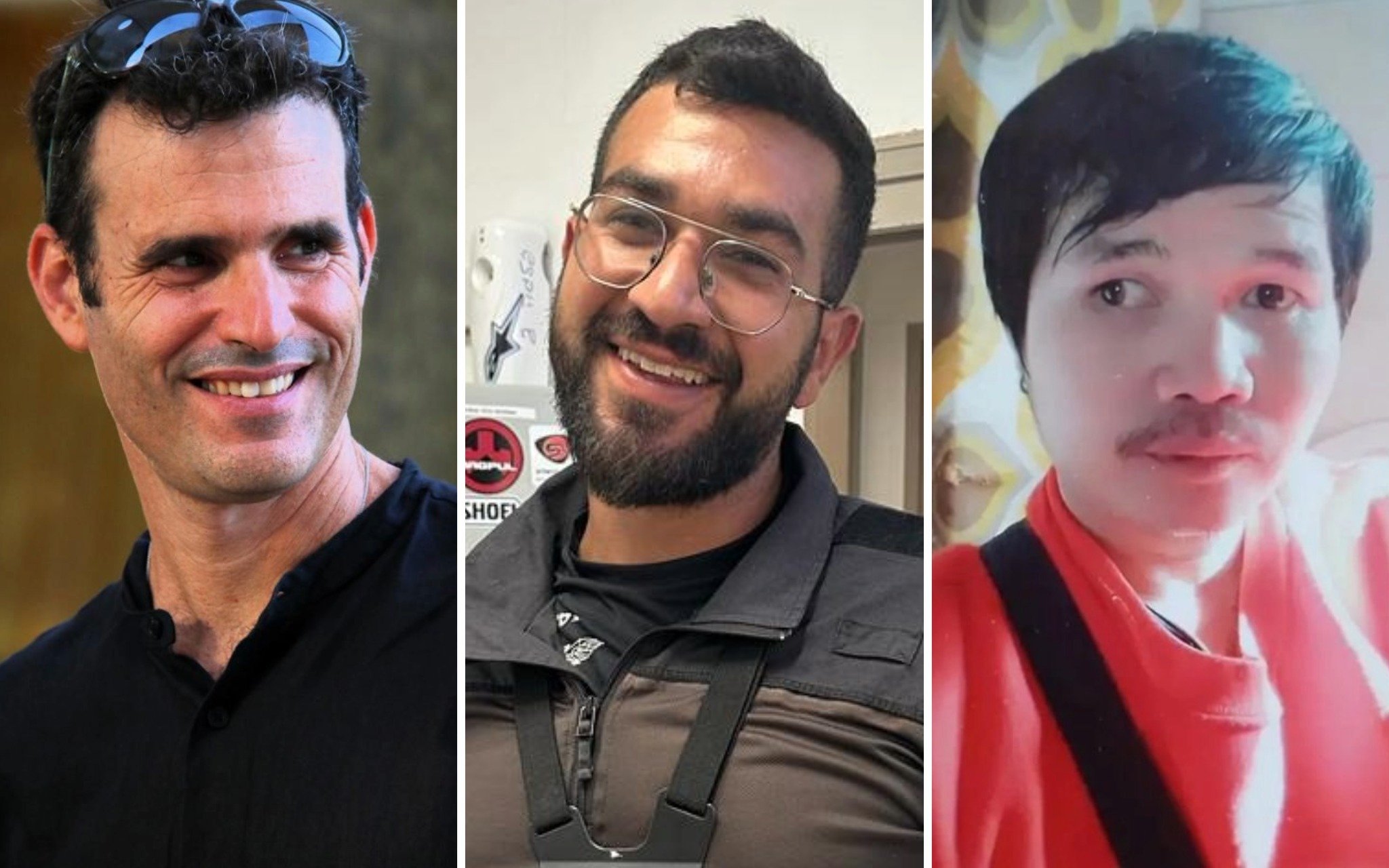
Ran Gvili, Dror Or, and Sudthisak Rinthalak still need to return home to their families. They need us to work to bring them home, too; they cannot do it alone. And I am internalizing what may be the Goldin family’s most important lesson: to take what we understand and move forward. The family says, “Look toward the future.”
I’ll end with the eloquent moral clarity of Idan Amedi, a singer who, like my brother Elad, was a longtime member of the circle of those working to bring Hadar home:
“At every step along this long road we discovered one failure after another. We thought that redeeming captives was a divine and moral obligation at the heart of Jewish leadership today. We discovered we were wrong… Renewal will come when we truly recognize this fact – that we failed – and when we listen, investigate, and repair our internal flaws. Only then can we rise.”
Amen.