
The Greatness of King Josiah
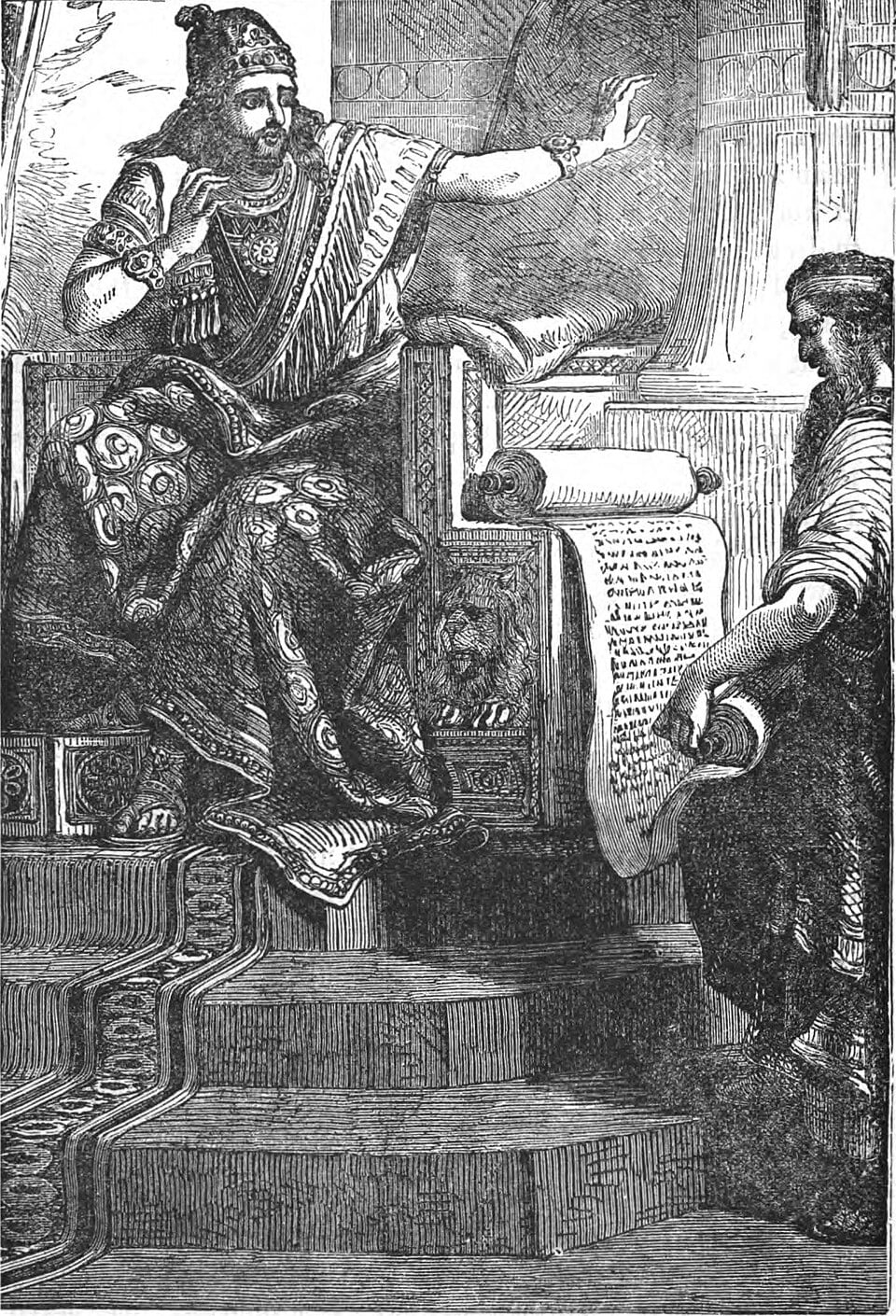
King Josiah should feel confusing to the modern reader.
He discovers the forgotten Torah deep into the decline of the Kingdom of Judah. He tears his clothes in grief. He destroys idols, tears down high places, restores Passover, renews the covenant, and attempts to reorder the kingdom around God after generations of corruption. The Book of Kings praises him almost beyond any other king:
“Before him there was no king like him…”
And then Judah is destroyed anyway.
Josiah dies abruptly at Megiddo trying to stop the Egyptians from crossing his territory on their way north toward the Euphrates. Within a generation, Jerusalem falls. The Temple burns. The Davidic monarchy collapses. Exile begins.
Under the modern heroic framework, this almost reads like narrative failure.
We instinctively expect a different ending. The righteous reformer discovers truth, courageously turns the nation back toward the good, defeats the forces of corruption, and restores the kingdom. That is the moral grammar we have inherited from modern storytelling. Moral awakening leads to historical vindication.
But the Book of Kings is operating under a different ontology.
The covenantal world of the Hebrew Bible does not assume that righteousness guarantees immediate worldly triumph. Nor does repentance necessarily erase accumulated historical consequences. The kingdom Josiah inherited had already been shaped by generations of idolatry, violence, institutional decay, and what the text repeatedly calls the sins of Manasseh. By the time Josiah discovers the Torah scroll during Temple repairs, Judah is already inside the gravitational pull of imperial collapse.
And yet Josiah reforms anyway.
That is what makes him extraordinary.
He is explicitly told that judgment is still coming. The prophetess Huldah confirms it. Disaster will not fully be averted. The kingdom will fall.
Modern narrative logic would suggest resignation at this point. Why continue? Why risk political instability? Why tear down entrenched systems if the catastrophe remains inevitable?
But Josiah continues because covenantal fidelity itself matters.
This is where the biblical story breaks from both modern progress narratives and classical heroic narratives. Josiah’s righteousness is not validated by victory. It is validated by faithfulness before God.
The Book of Kings allows a type of heroism that modern readers often struggle to recognize: obedience without guaranteed success, repentance without reversal of consequences, righteousness within decline, continuity through catastrophe rather than escape from catastrophe.
And this is where the covenantal ontology of the Torah becomes especially important.
In the Ten Commandments, God speaks of the consequences of corruption extending to the third and fourth generation, but of covenantal faithfulness extending to thousands of generations. The asymmetry matters. The biblical imagination does not treat good and evil as mechanically equivalent forces. Corruption ripples outward historically, but faithfulness reaches farther still.
The modern world often imagines individuals as isolated moral units, responsible only for themselves in the present moment. But the biblical covenantal imagination sees people embedded within generational transmission. Actions reshape institutions. Institutions shape generations. Some turns of the wheel persist long after the individual who made them is gone.
This is precisely how the Book of Kings frames Manasseh.
Out of all the kings of Judah, it is the sins of Manasseh that are repeatedly invoked near the kingdom’s end. His reign becomes a civilizational turning point. The corruption was not merely personal. It became institutional, generational, cultural. A generation grew up inside his religious order. Habits calcified. Corruption became normalized. The wheel turned.
But if evil can echo across generations, so can righteousness.
Josiah’s reforms did not save the kingdom politically. The Babylonians still came. Jerusalem still fell. But perhaps his turn of the wheel reshaped what survived after the fall.
The northern kingdom of Israel had already scattered into history after Assyrian conquest. But Judah, despite exile, endured. Torah endured. Passover endured. Covenantal memory endured. The Jewish people survived the destruction of the state because the covenant survived the destruction of the state.
This is why Josiah may be one of the most important figures in Jewish history precisely because he does not “win” in conventional terms.
His greatness lies in fidelity under conditions where success is no longer guaranteed.
The Book of Kings refuses the fantasy that history can always be cleanly reversed at the final moment. Civilizations accumulate consequences. Institutions decay over generations. Some wounds become historical realities that even the righteous cannot instantly heal.
But the text also refuses nihilism.
Josiah matters. His repentance matters. His reforms matter. Even though the Temple burns.
Perhaps that is one of the deepest lessons of the biblical covenantal worldview: the highest good is not permanent sovereignty, uninterrupted success, or historical domination. The highest good is covenantal faithfulness before God, even under conditions of uncertainty, decline, and coming exile.
We understand triumphant heroes who save the kingdom. We understand tragic heroes who lose gloriously.
But Josiah is neither.
He restores truth knowing the kingdom may still fall.
And in doing so, he becomes great.