Writing on Jewish identity, Israel, and American politics
The Hilltop Youth
A friend I grew up with went back into the IDF reserves after October 7. He had done his military service years earlier. Since then, he had built and sold a successful business and become a surfer. Then October 7 happened, and he put the uniform back on.
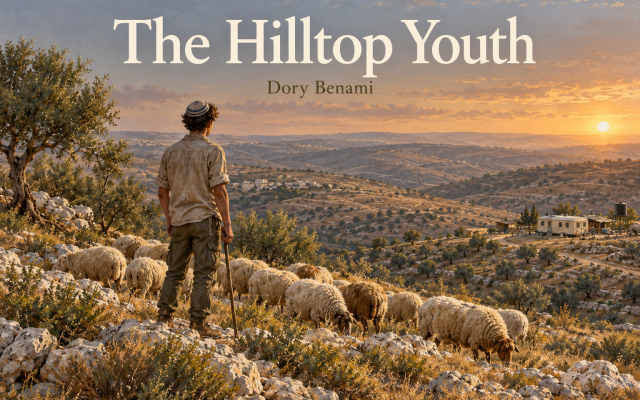
His reserve duty has taken him around Shechem in Judea and Samaria, where he has spent time around young Israelis living on hilltop farms and outposts. Israelis call them Noar HaGvaot. The Hilltop Youth.
I thought I knew who they were. I didn’t.
There are ideological activists in that world, and there are people who commit violence. But there are also boys who arrived because school went badly, home went badly, or a remote farm was the first place anyone gave them a job, a bed, and a role.
Israeli reporting describes children as young as 10 showing up at isolated farms after dropping out of school, sometimes without much adult supervision.
I’m a dad. I keep coming back to that age.
A 10-year-old isn’t working through the Oslo Accords, international law, or competing theories of sovereignty. He wants somewhere to belong.
Lesley Stahl’s recent “60 Minutes” report brought these farms back into the headlines. Then came reports of an editorial dispute with CBS News editor-in-chief Bari Weiss, which CBS disputed.
I found the coverage too narrow. The violence deserves scrutiny. So do the circumstances that bring children into this world and the adults around them. I want those questions followed beyond the confrontation that makes compelling television.
The word “outpost” can make these places sound more substantial than they are. Sometimes you’re talking about a caravan on a rocky hill, a water tank, solar panels, rough fencing, and sheep. Lots of sheep.
Many boys are visibly religious. Knitted kippahs, tzitzit, sometimes long sidelocks. Prayer, Torah, kosher food, Shabbat.
At some farms, a boy who has stopped attending school can become useful immediately. There are animals to feed and fences to repair. He can sleep in a caravan and wake up with people expecting something from him.
For a kid who wasn’t doing well anywhere else, I can see the attraction.
Maybe a farmer trusts him with animals. Maybe a rabbi talks to him in a way nobody at school ever did. Older boys take him seriously. There is Shabbat dinner. Somebody notices whether he shows up.
There is also the land.
Some boys arrive with strong beliefs. Others acquire them there. A kid can arrive because he hates school and stay because he believes he is doing something important for the Jewish people.
Adolescent boys form tribes. Territory matters. Reputation matters. Your friends matter. Somebody has a problem with your friend, and pretty soon you have a problem too.
Now put teenage sheep herders in the hills of Judea and Samaria.
Sheep need grass and water. They move. They don’t know where one person thinks a property line ends and another thinks it begins.
A flock crosses disputed ground. A fence gets moved. An animal disappears. Somebody gets shoved or throws a rock. Someone returns with friends.
My friend describes some encounters as tit for tat. That is his observation. It doesn’t establish what happened in every incident or excuse attacking an innocent person.
Jews did not suddenly arrive in Judea and Samaria in 1967. They lived in Hebron long before the modern State of Israel. Arab rioters murdered Jews there in 1929. Jewish communities in the Etzion Bloc were destroyed in 1948.
None of that tells you who owns a particular field today.
An Arab family may have grazed that field for generations. Some Jewish outposts are unauthorized under Israeli law. Ownership, access, and grazing rights require evidence and lawful decisions.
The Jewish teenager may believe he has returned to his ancestors’ land. I understand that.
The Arab shepherd may see a new flock threatening pasture his family depends on. I understand that too.
Understanding both people doesn’t decide who owns the field. Somebody still has to establish the facts and enforce the law.
These boys arrive through different routes. Some seek the farms themselves. Some parents may be trying everything they can to get them home. We shouldn’t assume every struggling teenager has indifferent parents.
But who is checking on him now?
Who knows whether he attends school? Who makes sure the adult providing his bed isn’t exploiting his need to belong?
Giving a struggling boy sheep to care for may be wonderful. Animals don’t care whether he was good at algebra or got suspended. He has to get up and feed them.
Leaving him on an isolated hill without enough responsible adults makes considerably less sense.
The violence is getting worse. IDF and Shin Bet figures reported by The Times of Israel recorded 867 incidents of Jewish nationalist crime in 2025, up from 682 in 2024. Severe attacks increased by more than half.
I don’t dismiss those numbers because I support Jewish communities there. I want the people committing those crimes stopped.
Adults who encourage, finance, or participate in violence need investigation and accountability. Boys who hurt people need consequences. The same applies to Arab perpetrators who attack Jews.
Israel votes on October 27. Whoever forms the next government will inherit these hills, these children, and the responsibility to enforce the law.
Coalition negotiations will determine who controls the police and oversees settlement policy. Will officials responsible for stopping violence have the backing to do their jobs?
There are consequences beyond Israel too. Violence against innocent Arabs makes defending Israel harder for people who want to stand with us. It adds strain to relationships Israel needs.
As an Israeli-born American and a former Democratic candidate for Congress, I care about those relationships. I want Israel strong enough to defend itself and governed responsibly enough to maintain the partnerships that help it do so.
My answer is not to remove Jews from Judea and Samaria. I believe Jews belong there. I believe Jewish communities should be able to grow there.
But if Israel is going to build there, Israel has to govern there.
Protect the Jewish shepherd when he is attacked. Protect the Arab shepherd when he is attacked. Investigate stolen sheep. Deal with illegal fencing. Find whoever burns a car. Arrest whoever attacks an innocent person.
That is what government is for.
Soldiers who encounter an attack should stop it. People shouldn’t have to wait for a discussion about adolescent psychology while somebody beats them.
But soldiers cannot investigate every stolen animal, resolve every property dispute, and raise every troubled teenager.
There should be more police, teachers, social workers, and responsible adults. People whose job is to know these kids before the Shin Bet has to know them.
Israel has begun creating educational programs for youths on these farms. Good. Make sure the children are reached and the programs work.
These are actual farms. The animals are real. The work is real. For some boys, caring for animals may be one of the healthiest things anyone has asked them to do.
Keep the sheep. Give them adults too.
Context can explain why a Jewish teenager picks up a rock without making it acceptable to throw it at an innocent Arab. The same applies to an Arab teenager throwing a rock at an innocent Jew.
A terrible childhood doesn’t erase responsibility. A real historical connection doesn’t excuse a crime.
If he commits a crime, arrest him. Then ask how a kid who needed somewhere to belong ended up there.
Build the communities. Protect the farms. Police the hills. Take care of the kids.
–
Adapted from my original essay, also published by Future of Jewish.
Related Topics
Related Posts