Geopolitical Analyst: Bridging Somaliland & Israel to the world
The Human Story Behind Somaliland’s Historic Recognition
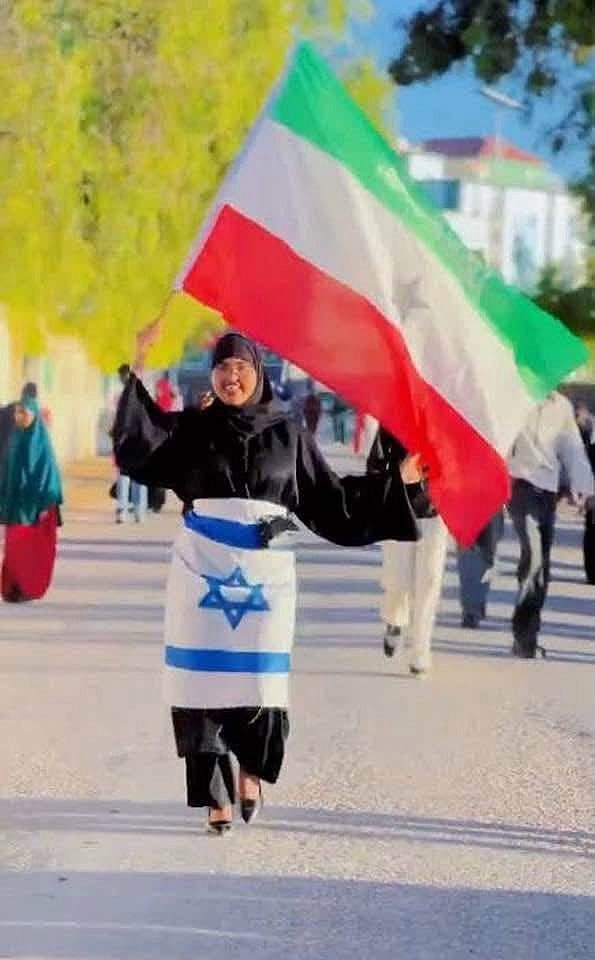
A cheerful young women among the hundreds of jubilant crowds who celebrated Israel's recognition of Somaliland on June 26, 2025. Photo credit: the author
Hargeisa, Somaliland.
The Call that Changed the Geopolitical Map:
There are moments in the life of a people when history does not knock politely on the door. It bursts through it. It arrives suddenly, almost unbelievably, and for a few breathless seconds, an entire nation seems to forget how to breathe.
For Somaliland, that moment came on 26 December 2025. A video call brought Israeli Prime Minister Benjamin Netanyahu face-to-face with Somaliland President Abdirahman Mohamed Abdullahi “Irro.” Then came the words generations of Somalilanders had spent more than three decades waiting to hear: Israel recognized Somaliland as a sovereign and independent state.
Suddenly, everything changed. A diplomatic announcement on paper became something almost physical. It travelled through television screens, mobile phones, WhatsApp groups and social media. It raced from one neighbourhood to another, from Hargeisa to Burao, Gebiley and beyond.
And then Hargeisa exploded and Refused to Sleep
Not with anger. Not with gunfire. With joy. Fireworks tore into the night sky. People poured into the streets. Young men and women danced. Cars honked endlessly. Songs erupted from homes, streets and public gatherings. People embraced strangers. The flags of Somaliland and Israel seemed suddenly to be everywhere.
It was as if an entire population had been holding its breath since 1991—and somebody had finally shouted: “You can breathe now!” “You all can exhale now!”
The Screen Becomes History
The remarkable thing about the Netanyahu–Irro exchange was its simplicity. There was no battlefield, no army marching across a border and no military ceremony. There was simply a screen, a conversation and a declaration.
But behind those few moments stood more than three decades of waiting. For Somalilanders, this was never merely about possessing a flag, a government, a parliament, currency, elections, security forces or functioning institutions. They already had those things.
They waited for the world to finally acknowledge what Somalilanders believed they had rebuilt and defended since reclaiming their independence in 1991.
For thirty-four years, the answer had largely been silence. Recognition always seemed somewhere over the horizon—a promise, a possibility, a diplomatic mirage. There were conferences, delegations, foreign diplomats, reports, declarations, presidential visits and meetings behind closed doors. There were also plenty of gossip, conspiracy theories, and rumours in social media.
And then came another year of waiting. Another election. Another diplomatic setback. Another explanation for why the time was not yet right.
For an entire generation, recognition became almost mythical. Parents talked about it. Politicians campaigned around it. Students debated it. Journalists wrote about it. Children grew up hearing that someday Somaliland would be recognized.
And someday kept becoming tomorrow.
For many Somalilanders, that moment was more than diplomacy—it was the culmination of decades of unwavering sacrifices, persistence, patience and resilience. For 34 years, the cause of recognition was carried not just by politicians, but by ordinary citizens, diaspora advocates, and writers who fought with words instead of weapons. Writers like myself.
They carried the cause through classrooms and conference halls, newspaper columns and books, social media groups, diplomatic meetings and community gatherings. They argued Somaliland’s case wherever they could find an audience. Some travelled thousands of miles to knock on foreign doors. Others simply kept telling the story, year after year, refusing to allow the dream of recognition to disappear.
Their struggle was rarely spectacular. There were no marching armies and no dramatic victories. There were letters, articles, speeches, petitions, conversations and countless attempts to persuade a sceptical world.
That quiet persistence and resilience became part of Somaliland’s national story.
Then the Screen Lit Up
That is why the Netanyahu–Irro video call carried an emotional weight that diplomatic language can hardly describe.
When Netanyahu appeared on the screen and recognition was announced, something inside Somaliland’s collective memory seemed to crack open. The reaction was almost surreal.
People behaved as though they had suddenly been released from captivity. As though a football team had scored in the final second of a championship match. As though someone had opened the doors of a dark hall in which they had been waiting for 34 years.
The streets became theatres of disbelief. People shouted, laughed, cried, danced, prayed and hugged. Some simply stood staring at their phones, trying to understand what they were seeing.
Was it really happening? Was this finally it? Was Somaliland actually recognized?
Then the fireworks answered. Yes. For that moment, it was real.
A Nation Celebrates Its First “Yes”
And that single word carried enormous emotional power.
International media captured the extraordinary scenes. Major news outlets `reported large gatherings, celebrations and residents describing overwhelming emotions. There were fireworks, dancing, singing, flags and crowds. Hargeisa appeared unwilling to sleep.
One resident described the atmosphere as unlike anything he had witnessed in decades. Another said he had barely slept since the announcement.
That is the human story beneath the diplomatic headlines. A country had not suddenly been created that day. A people had not suddenly appeared. A government had not suddenly become functional.
What changed was something psychological.
For the first time, another sovereign state had formally told Somaliland: We see you.We here you.
After 34 years, being seen felt like being born again.
The Pain Beneath the Celebration
But every celebration has a shadow. Behind those fireworks lies a painful history.
Somaliland’s modern story is inseparable from the devastation of the late 1980s. Hargeisa, Burao and other cities was devastated during the war under the Siad Barre regime. Families were torn apart. People were killed, displaced and scattered. Homes disappeared. Entire neighbourhoods were destroyed.
The scars remain visible in the city. They remain even deeper in the memories of survivors.
Then came 1991. The old political order collapsed. Somaliland declared the restoration of its independence, and the long experiment began.
No great power came rushing to recognize it. No seat was immediately offered at the United Nations. No international parade welcomed the new state.
Instead came isolation.
Somaliland had to build from almost nothing. Institutions were constructed. Elections were held. Governments changed peacefully. Communities negotiated their differences. A political system developed.
And generation after generation continued asking the same question:
When will the world recognize us?
Thirty-Four Years Later
Then, suddenly, a screen lit up.
Netanyahu. Irro. A declaration. Recognition.
And the emotional dam broke.
For decades, Somaliland had been trying to get the world’s attention through diplomatic channels. Yet on that day, the world did not have to search for Somaliland.
Somaliland was suddenly everywhere.
International television. Newspapers. News websites. Social media. Photographs. Video clips. Political statements. Diplomatic meetings.
The name that had so often been absent from the world’s political vocabulary was suddenly being repeated across newsrooms around the globe.
Hargeisa had become a global news story.
The flag that had spent decades flying largely without international diplomatic recognition was suddenly appearing beside the flag of a recognized state.
For Somalilanders watching at home and across the diaspora, the psychological impact was enormous. It was the difference between saying, “We exist,” and hearing another country say, “We recognize that you exist.”
The First Door Opens
One recognition does not settle every question. It does not automatically produce UN membership. It does not erase diplomatic opposition. It does not end Somaliland’s long struggle.
But history often begins with one door opening.
For Somaliland, Israel’s decision became that first opening. One UN member state had crossed the threshold. One government had formally recognized Somaliland’s sovereignty. One country had taken the historic step Somalilanders had spent more than three decades seeking.
And suddenly, the question changed.
Before 26 December, the question was:
“Will anyone ever recognize Somaliland?”
After 26 December, another question became possible:
“Who will be next?”
That is the psychological revolution contained in that video call.
The Night the Waiting Ended
Long after the politicians finished speaking, the people continued celebrating. The fireworks continued. The dancing continued. The cars continued honking. The flags continued waving.
Hargeisa remained awake.
Perhaps because sleep felt almost inappropriate.
How could anyone sleep on the night when the dream they had inherited from their parents suddenly seemed to have become real?
How could a grandmother who had waited for decades simply go to bed? How could a young person who had grown up hearing that recognition was coming someday simply turn off the television or put away the cell phone?
How could a nation that had spent 34 years knocking on the world’s door quietly return home after hearing someone finally open it?
So they celebrated and celebrated until sunrise.
They danced. They sang. They waved their flags. They looked at the sky.
And perhaps somewhere in that extraordinary night, a child asked a parent:
“Are we recognized now?”
And the answer, for the first time, could be:
“Yes. At least one country has recognized us.”
It may sound like a small sentence.
For Somaliland, after more than three decades of waiting, it was enormous.
It was a beginning. A breakthrough. A psychological liberation.
And above all, it was the moment when a telephone screen suddenly became a window through which an entire people saw themselves appear on the geopolitical map of the world.
Related Topics
Related Posts