
Analysing Risks, Assumptions and What Comes Next
The Identity Shift Reshaping the Gulf
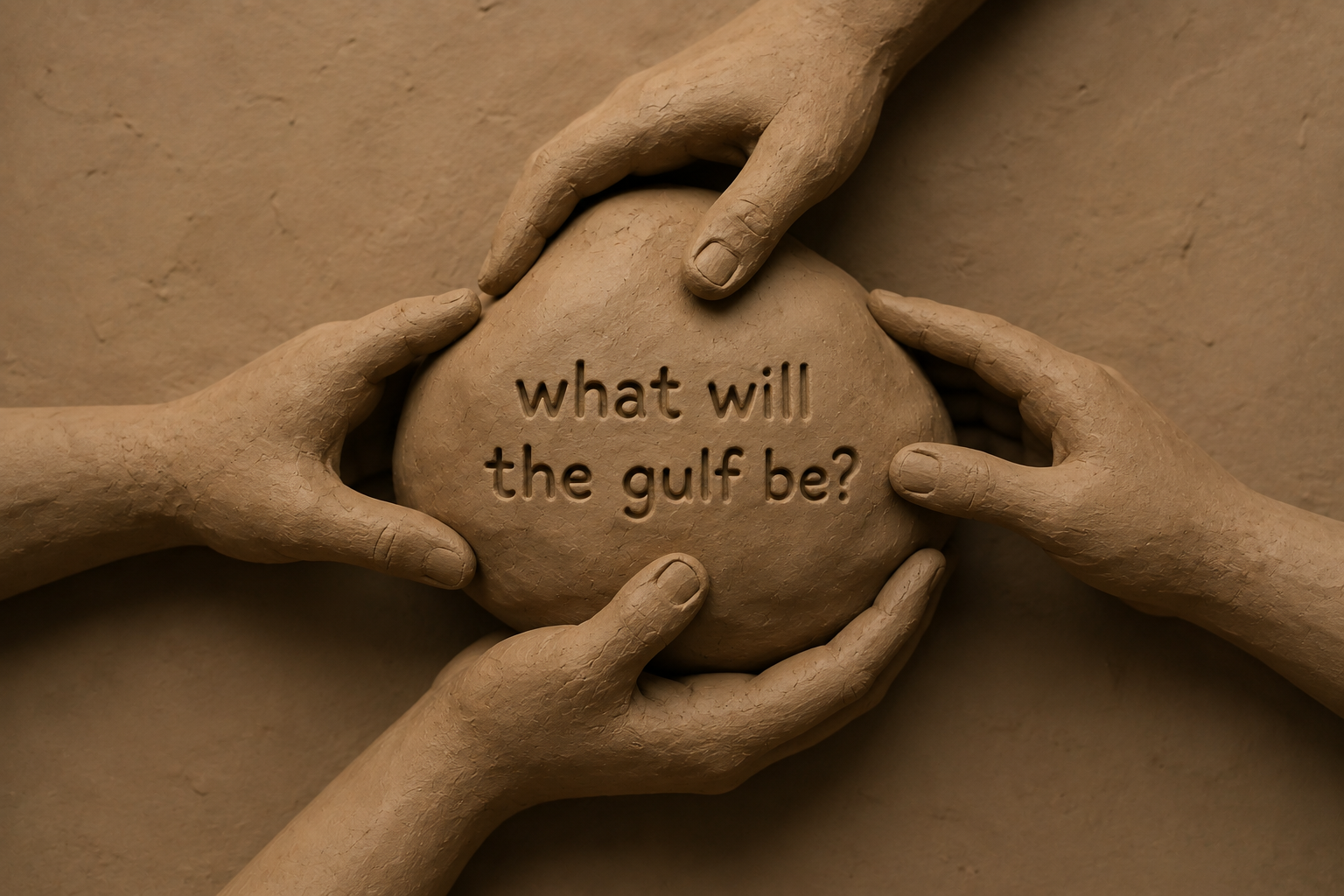
Sharing thoughts on whether: the Gulf’s future identity become increasingly national before it becomes religious? Could Arab identity become more politically useful than the broader category of Muslim solidarity? And how Turkey’s ambition to build a larger role within an emerging Muslim security architecture could shape that shift?
For centuries, political analysis has repeatedly taken the identities of a particular moment and treated them as structural facts. But identities have astonishingly short political half-lives.
Geopolitically identities have found life, succeeded , suffered from and failed- variably. Identities of religion, faith, of climate and race, of economy or geography. Some ideologies had history and some not. A century is enough to sample test how modern identities of countries could be polar and recognizable from their past. Do we truly believe that the same would not happen again while it has since time immemorial.
The question is not as simple as asking whether the Gulf is becoming less religious. It’s clearly is not. Nor is it about celebrating a new national confidence, as though Saudi Arabia or the UAE have only recently discovered that they possess histories of their own. The more interesting question is what happens when several identities that have coexisted for generations begin to acquire different political weights and when governments become increasingly capable of deciding which one should be emphasized, when, and for what purpose.
Politics shaping the middle-east have changed the identity of nations such as Iran from Persian and monarchial to islamic extremism through its own revolutions – yet none of these identities have brought them what would be simply called moderate peace, ease or growth. The point isn’t that one identity was “true” and another was “false.” The point is that identity is capable of being rewritten and when it is rewritten by the state, the consequences are material. Japan is a spectacular example: imperial Japan, militarist Japan, defeated and pacifist post-war Japan, and today’s Japan are recognizably the same civilization but not the same political identity.
While we have globally factored FSU nations as a singular entity loosely in majority IR assumptions, we see that Russia does not have its blatant influence in the cultures of some of these nations who through their uniqueness of race, culture, tribe and outlook have managed to maintain an identity that most nations in Europe may have merged or forgotten and that the poverty and lack of development still overpower the ability of anything other than remnants of FSU infra to remind. This lies true for the Gulf since the GCC has also spent decades asking a shared identity to do more political work than it could reliably sustain. Then we see that the Gulf and GCC have travelled from a point of theological extremities to an ill attempted guild that has had growing heat and moments of clear divulgence and led to key players such as Saudi and the UAE who fought alongside one another in Yemen, with different interests and relationships with Yemeni actors that created a visible rift.
The result is not that the GCC has failed. It is that the Gulf has entered a period in which shared identity is increasingly insufficient to predict shared behavior.
The Mecca Pact may look like evidence of a renewed Muslim political identity, but the composition of the pact could expose the limits of that identity. Turkey, Pakistan and potentially Bangladesh are not Gulf states, and their involvement in a Middle Eastern conflict would create a very different political burden from cooperation among Arab Gulf states. At the same time, the Gulf states have increasingly strong incentives to narrow their definition of responsibility: national security, economic transformation, internal stability and state capacity are much more immediate than assuming responsibility for every crisis framed through Muslim solidarity.
This matters because religious identity carries obligations that national identity does not. It can create expectations of reassurance, solidarity and eventually intervention far beyond a state’s own borders. For Gulf governments pursuing economic transformation and increasingly sophisticated national security systems, that is a difficult burden to carry indefinitely. They have bigger strategic problems to solve than proving their commitment to every crisis presented as a test of Muslim solidarity.
Turkey’s Identity Crisis Is Becoming a Regional Ambition. Turkey is not simply entering the Gulf as another security partner. It is also trying to resolve an identity problem of its own. For decades, Turkey has had to negotiate between Turkish nationalism, its Ottoman inheritance, secular republicanism, NATO membership and its Muslim identity. The pursuit of a larger Islamic power role offers a way to bring some of these competing strands together: Turkey can remain Turkish and modern, militarily capable and Muslim, while presenting itself as a power with interests and responsibilities extending well beyond its own borders.
The Mecca Pact fits neatly into that ambition. It gives Turkey a platform from which to present itself not merely as a country with regional interests, but as a Muslim power capable of contributing to the security architecture of other Muslim states. For Turkey, this is more than another defense relationship. It is an opportunity to turn religious identity into strategic relevance and geography into influence.
What begins as defense cooperation can begin to resemble an attempt to construct a wider Islamic security constituency.
This partnership could place the Gulf in an uncomfortable position with partners it cannot afford to alienate, particularly the United States, who may tolerate and even expect, Saudi to diversify its partnerships. It is a different matter if diversification begins to look like participation in an alternative security architecture in which Turkey is positioning itself as an Islamic powerhouse. Saudi therefore has a difficult balancing act.
The Gulf has multiple options to broaden its strategic options, but it has little reason to inherit Turkey’s identity project along with its military capabilities. Turkey may see the Mecca Pact as a route towards becoming a more consequential Islamic power. The Gulf may ultimately have to decide whether helping Turkey achieve that role is worth the strategic and diplomatic cost.
Related Topics
Related Posts