Exiled Iranian Writer & Political Commentator
The Illusion of Superiority: The Invisible Root of Human Rights Violations
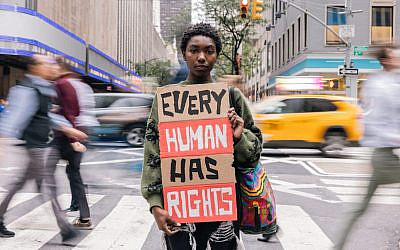
Every human rights violation begins long before a prison cell, a battlefield, or a courtroom. It begins with an idea—the belief that some people are inherently more valuable than others.
The illusion of superiority has shaped some of history’s darkest chapters. Whether based on ethnicity, religion, nationality, language, race, or political ideology, it transforms human differences into justifications for discrimination. Once a society accepts that one group deserves more rights than another, injustice becomes easier to normalize.
This mindset rarely appears overnight. It is reinforced through education, political narratives, media, and institutions until discrimination no longer seems exceptional but ordinary. Minority communities are often the first to experience this process. Their language, identity, culture, or political views become reasons to deny them equal opportunities and equal protection under the law.
Human rights are founded on a simple principle: every person possesses equal dignity. The Universal Declaration of Human Rights does not distinguish between majorities and minorities, powerful and powerless. It recognizes that equality is not a privilege granted by governments but a right inherent to every human being.
The illusion of superiority threatens this foundation. It allows prejudice to disguise itself as patriotism, discrimination to appear as security, and exclusion to be presented as national interest. Throughout history, societies have repeatedly witnessed how these narratives can gradually erode justice and silence vulnerable voices.
Around the world, journalists, writers, human rights defenders, and civil society activists often become among the first targets when they challenge systems built upon inequality. Defending equal rights should never be viewed as a threat; it is essential to preserving democratic values and the rule of law.
Respect for diversity is not a sign of weakness. It is the measure of a mature and confident society. Nations become stronger not by forcing people to be the same, but by ensuring that differences never become grounds for discrimination.
The future of human rights depends not only on laws and institutions but also on rejecting the dangerous belief that one identity, one nation, or one ideology is inherently superior to another. Human dignity cannot be divided into categories. It either belongs equally to everyone, or it is ultimately secure for no one.
Related Topics