
This Way Up: Spiritual Means to Psychological Ends
The Jewish-Chinese Bond: Shelter, Soul, and Shared Wisdom
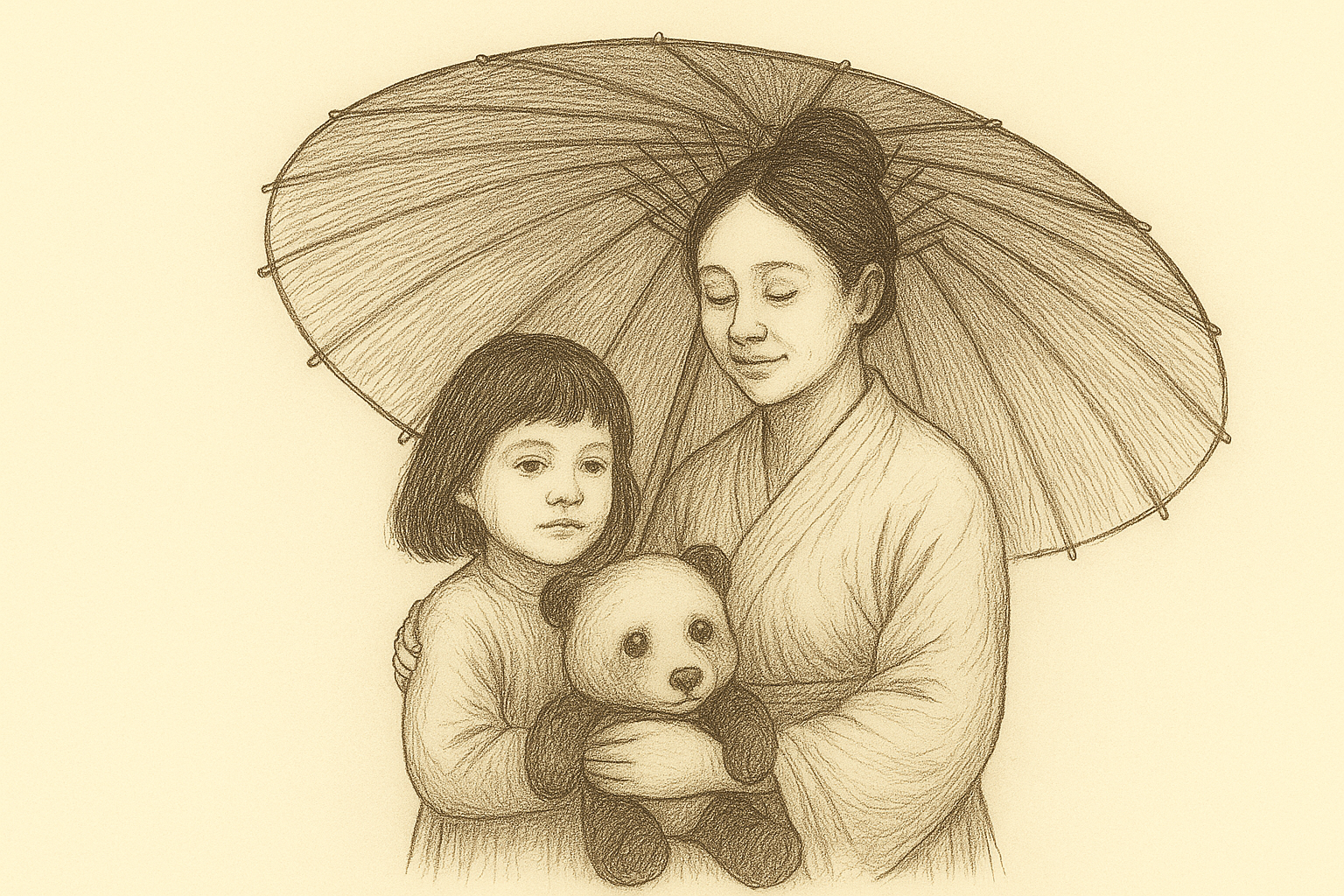
Illustration generated with ChatGPT (OpenAI, 2025).
A Scene of Shelter and Symbolism
The year is 2013, the 70th anniversary of the establishment of the Shanghai Ghetto—also known as the Hongkew Ghetto—the designated area where stateless Jewish refugees were permitted to reside, escaping Hitler’s genocidal campaign. It was thanks in large part to the courage of one Chinese diplomat, Consul General Feng-Shan Ho, that thousands of Jews were granted life-saving visas and safe passage to Shanghai.
These refugees, fleeing terror in Europe, lived in Shanghai for nearly a decade before eventually resettling across the globe. To commemorate this history, the Shanghai Mint issued limited-edition coins—silver and gold medallions housed in elegant wooden boxes with glass lids. The glass was chosen deliberately, referencing Kristallnacht, the “Night of Broken Glass,” which marked a chilling escalation in Nazi aggression and precipitated many Jews’ flight from Germany and Austria.
A Feminine Gesture of Compassion
The imagery on the medallion is deeply symbolic. It depicts a young girl, a Jewish refugee, holding a toy panda. A Chinese woman gently shields her with an umbrella. The panda, a national symbol of China, and the umbrella, a gesture of shelter, together communicate a powerful message: China as a protective, nurturing force.
To the left of the girl stands a doorway bearing the number 1943, marking the year the Shanghai refuge was officially designated. Etched on the doorpost is a mezuzah, the Jewish emblem of sanctified space and spiritual protection.
What stands out is that China is personified as a woman offering protection—not as a warrior or patriarch, but as a maternal presence. This alone is rare in national iconography. Most nations represent themselves with masculine symbols—swords, flags, eagles. Even Canada, until recently, enshrined masculine language in its anthem: “True patriot love in all thy sons command.” But here, China is the woman with the umbrella—a protector, a nurturer, a witness to suffering who offers quiet refuge.
Feminine Foundations in Two Ancient Cultures
This representation is more than symbolic; it reflects an underlying truth about Chinese culture as deeply feminine in spirit. It is a civilization that prizes humility, introversion, family loyalty, and personal restraint. Reverence for virtue, moral development, and respect for elders are central. China has long been the soil from which sages, physicians, and philosophers have grown.
In parallel, Judaism also elevates the feminine principle. The ritual of circumcision, a sacred limit placed upon masculine power, speaks volumes: aggressive, unchanneled male energy is to be restrained and refined. Jewish tradition centers life around the Sabbath, understood in mysticism as the feminine face of time, the “bride” who arrives each week to bring peace, reflection, and renewal.
Jewish values celebrate education, service, prayer, ethical behavior, and the honoring of boundaries—all expressions of a culture where yin balances yang, where discipline and compassion govern human behavior. Both civilizations share a high regard for modesty, introspection, and generational continuity.
A Quiet Kinship Across Time
Perhaps it is this shared feminine value system that explains the quiet kinship between Jewish and Chinese people across history.
-
Jewish families have long adopted Chinese children and raised them in loving Jewish homes.
-
Intermarriage between Jews and Chinese is not uncommon—Mark Zuckerberg and Priscilla Chan being one high-profile example.
-
Jewish refugees historically assimilated quickly in Chinese cities, forming bonds of mutual respect.
-
Many Jews are drawn to Traditional Chinese Medicine and its ancient wisdom, seeing in it echoes of their own healing traditions.
-
Chinese scholars and students of Judaism, including those who study in Yeshiva University’s Chinese-Jewish Conversation program, reflect the growing curiosity and connection between the two cultures.
-
And yes, even the long-standing Jewish love for Chinese food (and Mah Jong!) is part of this enduring cross-cultural affection.
Toward a New Chapter of Friendship
While the reasons may be varied and speculative, one thing is clear: this relationship is real, enduring, and worth deepening. Two peoples who uphold virtue, learning, and discipline can form a powerful alliance—not loud, not aggressive, but principled, enduring, and high-minded.
Now is the time to nurture that alliance. To celebrate shared values. To build bridges of trust and collaboration—in medicine, education, business, the arts, and beyond. These are the seeds of friendship. These are the roots of mutual respect.
More can be done. And the time is now.
Related Topics
Related Posts