
Actually, Israel Studies are doing just fine
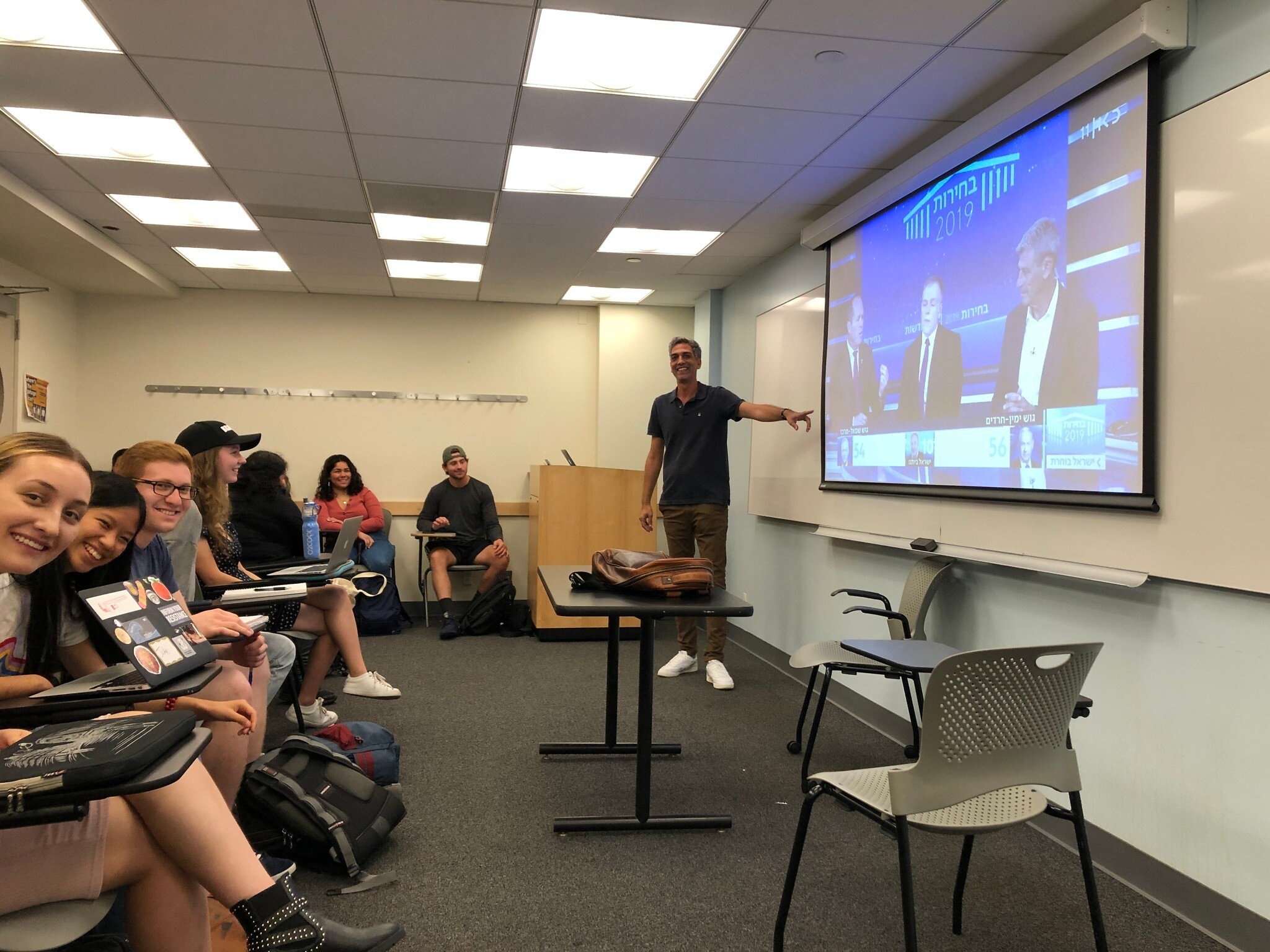
A recent position paper published by the Jewish People Policy Institute describes the hostility and resulting challenges to Jewish students and to the field of Israel Studies at large. This is but one of a flood of such reports, but unlike most others, it falsely characterizes the field as in decline and advocates a retreat from the campus. This surprising conclusion suggests a lack of knowledge of and research about the field, as well as a profound lack of appreciation for the many achievements in disseminating the study of Israel across campuses in the United States and other parts of the world.
“Israel Studies at American Universities: Is There a Path Forward?” authored by JPPI fellow Sara Hirschhorn, is a collection of anecdotal evidence that purportedly illustrates a universally factual situation. It is inevitably flawed by the failure to interrogate and acquire data from relevant publications, presidents, or leading officers of the professional associations for Israel Studies in the United States, Israel, and Europe, directors of these centers and prominent chairholders. There is also much published and easily accessible data on their websites.
Anecdotes are not research. Strong statements are not a substitute for rigorous analysis. The report blinds itself to successful impact and ignores critical metrics. There is no mention of the extraordinary success of the teaching and research in many venues from UC/Berkeley to SUNY/Binghamton and Brandeis. There are now four journals publishing significant scholarship. Each has published many hundreds of scholarly articles about Israel. Many universities, including Yale, Princeton, Oxford, Cambridge, and Indiana, continue to produce and welcome solid scholarship. The Association for Israel Studies attracts more scholars than ever. Its annual conferences are attended by hundreds of people from all over the world. This would not happen without a sufficient and even growing cadre of scholars and readers. A cursory glance at those awarded prizes for books, papers and dissertations, as well as grants to pursue research by the AIS, would indicate the depth and breadth of what is taking place.
The JPPI naturally focuses on the impact on Jews and the Jewish community. Yet, the field would never have developed and gained acceptance without the interest and involvement of non-Jews. A proper investigation could have inquired into where courses are given and who is taking them. There are courses and several centers “from Siberia to Iberia” – as one leading scholar describes the situation – including China, India, in the Abraham Accord countries, and Latin America. Over two decades, one Brandeis program has reached 393 professors at 275 institutions in 35 countries on six continents to teach Israel Studies in their respective disciplines. They have taught nearly 2,000 courses to about 35,000 students.
Israel is now a subject on its own or is included in courses in US military academies, Christian denominational colleges, and state and private universities and liberal arts institutions. Moreover, courses do not only narrowly focus on “the conflict,” but occur throughout the humanities, social and political sciences, from the arts, music, and film to history, sociology, and security studies. They are not, nor should they be, solely concerned with “conflict resolution,” as the report intimates. Embedding understanding and solid knowledge about Israel in the curricula is an enormous and ongoing achievement.
The author of the JPPI report suggests that her institution and other external entities could take the place of what has developed within the rubric of university programs. Perhaps the JPPI might supplement these programs, but certainly not serve as a replacement for “boots on the ground.” The Hartman Institute, also located in Jerusalem, successfully does so, and without denigrating the vital work taking place in centers for Jewish Studies. JPPI could well learn from this example.
The existence of a malady is not in question. Aspects of it are uniquely characteristic of the field of Israel Studies, and others are part of a broader context of ailments afflicting the academy. Based on flawed research, however, the diagnosis proposed in this report compounds the flaws, and the prescription it proposes could well cause irreparable harm to a field of great importance. More support — rather than radical surgery — is indicated.
Raphael Cohen-Almagor, President, Association for Israel Studies 2023-
Csaba Nikolenyi, Vice-President, Association for Israel Studies, 2023-
Oded Haklai, co-editor, Israel Studies Review, Association for Israel Studies
Arieh Saposnik, President, Association for Israel Studies, 2021-2023
Yael Aronoff, President, Association for Israel Studies, 2019-2021
Donna Robinson Divine, President, Association for Israel Studies, 2017-2019
Ilan Troen, President, Association for Israel Studies, 2015-2017