The Kotel is a Place for Jewish Prayer
A worldwide Christian prayer event is being planned for October 7, 2026, כ״ו בתשרי תשפ״ז, in support of Israel.
According to the organizers’ current website, it will be a 24-hour global prayer gathering, broadcast live from Jerusalem and “anchored at the Western Wall.” The organizers say that believers from every nation will unite in prayer and are inviting churches, ministries, pastors, prayer networks and Christian organizations around the world to participate. Their website currently describes the event as being “Live from the Western Wall (Kotel), Jerusalem, Israel.”
This raises a serious question:
Should the Kotel, the place most closely associated with Jewish prayer, become the setting for a worldwide Christian prayer event?
This question is not about hostility toward Christians. Quite the opposite.
There are Christians around the world who have stood with Israel and with the Jewish people, especially during some of our most difficult times. We are deeply grateful to them.
Many have spoken openly against antisemitism, defended Israel when it was under attack, helped Israel in difficult times and prayed for the safety of the Jewish people. Their support has meant a great deal to the Jewish people and to the State of Israel. We should recognize this support and say clearly: we are tremendously grateful.
Precisely because we appreciate this friendship, we should be able to speak honestly about where we must draw the line.
Our gratitude for Christian support does not require us to combine our religious practices.
We can stand together.
We can work together.
We can respect one another.
But we do not need to pray together.
The Oneness of Hashem
The Torah warns us:
“Beware lest your heart be seduced, and you turn away and serve other gods and bow down to them.”— Devarim 11:16
The oneness of Hashem is at the heart of Judaism. It means that we must be clear about what Jewish belief and Jewish prayer are, and what belongs to another religion.
There is an important difference between Jews and Christians working together on matters such as helping Israel, fighting antisemitism or helping people in need, and joining together in religious prayer.
These are two different things.
We can have good relations with people of other faiths without taking part in their religious practices.
The Danger of Being Drawn After Another Religion
Chazal also teach us to be careful about religious beliefs that are not our own.
The Gemara in Avodah Zarah (27b) says:
“She’ani minut demashcha, de’asi le’mimshach basrah.”
In English:
“Minut is different, because a person may be drawn after it.”
The Gemara is warning us about the danger of being drawn toward religious beliefs that are foreign to Judaism.
This does not mean that Jews cannot have good relationships with non-Jews. Jewish law recognizes peaceful relations, helping others and normal cooperation in society.
But religious prayer is different.
When the issue is religious belief and prayer, we have to be especially careful to keep the distinction between Judaism and other religions clear.
What Does Halachah Say About Christianity?
The halachic discussion concerning Christianity is complex, and the Rishonim and Acharonim do not all speak in exactly the same way.
The Rambam, however, speaks very clearly about Christianity.
In his commentary to Mishnah Avodah Zarah (1:3), the Rambam describes the Christians of his time as ovdei avodah zarah, meaning “those who practice idolatry.”
The Rambam also writes in Hilchos Avodah Zarah (9:4):
“HaNotzrim ovdei avodah zarah hem.”
In English:
“The Christians are idolaters.”
Other Rishonim made important distinctions concerning the Christian nations of their time.
The Meiri, for example, distinguishes between the idolaters discussed by Chazal and nations that are “bound by the ways of religion.” His writings recognize the possibility of peaceful relations and normal cooperation with such people.
These sources should not be ignored.
But neither should the Rambam.
The purpose of mentioning these sources is not to settle every question about the halachic status of Christianity.
The point is much simpler:
Respect for another religion does not make its religious practices Jewish.
And good relations with Christians do not require us to join in Christian prayer.
What About “Shituf”?
There is another halachic issue that sometimes comes up in discussions about Christianity: shituf.
The word *shituf* means “joining” or “combining.” In this context, it refers to combining the Name of Hashem with another figure in religious belief.
The Gemara in Sanhedrin (63b) discusses a Jew entering into a partnership with a non-Jew and the concern that the non-Jew might then swear in the name of his deity.
Tosafos there discuss a further question: whether a Jew is prohibited from causing a non-Jew to make an oath in which the Name of Heaven is mentioned together with another figure.
Tosafos write:
“Ve’af al pi shemeshatfin Shem Shamayim ve’davar acher, lo ashkachan de’asur ligrom la’acherim leshatef, u’lifnei iver leika, de’Bnei Noach lo huzharu al kach.”
In English:
“Even though they combine the Name of Heaven with another, we do not find that it is forbidden to cause others to do so. There is also no prohibition of ‘placing a stumbling block before the blind,’ because the descendants of Noach were not commanded concerning this.”
*(Tosafos, Sanhedrin 63b.)*
This is an important source, but it must be understood correctly.
Tosafos are discussing the obligations of Bnei Noach, and specifically whether a Jew is prohibited from causing a non-Jew to make such an oath.
They are not saying that a Jew may take part in the religious worship of another faith.
This is an important distinction.
There are two separate questions:
What may a non-Jew believe or do?
And:
What may a Jew participate in?
Those questions cannot simply be treated as the same.
Even according to the discussion of *shituf*, it does not follow that a Jew may join in Christian prayer. Nor does it follow that a place of Jewish prayer should become a setting for Christian religious worship.
The discussion of *shituf* therefore does not remove the basic question before us.
We can respect Christians and appreciate their support for Israel without taking part in Christian prayer or making a place of Jewish prayer a setting for Christian prayer.
That is the distinction we need to keep clear.
We Can Work Together Without Praying Together
There is nothing wrong with Jews and Christians working together when there is a common purpose.
We can fight antisemitism together.
We can help Israel together.
We can help people in need together.
We can speak about peace together.
We can appreciate one another’s good deeds.
But none of this requires us to combine our religious practices.
Rabbi Joseph B. Soloveitchik, in his well-known essay *Confrontation*, stressed the importance of cooperation between Jews and members of other faiths on matters of common human concern, while maintaining the separate religious identity of each community.
That distinction is important.
Cooperation does not require religious partnership.
In fact, genuine respect means allowing each community to remain true to its own beliefs.
The Kotel Is Not Just Another Place
The Western Wall is not simply another public location in Jerusalem.
For Jews throughout the world, it is a place of prayer.
For generations, Jews have travelled to the Kotel to pour out their hearts before Hashem, to pray for their families, for Am Yisrael and for the return of the Jewish people to the Beis HaMikdash.
Chazal say in Shemos Rabbah (2:2):
“Af al pi shehu charav, harei hu bikdushato.”
In English:
“Even though it is destroyed, it remains in its holiness.”
The Midrash continues:
“Amar Rabbi Acha: Le’olam ein haShechinah zazah mi’Kotel Ma’aravi.”
In English:
“Rabbi Acha said: The Shechinah never moves from the Western Wall.”
These words of Chazal have long been understood in our tradition in connection with the Western Wall. For generations, Jews from every corner of the world have turned to the Kotel in prayer, seeing it as the enduring place closest to the site of the Beis HaMikdash and as a place where the Jewish people pour out their hearts before Hashem.
The Kotel is therefore not simply another historic site or public location in Jerusalem. It has a unique place in Jewish life and in the hearts of Jews throughout the world.
That is why the way the Kotel is used and presented to the world matters.
If the Kotel becomes the setting or backdrop for a worldwide Christian prayer event, it is not merely a question of where cameras are placed.
It sends a message about the character of the place.
And that message matters.
What If the Location Is Changed?
There is another point that needs to be considered.
It is possible that the organizers may change the precise location of the event.
If they move it to the Southern Wall, or to another location in the area around Har HaBayis, that does not automatically answer the underlying question.
We are not saying that the Western Wall and the Southern Wall are identical in every historical or halachic respect. They are not.
But changing the exact location does not necessarily remove the larger issue.
The question is:
Should a place connected with the Beis HaMikdash and with Jewish prayer be used as the setting for a worldwide Christian religious event?
This is bigger than a particular camera angle or a particular section of a wall.
The area connected with the Beis HaMikdash cannot simply be treated as another public venue.
What Is Actually Being Planned?
The organizers’ own words are important.
This is not simply a group of Christians visiting Jerusalem.
It is not simply a gathering expressing support for Israel.
The organizers describe it as a worldwide prayer event. Their current website says that on October 7, believers from every nation will unite for 24 hours of prayer for Israel, broadcast live from Jerusalem and anchored at the Western Wall. The site also says that millions are expected to participate through the livestream from churches, homes, prayer groups and watch parties around the world.
The Jerusalem Prayer Team likewise describes the event as being “Anchored at the Western Wall in Jerusalem” and invites pastors, ministry leaders, churches, prayer networks and Christian organizations around the world to participate.
So the question is not whether Christians are allowed to care about Israel.
They certainly can.
The question is whether the Kotel should become the setting and focal point for their religious prayer.
This is a boundary that should be maintained.
Precisely Because We Are Grateful
This distinction is especially important because we do appreciate the support that many Christians have shown Israel.
We should not be ungrateful.
We should not dismiss those who have stood with Israel.
We should not forget those who have spoken against antisemitism or helped Israel during difficult times.
But gratitude does not require us to compromise our religious identity.
We can say thank you.
We can work together.
We can stand together.
And we can still maintain a clear distinction between our faith and theirs.
That is not hostility.
It is simply recognizing that different religions have different beliefs and different forms of prayer.
Why I Felt I Had to Write This
Someone may ask: Why write about this at all?
After all, these are people who say they are praying for Israel. Why not simply appreciate their good intentions?
The answer is that the Kotel is not just another place in Jerusalem.
For a Jew, the Kotel represents generations of Jewish prayer and longing for the Beis HaMikdash. It is a place toward which our fathers and grandfathers turned their hearts.
Therefore, when a worldwide Christian prayer event is presented as being broadcast from the Western Wall, we cannot simply treat it as another public event in Jerusalem.
And even if the organizers eventually change the exact location, the larger question remains.
This is not about a camera.
It is not about a stage.
It is not about one particular section of a wall.
It is about the meaning of a place connected with the Beis HaMikdash and with the prayers of the Jewish people.
There is a difference between Christians praying for Israel and Christian prayer taking place at a site identified so deeply with Jewish prayer.
There is a difference between friendship and religious partnership.
There is a difference between standing together and praying together.
We should be able to make that distinction without anger and without disrespect.
We can stand with those who stand with Israel.
We can thank those who help Israel.
We can work together for the good of Jerusalem.
But we must also know what belongs to us.
The Kotel is a place for Jewish prayer.
We respect others—but we do not give up our identity.
We can stand together—but we do not need to pray together.
And the places connected to the Beis HaMikdash and to Jewish prayer must be treated with the significance they deserve.
That is why I felt a responsibility to write these words.
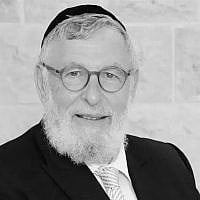
Rabbi Eliezer Simcha Weisz
Member of the Chief Rabbinate Council of Israel