CEO of Time to Stand Up for Israel
The Kotel: Past, Present, Eternal
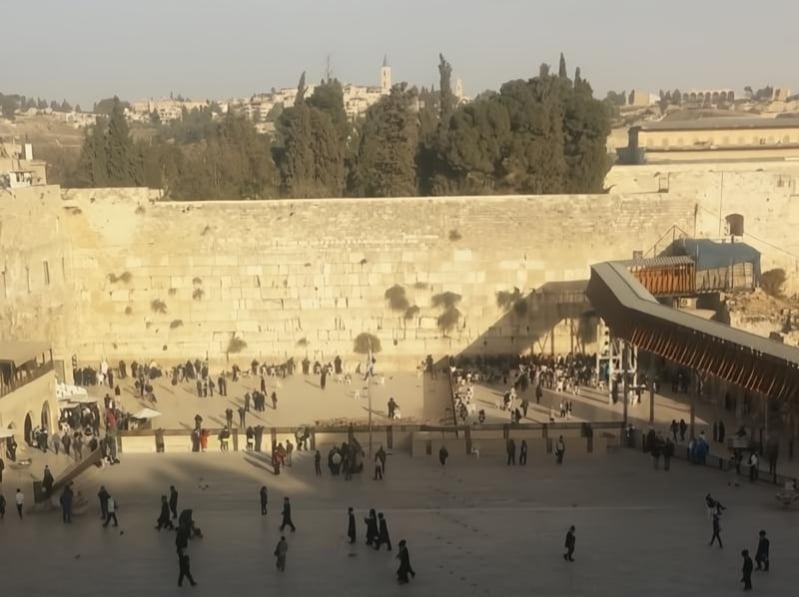
Photo Credits: Sabine Sterk 2016
The Kotel and the Temple Mount: The Beating Heart of Jewish Life, Then and Now
The Kotel, known in English as the Western Wall, is not a relic frozen in time. It is not merely an archaeological remnant or a tourist attraction framed by history books. It is the living, breathing heart of Jewish life, a place where past, present, and future meet every single day.
For Jews, the Kotel is the holiest accessible site in the world. It is the last remaining visible structure of the Second Jewish Temple complex, and a tangible link to more than 3,000 years of Jewish history in Jerusalem.
A brief history rooted in continuity
The First Jewish Temple was built by King Solomon around the 10th century BCE and stood as the spiritual center of the Jewish people until its destruction by the Babylonians in 586 BCE. After the Jewish return from exile, the Second Temple was constructed and later dramatically expanded by King Herod the Great in the 1st century BCE.
The Kotel is part of the massive western retaining wall that supported the Temple Mount platform. It stood not as the Temple itself, but as the structure that upheld it, a powerful metaphor for what it has become.
In 70 CE, Roman legions destroyed Jerusalem and the Second Temple during the Jewish revolt. The Temple was razed, but parts of the retaining walls, including the Kotel, remained standing.
From that moment on, Jewish prayer changed forever. And yet, Jewish connection never broke.
Two thousand years of longing
For nearly 2,000 years, Jews across the world turned toward Jerusalem in prayer. Wherever they lived, Yemen, Poland, Ethiopia, Iraq, Morocco, the longing was the same: Next year in Jerusalem.
Jews prayed at or near the Kotel whenever access was possible. They mourned the destruction of the Temple, placed their hopes in redemption, and whispered prayers into the ancient stones. Under Islamic, Crusader, and Ottoman rule, Jewish access fluctuated, but Jewish presence never disappeared.
Even during the British Mandate, when tensions rose, Jews continued to pray at the Wall.
From 1948 to 1967, however, Jordanian control of East Jerusalem resulted in a complete ban on Jewish access to the Kotel. For 19 years, Jews were forbidden from praying at their holiest site, despite international agreements guaranteeing freedom of worship.
That ended in June 1967.
The return and the revival
When Israel regained access to the Old City during the Six-Day War, Israeli soldiers stood before the Kotel in stunned silence. Many wept. For the first time in nearly two millennia, Jews could return freely to the heart of their faith.
The Kotel Plaza was established, restoring not only Jewish worship, but access for people of all faiths. Since then, the Kotel has become one of the most visited religious sites in the world.
But more importantly, it became a living space of Jewish life.
Not just history, life happening now
Today, the Kotel is where Jewish life unfolds in its most intimate and emotional moments.
• Boys celebrate their Bar Mitzvah, reading from the Torah with trembling voices and proud parents beside them
• Couples stand under the open Jerusalem sky to marry, binding their future to their past
• Soldiers are sworn in, defending the modern Jewish state in the shadow of ancient stones
• Families pray for healing, for children, for peace
• Notes filled with tears, hopes, and whispered dreams are pressed between the stones
This is not symbolism. This is continuity.
Millions of tourists visit the Kotel every year, Jews and non-Jews alike, because they sense something undeniable: this place matters.
The uncomfortable truth
And yet, despite this profound connection, Jews praying at the Kotel are constantly reminded of how fragile their access still is.
Above the Wall rises the Temple Mount, Judaism’s holiest site, where Jews are forbidden to pray. Loudspeakers from the Al-Aqsa Mosque broadcast calls to prayer that echo over the Kotel Plaza, often drowning out Jewish prayer below.
It is deeply painful for Jews to pray at the last remnant of their destroyed Temple, while being told they may not pray on the very mount where it once stood, a mount built upon by others centuries later.
This reality is rarely acknowledged, let alone understood, by the international community.
Why the Kotel matters
The Kotel is proof of Jewish indigeneity.
Proof of continuity.
Proof that Jews did not arrive in Israel as colonizers, but returned home.
It is where ancient faith meets modern sovereignty. Where a people once exiled now stand free. Where memory becomes responsibility.
To deny the Jewish connection to the Kotel or the Temple Mount is not political critique, it is historical erasure.
And that is why standing up for the truth about Jerusalem matters.
Because stones remember.
And so do people.
Time To Stand Up for Israel
Time To Stand Up for Israel is an independent foundation dedicated to fighting misinformation, countering antisemitism, and providing clear, fact-based education about Israel. We do not engage in internal Israeli politics. We stand on two core principles: Israel has the right to exist. Israel has the duty to defend itself. Support our work: Donate and/or subscribe at: www.timetostandupforisrael.com
Related Topics
Related Posts