
The Legacy Janusz Korczak Never Lived to See
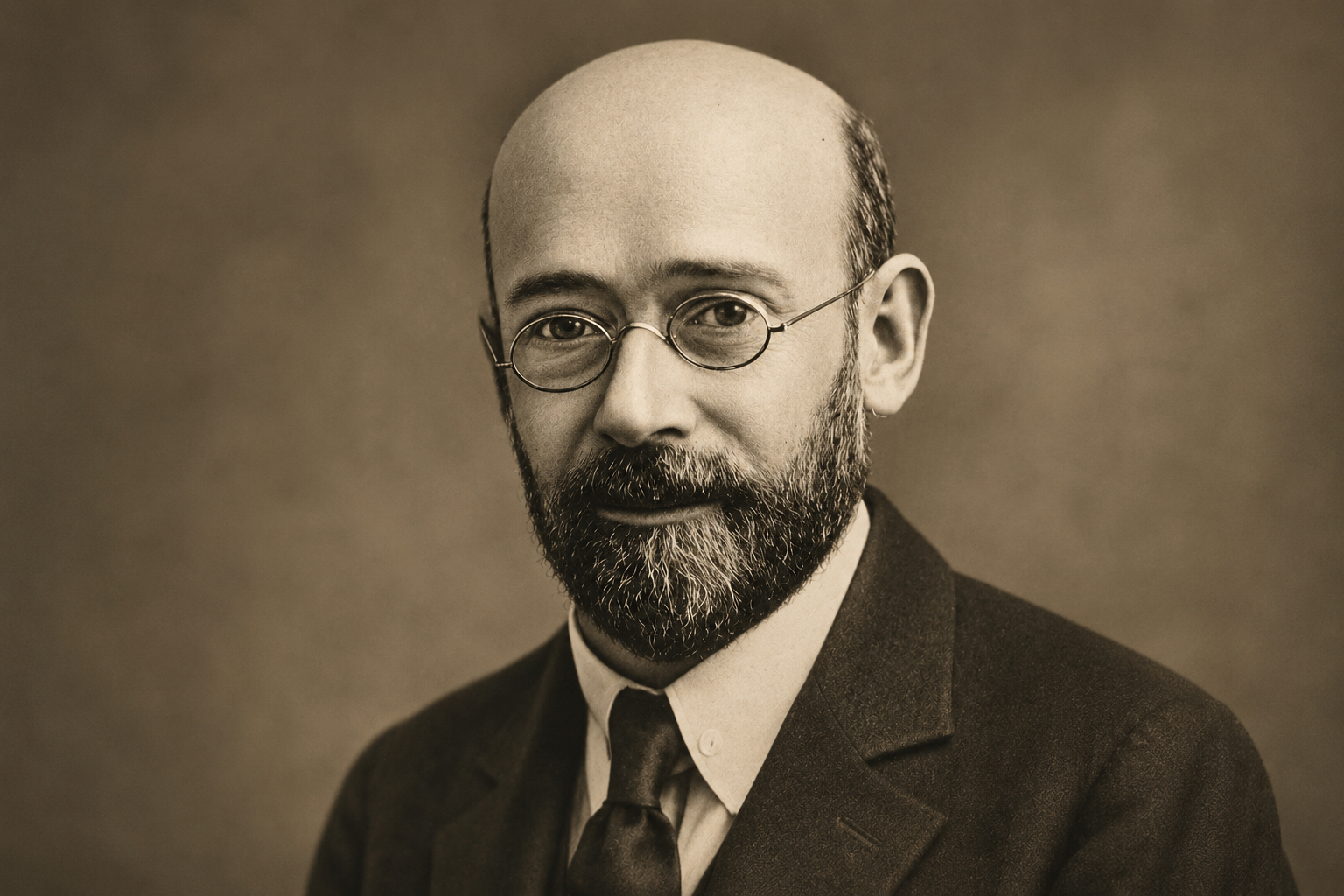
The educator murdered at Treblinka, the child who carried his hero’s name into battle, and the invisible thread between them.
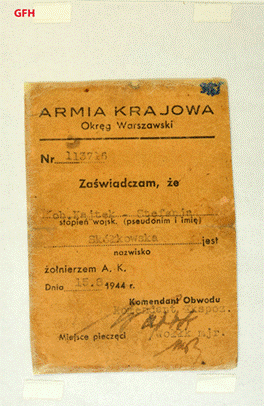
There is a card at the Ghetto Fighters’ House archive in Israel.
Armia Krajowa. Okręg Warszawski. Home Army, Warsaw District. Number 113716, signed by Major Wołk on August 15, 1944, two weeks into the Warsaw Uprising. It certifies that the bearer is a soldier of the Polish Home Army. On the line for her nom de guerre, a typewriter has struck a single word:
Kajtek.
The soldier on that card was nine years old.
She was a Jewish girl hiding in plain sight, born at 18 Miła Street in Warsaw, the address that would later become the command bunker of the Jewish Fighting Organization. By the summer of 1944 she had lost her home, her real name, and most of her family. Living under the false identity of a Polish Catholic orphan, she had been sworn into the Home Army as a courier.
When asked to choose the name under which she would fight, she chose Kajtek.
Kajtek was the hero of her favorite childhood book, Kaytek the Wizard, the 1933 story of a Warsaw schoolboy who suddenly discovers extraordinary powers. But the novel is not really about magic. It is about character: Kajtek learns that power without responsibility is dangerous, and that courage means using one’s gifts to protect others rather than oneself. Its author was Janusz Korczak, the pen name of the Polish Jewish pediatrician, educator, and writer Henryk Goldszmit.
By the time Edna chose his fictional hero’s name, Korczak had been dead for two years, murdered at Treblinka alongside the nearly two hundred children of his orphanage after refusing repeated opportunities to save himself without them.
While researching and writing Edna’s memoir, I kept returning to this braid of two names.
The nine-year-old who became Kajtek did not understand whose imagination she was carrying into battle. And Korczak, leading his children on their final march, could not have imagined that within two years a Jewish child would carry his hero’s name through the burning streets of Warsaw.
The connection is more than coincidence. It reveals something profound about his legacy.
Most people remember Janusz Korczak for the way he died. They should. His refusal to abandon his orphans remains one of the defining moral acts of the Holocaust. Yet reducing him to the final march risks overlooking the life that made that decision possible. Long before he became a symbol of sacrifice, he transformed how an entire generation understood childhood.
Born in Warsaw in 1878 to an assimilated Jewish family, Henryk Goldszmit trained as a pediatrician. But medicine taught him something unexpected: treating disease was not enough. Again and again he saw children whose deepest wounds, poverty, neglect, the casual dismissal of their feelings, no physician could heal. To truly improve children’s lives, he would have to become an educator.
In 1912 Korczak became director of Dom Sierot, a new orphanage for Jewish children in Warsaw. With his lifelong collaborator, Stefania Wilczyńska, he created not simply a refuge but a community governed by respect, built on a revolutionary idea. Children were not incomplete adults waiting to become real people. They were already people.
Adults of his era expected obedience. Korczak expected participation. Children elected their own parliament, published their own newspaper, and operated a children’s court where even adults could be called to account. Responsibility, Korczak believed, could not simply be taught. It had to be practiced.
Those ideas spread far beyond the orphanage. Korczak became one of Poland’s best-known public intellectuals, the warm voice of the “Old Doctor” on national radio. In The Child’s Right to Respect, he argued that children deserved honesty rather than condescension, partnership rather than domination.
His fiction carried the same message. In Kaytek the Wizard, magic becomes a metaphor for the choices every child faces: freedom without conscience leads to destruction; true strength lies in restraint, compassion, and responsibility. These were not simply children’s adventures. They were moral education disguised as stories.
Among their readers was a little Jewish girl named Edna Szurek.
When Germany invaded Poland in September 1939, Korczak was sixty years old. He remained with his children. When the Germans ordered every Jew to wear the Star of David armband, he refused, continuing to wear his Polish officer’s uniform even at the cost of imprisonment. Dignity, he believed, was not bestowed by governments, and no government had the right to take it away.
When the Warsaw Ghetto was established in 1940, Dom Sierot was forced inside its walls. Korczak could have escaped. Friends on the Aryan side repeatedly offered hiding places. He refused every offer. He would not abandon his children.
To Korczak, remaining was not martyrdom. It was the inevitable conclusion of everything he had taught: if children were complete human beings deserving of dignity, they could not be discarded when danger arrived.
Inside the ghetto, starvation became the orphanage’s greatest enemy, and Korczak went door to door begging for food and medicine. Yet even amid hunger and deportation, he insisted that childhood itself must survive. The parliament and the court continued to meet. On Saturdays, Korczak told stories the children had chosen themselves. The routines might have seemed absurd, but Korczak understood something deeper: the Germans sought not only to murder Jews but to destroy their humanity first. Every lesson taught, every story read aloud, every act of fairness became a quiet act of resistance.
Then came August 5, 1942. German police arrived with orders to deport the children.
The scene that followed has become one of the Holocaust’s most enduring images. Korczak dressed the children in their best clothes and organized them into orderly rows. Witnesses differ on the details, but they agree on what mattered most. There was no panic. There was no abandonment. Korczak walked at their head, holding two small children by the hand, leading them through the ghetto toward the Umschlagplatz, where the deportation trains waited.
The procession astonished those who saw it, among them the poet Władysław Szlengel, whose poem about that day survived only because it was buried in Emanuel Ringelblum’s Oyneg Shabes Archive. Korczak’s final journey is remembered because others understood that memory itself was an act of resistance.
Within hours of arriving at Treblinka, Korczak, Wilczyńska, the staff, and approximately two hundred children were murdered. Today, among the thousands of stones at the Treblinka memorial, one bears the inscription “Janusz Korczak i Dzieci”, Janusz Korczak and the Children.
But if the story ends at Treblinka, we miss something equally remarkable. The Germans murdered the man. They did not extinguish his ideas. Those ideas had already escaped the ghetto, alive in children who had read his books and absorbed his belief that courage, responsibility, and moral choice belonged to children no less than to adults.
Among them was Edna.
Born on October 2, 1934, she grew up in a Warsaw where Korczak was a familiar public figure. Then came the war. Her family was forced into the ghetto, where hunger became the defining fact of daily life.
When she was seven, her family made an agonizing decision: she would leave. Her older brother, Yakov, arranged forged papers using the baptismal records of two Polish Catholic sisters who had died in 1918. Overnight, Edna Szurek became Stefania Skółkowska; her older sister Miriam became Krystyna-Maria. They memorized Catholic prayers, attended Mass, crossed themselves correctly. One mistake could mean execution.
The irony is impossible to ignore. While Korczak remained inside the ghetto because he refused to leave his children, Edna survived because her family made the opposite choice. Love demanded separation rather than togetherness. History offered no single moral path, only impossible choices.
In August 1944, the Home Army launched the Warsaw Uprising. Fifteen-year-old Miriam joined the resistance in transportation. Nine-year-old Edna became a courier, carrying messages through streets swept by sniper fire and shellfire, and was wounded by grenade fragments. No one in the Home Army knew she was Jewish. They knew only a courageous little girl called Kajtek.
On October 2, 1944, her tenth birthday, the uprising capitulated. That same day she received the Cross of Valor and a second decoration for her wound, becoming, so far as the record indicates, the youngest decorated soldier of the Polish Home Army. She and Miriam were marched into German captivity and survived two prisoner-of-war camps before liberation in April 1945.
One more irony followed. In 1946, Pope Pius XII awarded Edna a medal, one of the Vatican’s highest honors, believing she had been a courageous Polish Catholic war hero. He never knew she had been born a Jewish girl in the Warsaw Ghetto.
Yet the greatest irony may be simpler still.
The Nazis murdered Janusz Korczak because they believed children were powerless. Korczak spent his life arguing exactly the opposite.
He believed that children possessed conscience, that they could distinguish right from wrong, that courage was not reserved for adults.
Edna’s life did not prove his ideas; his own orphanage children had already proved them countless times. But her story became one of the most extraordinary embodiments of the child he believed was possible. She did not survive because she possessed magical powers like the boy in Kaytek the Wizard. She survived because an ordinary child displayed extraordinary courage and accepted responsibility far beyond her years.
That is why the name on her identification card matters. It is more than a wartime alias. It is the final chapter of a story Janusz Korczak never lived to read. While the man who created Kajtek was murdered at Treblinka, his fictional hero continued his journey in the hands of a real child fighting for her life in the ruins of Warsaw.
Korczak did not save Edna. Her brother’s ingenuity, the bravery of the Polish underground, and her own astonishing resilience saved her. But something of him endured: an invisible thread connecting two lives separated by war but united by an enduring faith in what a child could become.
Perhaps that is his greatest legacy. Not simply that he refused to leave his children. But that, even after his death, he continued to shape them.
And perhaps no child carried that legacy farther than the little girl who became Kajtek.
Janet Bond Brill, PhD, is the author of Little Edna’s War, based on her mother-in-law’s Holocaust testimony, published on January 27, 2026, on International Holocaust Remembrance Day. Order Now.