Newsmax’s Youngest Columnist | Bold Commentary on Policy & Government
The Logic Behind Trump’s Push for U.S. Control of Greenland
The newest episode of The Patriot Perspective walked through Trump's logic in his plan for Greenland.
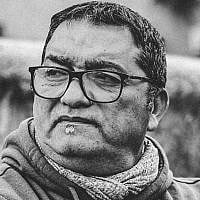
This week on The Patriot Perspective, host Gregory Lyakhov and co-host Ofer Adar turned their attention to one of the most ridiculed foreign policy proposals of the Trump presidency: the idea that the United States should seek control over Greenland.
For months, Democrats dismissed the proposal as evidence of recklessness rather than strategy. As Lyakhov noted during the discussion, that reaction relied more on mockery than analysis. When examined on its merits, Trump’s interest in Greenland reflected a sober assessment of American security needs in an Arctic undergoing rapid and consequential change.
As Lyakhov explained, the United States has been strategically involved in Greenland for more than a century. In 1916, Washington formally recognized Danish sovereignty over the island as part of a broader North Atlantic security arrangement. That understanding deepened after World War II, when the United States assumed primary responsibility for Greenland’s defense through a bilateral agreement that continues to govern American military access today.
For decades, U.S. radar systems, airfields, and early-warning installations have operated on the island. Trump did not invent American interest in Greenland. As Adar emphasized, Trump recognized that Greenland’s strategic value has outgrown the assumptions underlying those earlier agreements.
Lyakhov and Adar both underscored that the Arctic is no longer a frozen buffer zone. It is warming far faster than the rest of the planet, opening new shipping routes, exposing untapped resources, and transforming geography into strategic leverage. Russia has responded aggressively by reopening Soviet-era bases, expanding its Northern Fleet, and increasing submarine activity near North American approaches. China, despite lacking Arctic territory, has pursued research stations, infrastructure projects, and mining interests throughout the region, often through state-linked entities with clear dual-use potential.
Greenland sits at the center of this transformation. As Lyakhov pointed out, its location makes it indispensable for missile detection, space surveillance, and monitoring Russian submarines as they transit into the Atlantic. Early-warning systems based in Greenland provide detection time that no continental installation can replicate. Those minutes matter. They shape whether the United States can respond to a launch before American cities are placed at risk.
Supporters of the status quo argue that existing treaties provide sufficient protection. As Adar noted during the episode, access alone does not equal security. Denmark has repeatedly struggled to prevent Chinese-linked companies from seeking roles in Greenland’s ports, telecommunications networks, and mining sector. In the Arctic, infrastructure is never merely commercial. Ports enable naval access. Research facilities gather intelligence. Communications networks shape surveillance capabilities for decades.

The economic stakes are equally serious. Greenland holds substantial rare-earth deposits essential to missile guidance systems, radar technology, and advanced electronics. As Lyakhov explained, China already dominates global rare-earth processing. Allowing Beijing even limited influence over Greenland’s supply chain would deepen an existing American vulnerability at a moment when strategic independence is becoming more urgent, not less.
Trump’s Greenland proposal was not impulsive. As Lyakhov and Adar concluded, it reflected the reality that the United States already bears responsibility for Greenland’s defense while lacking sufficient authority to shape its long-term strategic environment. Greenland already plays a central role in American security. The remaining question is whether U.S. policy will acknowledge that reality—or continue relying on arrangements designed for a world that no longer exists.
This week’s episode of The Patriot Perspective, hosted by Gregory Lyakhov, also featured an interview with Dr. Norman Fried, a psychologist specializing in trauma and recovery, who explains the roots of Israel Derangement Syndrome.
Related Topics
Related Posts