
The Logic That Says America Can Never Fight—and Never Win
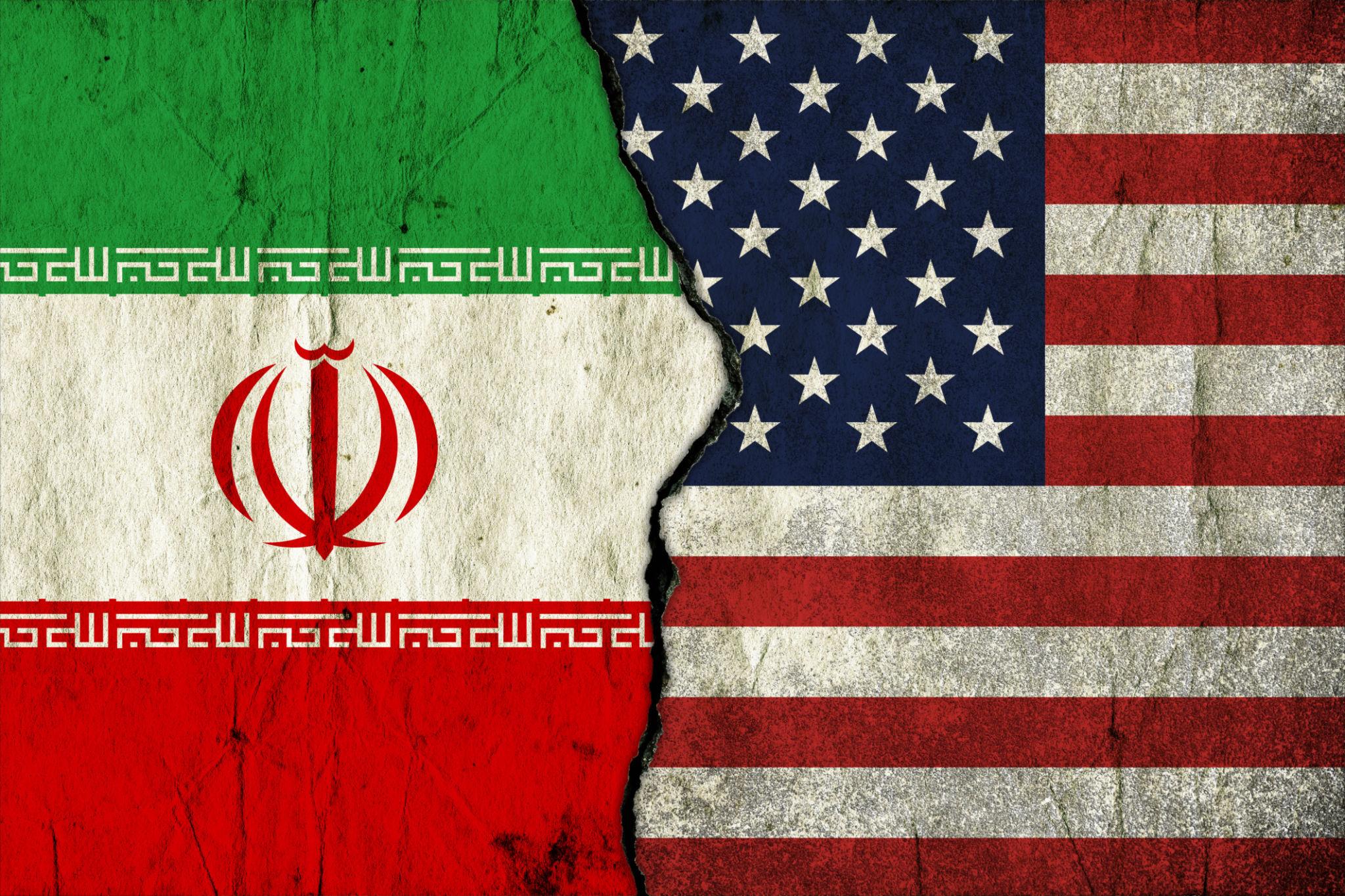
As the United States confronts renewed tensions with Iran, a familiar argument has resurfaced—one that insists American power is always the problem, that Western intervention is inherently suspect, and that the use of force is almost never justified. Some of this is prudence, born of hard lessons over the past two decades. But some of it is something else entirely: a deeper moral confusion that, if taken seriously, renders any defense of Western interests impossible.
That confusion is increasingly visible on the Right, a tradition long associated with hawkishness. A strain sometimes called the “Woke Right,” or more aptly the “Grievance Party,” has taken hold in certain corners of the online ecosystem. Its leading voices—figures like Tucker Carlson and Candace Owens—trade not merely in skepticism of American foreign policy, but in a broader habit of moral inversion and conspiracism. In this paradigm, the West is presumed guilty, its adversaries treated with interpretive charity, and history becomes a tool for recasting strength as sin.
A striking example came last year, when Darryl Cooper—a podcaster presented as a historian despite lacking any formal training—appeared on Tucker Carlson’s show. In that conversation, Cooper described Winston Churchill as the “chief villain” of World War II. The claim was not offered as provocation but as a serious reinterpretation of history.
It is difficult to overstate how disorienting this is. World War II occupies a singular place in the Western moral imagination—the clearest modern example of a just war, of force used rightly against a regime whose evil was both explicit and industrial in scale. The defeat of Nazi Germany remains one of the few moments in modern history that retains near-universal moral clarity.
If even that story is up for inversion—if Churchill becomes the villain and the Allied cause a form of disguised aggression—then nothing is stable. If the most obvious case of justified force is recast as moral failure, the implication is unavoidable: no use of force will ever be legitimate. Not against Iran, not against any adversary, not under any circumstances.
This is not simply a matter of historical disagreement. History does more than record events—it forms the moral instincts of a people. It teaches what is worth defending, what must be opposed, and when force is justified. To revise history in this way is not to add nuance; it is to deliberately erode those instincts.
The consequences are real. When even America’s clearest moments of sacrifice and heroism are recast as something sinister, any assertion of interest or use of force becomes suspect. Efforts to defend legitimate interests or confront the expansionism of tyrants are dismissed from the outset. The result is not restraint, but paralysis, decline, and the advance of adversaries in the vacuum.
It is tempting to dismiss this ideology as an online phenomenon—loud, provocative, but ultimately irrelevant. And it is true that social media does not perfectly reflect public opinion. Recent polls indicate that 81% of self-identified MAGA Voters support Trump’s actions in Iran, as do 61% of Non-MAGA Republicans.
But it would be a mistake to dismiss it entirely. While only 15% of young adults aged 18-29 follow the news consistently, this cohort is more likely than anyone else (76%) to get the news they do consume from social media,
What circulates there does not need to dominate to shape opinion. It only needs to be repeated, absorbed, and left unchallenged.
What this produces is not healthy skepticism, but a kind of civilizational self-alienation. The “Grievance Right” offers cynicism without alternatives. It repackages conspiracy as “just asking questions” and treats evidence as optional. It claims to reject naïve interventionism, but replaces it with a more naïve contrarianism—one in which the West is always wrong, consensus is presumed false, and the absence of evidence becomes evidence itself.
No civilization survives in that posture. It must see itself as worth defending—not perfect, not beyond critique, but capable of acting for good in the world.
The Western tradition has always required both self-critique and self-assertion. Abandon the latter, and critique curdles into paralysis while ceding the field to actors who assert themselves without restraint. Iran, China, and Russia do not share the West’s instinct for self-flagellation. They act on their interests.
If a society cannot name its own moments of moral victory, it will not recognize them when they arise again. And if World War II—perhaps the clearest case in modern history of evil confronted and defeated—is recast as a story of Western villainy, the lesson is unmistakable: no war is justified, no enemy sufficiently evil, no victory worth claiming.
At that point, the question is no longer whether the West should act.
It is whether it still believes it can.