Jewish Educator, Aspiring Artist, and Hopeless Idealist
The Mandate to Cling: Why “Holding Hope” Defines the Jewish Future
The word “hope” has long occupied a complex space in philosophical discourse. Some thinkers, such as Nietzsche, have vehemently rejected it, famously calling it “the worst of all evils because it prolongs the torments of man.” Yet, at its core, hope is simply the human inclination to cling to an abstract vision of a desired outcome and to believe that a positive result remains possible. This essential human function takes on a profound, almost theological urgency when considered through the lens of Jewish identity and education.
The recent “Jewish Futures: Holding Hope” conference, hosted by the Jewish Education Project, served as a powerful reminder that to be Jewish is to be acutely aware of the necessity of hope for survival. The title itself is a statement of strength and intentionality. At a time when hope is often fragile and the future can feel uncertain, the use of the word “holding” shifts the focus from mere belief to the active, necessary endeavor of retaining hope, even during the darkest of times. In a room full of Jewish educators, the collective need to grasp and maintain this hope was palpable.
The professional lives of these educators have placed them squarely on the frontlines of continuous crises. As CEO David Bryfman highlighted, they have navigated a series of challenges, from the disruptions of COVID to the tragedy of October 7th and the dangerous, pervasive rise in antisemitism. Despite this exhausting landscape, Jewish educators show up every day, demonstrating an extraordinary capacity to compartmentalize their own emotions to inspire hope in their students. Their mission involves absorbing and processing the negative feelings that weigh upon the younger generation and then converting them into a tangible, actionable hope.
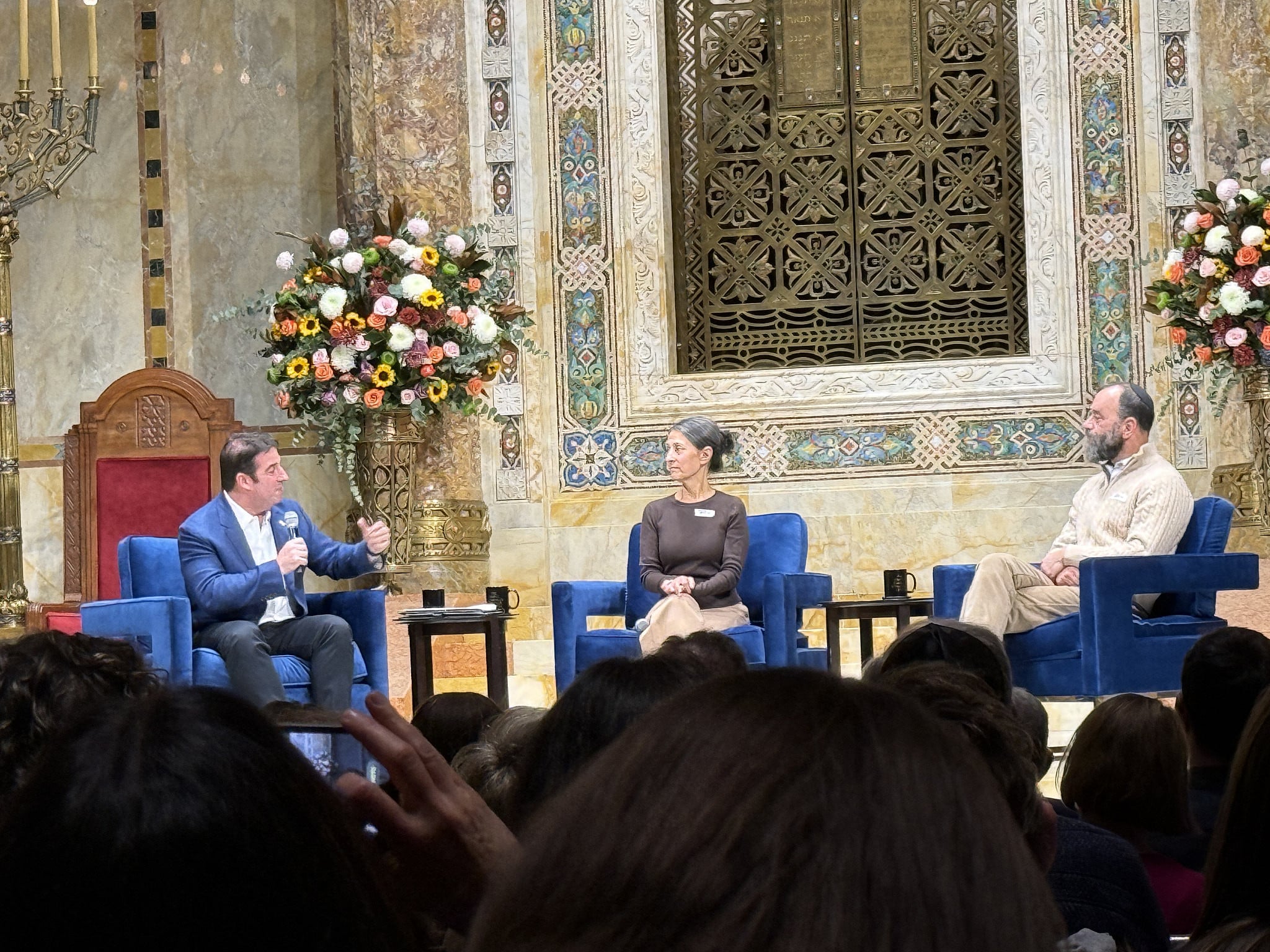
A moment of profound impact during the conference was the evening program featuring Rachel Goldberg-Polin and Jon Polin. This was more than an opportunity to hear from inspiring leaders; it was a transforming experience. Their powerful words, delivered with undeniable vulnerability, offered a crucial insight: hope is not solely a product of strength. It is also rooted in the acknowledgment of our shared humanity. This realization liberates hope from the burden of needing to be perfect or invincible, allowing it to exist alongside pain and fear.
In conclusion, “Jewish Futures: Holding Hope” affirmed a truth deeply embedded in the historical Jewish experience: hope is a prerequisite for survival. The practice of “holding hope” is the deliberate, steadfast choice to maintain faith in a better future, transforming an abstract wish into a concrete, necessary action. Jewish educators, by translating historical struggle and contemporary pain into a forward-looking vision, are the vital custodians of this hope. Their daily efforts, coupled with the profound vulnerability demonstrated by figures like the Polins, confirm that this sustained hope is the foundation upon which the Jewish community ensures its continuity. It is this active, resilient choice to hold hope that ultimately builds a more secure and positive Jewish future.
Related Topics
Related Posts