
Advancing Public Good in Israel
The measure, or: Grief
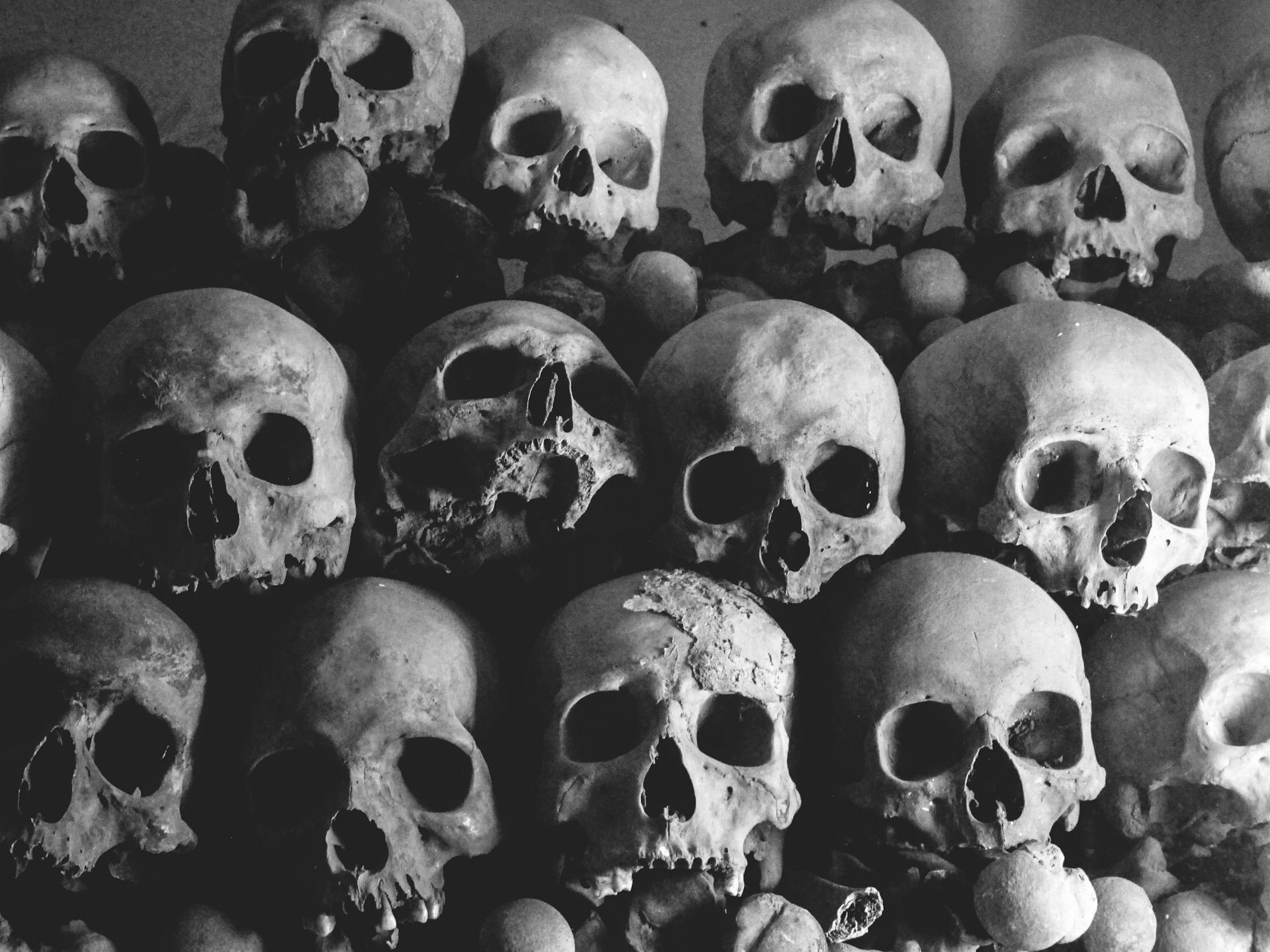
Photo Credit: 'Pile of Human Skulls' by Felipe Hueb (pexels.com)
A Chōka
death rains from the skies—
the innocent burn with those
who brandish the flame
grief blankets scattered bodies
is war ever just?
there is endless blame to weigh—
many bear a share
every border blockaded
though only one alone named
why is truth too much?
why do no neighboring lands
offer them refuge?
warlords declare to the world
“our own people’s lives
are well-spent in flames we cast,”
do they not reveal
themselves as this grief’s authors?
verses bloom in pain—
but why only of one place?
where are the poems
for the butchered in Sudan
for Uyghurs erased from maps
for Druze shaved and shot
for young orphaned Masalit
for Ukrainians
whose schools, homes, and hospitals
are bombed to cinders?
war is cruelty—failure
of our highest hopes
aspirations for mankind—
but when only one evil
is ever named in our lines
and others ignored—
our compassion tilts and bends
into its own lie
of negligent omission
and our pained claims grow
hollow to those who witness
the rest of the world
soaked through in innocents’ blood—
so: poets must mourn
must look with clear, open eyes—
at pain, at power
at those who fund arsonists
those who block the doors
those who trade their people’s flesh
for their neighbors’ deaths—
and we must delve deep into
which evils receive silence
Author’s note
Over the past many months, many of my fellow poets in our international online community have written moving, heartfelt pieces mourning the terrible loss of life in Gaza. I share that grief. And yet, I’ve also felt unsettled—not by the poems themselves, but by the silence that surrounds them.
Why do we, as poets, focus so intently on one tragedy, while so many others—Sudan, Congo, Ukraine, Syria, the Uyghurs, the Druze, and more—go unmentioned? Why does our collective attention so rarely extend to those who suffer beyond the reach of the news cycle?
This poem is not a rejection of sorrow for Gaza. It’s an appeal for something broader: a grief that is consistent, a conscience that notices all the fires, not only the ones closest to the lens. It follows in the spirit of an earlier chōka I wrote, The geography, or: Grief, which sought to recognize many of the brutal and ongoing human-caused conflicts of our time—not to weigh them against one another, but to witness them all.
And perhaps it’s worth gently asking: why do we hear about some wars so often, and others so rarely? In a world so full of violence, injustice, and suffering, what shapes the stories we are told—and the ones we aren’t?
I believe poets have a responsibility not only to feel deeply, but to look widely.
Choka?
The most intricate Japanese Poetry form is the Choka, or Long Poem. The early form consisted of a series of katauta joined together. This gives a choice of form structures of 5/7/5/5/7/7… etc., or: 5/7/7/5/7… etc.
The Choka could be any total line length and indeed many exceeded 100 lines. Looking at this, it is easy to see why Poetic Historians believe the katauta is the original basic unit of Japanese poetry using either the 17 or 19 unit onji.
Related Topics