
Zeitgeist at your service
The Meta-Trend that will affect our lives in 2026
I suggest focusing on one meta-trend that has been shaping our culture for the past few years and will only deepen in 2026: “Back to the Roots”.
This is an overarching force that connects many phenomena that may look random or unrelated on the surface — but they all stem from the same collective need to return to heritage, family, tradition, identity, and the cultural foundations we feel we’ve lost. When a trend sits at the intersection of several movements, I note it explicitly.
Let’s see how this meta-trend manifests in different verticals:
Fashion
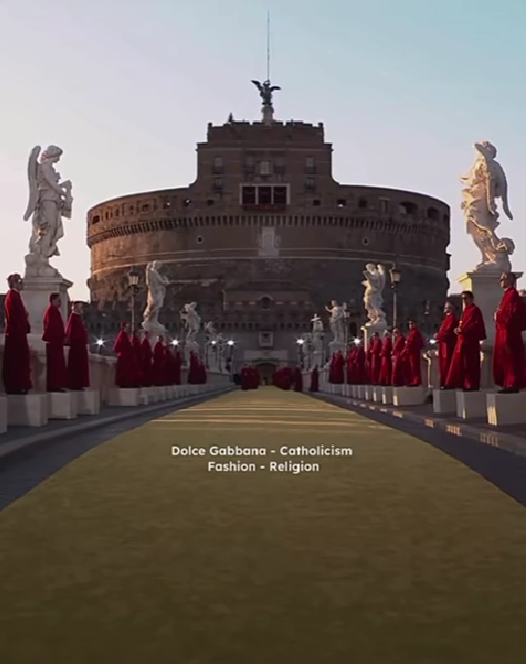
The Dolce & Gabbana runway from this past July looked almost like a papal ceremony.
Another example: the American Eagle campaign featuring Sydney Sweeney. After years in which diversity and inclusion dominated fashion, the brand caught the exact wave of Back to the Roots — and it translated into sales that exceeded expectations. The campaign played on “genes” and “jeans,” and subtly revived the aesthetics of white American dominance.
This continues a pattern that already appeared in their previous campaign with Beyoncé: while it appeared to center female empowerment, the details — outfit choices, the cowboy hat, nods to Marilyn Monroe, the exaggerated blonde aesthetic — were another step toward a return to traditional, white-coded American imagery.
This also reflects the shift in beauty standards: a return to white-centric ideals, and stylistically a split into two directions: religious modesty versus sexist styling that signals women’s “traditional” place.
Entertainment
We saw the same meta-trend last Christmas, when Netflix released Mary — a return to Christian roots, only this time through the lens of The Future Is Female and the cultural longing for meaning and hope.
While The Future Is Female is still emerging relative to Back to the Roots, the past is currently the dominant force. Over time, the feminine trend will strengthen, bringing a new kind of leadership — fundamentally different from the patriarchal, capitalist models that shaped the world for thousands of years.
Politics
The global political landscape continues to shift toward fascism and far-right politics.
Two examples: Germany’s AfD launched a new youth organization and in Canada, Quebec introduced a new secular law restricting public prayer, which may seem counterintuitive to a “return to roots,” but actually aligns with the far-right interpretation of roots: restricting minorities and “returning Quebec to its own people.” This fits the same logic behind the American Eagle campaign.
Travel and Vacations
We’re seeing a rise in slow travel, nature-based trips, and escapist experiences — nature as refuge from global instability. An example is Marriott’s new outdoors-focused initiative
Food
As I explained in a previous Newsweek feature, Gen Z is embracing “grandma hobbies” — cooking at home, gardening, farm-to-table. This is a direct return to roots, even if driven partly by inflation and economic pressure.
This ties directly into health and wellness trends.
And from here — back to American Eagle: their new holiday campaign with Martha Stewart.
On the surface, it looks like a shift from the explosive Sydney Sweeney campaign, but it actually hits several trends perfectly: nostalgia, tribalism, Back to the Roots, and DEI for the “tribal elders” — what I call integrandparents (Integration + Grandparents). This movement brings grandparents from the margins to the cultural front — valuing their wisdom, presence, and authority.
Gen Z struggles with loneliness and disconnection, and everything Martha Stewart symbolizes — warmth, stability, tradition — resonates deeply with them.
TikTok proved this last Christmas, where one of the biggest trends was grandchildren surprising their grandparents and staying for a sleepover — intimate, tribal, sentimental family moments.
Relationships, Friendships & Technology
We’ve entered the age of loneliness. Two trends emerge as responses:
A return to community and tribal belonging (a direct branch of Back to the Roots).
Relationship-based technology — personal AI chatbots, AI-driven emotional guidance, and the rise of AI girlfriends, aligned with the growing phenomenon of The Rise of the Lonely Men.
I call this trend technolonely — technology filling the social vacuum.
Interiors
Interiors also reflect Back to the Roots and the search for hope. After several years dominated by warm earth tones (browns, oranges, yellows) — literal representations of grounding and stability — brands are now shifting toward greens. Not bright foliage greens yet, but transitional khaki greens that signal early sparks of hope. Brighter, more vibrant greens will follow. This also reflects in fashion.
Let’s wrap this article with an example from the dance music world and close a full circle, getting back to the pop: Like A Prayer 2025 Edition
DJ Padre Guilherme (yes, it’s real) performed in an electronic music event outside a cathedral in Slovakia to celebrate the 75th birthday of Archbishop Bernard Bober and received the Pope’s blessings.
Padre Guilherme, a priest who DJs, performed at the event, and Pope Leo XIV appeared via a video message projected onto the cathedral walls to bless the crowd. The event combined electronic dance music with spiritual themes and included features like lasers and projection mapping.
This TikTok, from the padre/DJ profile, was viewed 18.2M times, liked by 1.5M, shared 357k times and has 5,740 comments and as we can see, his popularity is not just in likes, the venue is full.
If your company wants to understand how these cultural shifts, new rhythms, and next-gen preferences will impact behavior, products, and the market — that’s exactly what I do at Tectonic Shift.
Curious how these trends will affect you?
Send a message and let’s connect it directly to your business.
Happy New Year!
Related Topics
Related Posts