
The method in the madness: Rom Braslavski and the creed of sexual cruelty
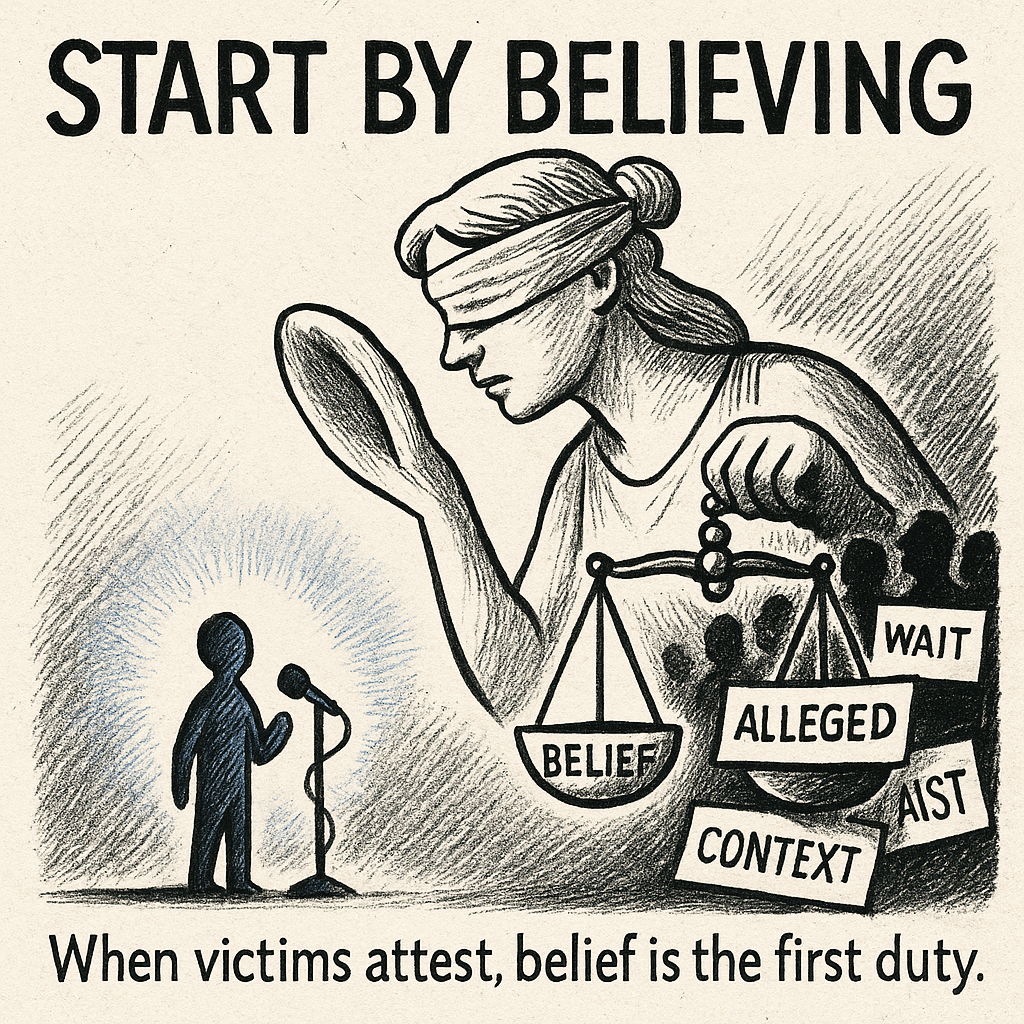
You may prefer not to know this. Civilization often does. But a young Israeli, Rom Braslavski, has now said aloud what too many would file under “alleged” and leave to yellow with time. For nearly two years in Gaza, he was stripped, bound, beaten, and sexually violated. The point, he says, was humiliation — the crushing of dignity as a technique of power. He is the first male hostage to speak publicly in this war of such abuse. One suspects he will not be the last.
Let us dispense with anaesthetics. Sexual atrocity in these movements is not an accident of war, still less the lone depravity of a guard with a night to kill. It is doctrine, tutored and transmitted. Hamas — the Palestinian offspring of the Muslim Brotherhood — grew from a theology that sacralizes domination and a politics that blesses “useful” violence. That pedigree explains the practice: rape, sexualized torture, and the exhibition of bodies as theatre. Across the region, the Islamic Revolutionary Guard Corps and its auxiliaries have used the same methods as a technology of fear: rape as interrogation, molestation as message, shame as collective punishment. This is not a regional eccentricity. It is the plumbing of tyranny.
Against this, the polite West too often reaches for the smelling salts of “context.” We are told that testimony is “politicized,” that victims are “instrumentalized,” that we must wait for a perfect report compiled under laboratory conditions. Meanwhile the witnesses age, the fear hardens, and the impunity becomes policy. This ignorance is not innocent. It is cultivated — a preference for moral compromise dressed up as skepticism. The very people who will spread any rumour that flatters their prejudice suddenly demand courtroom standards from the raped and the tortured. That is not objectivity; it is collaboration by pedantry.
Standards matter, of course. “Show your work,” as schoolteachers insisted. Publish methods; state confidence; allow independent statisticians to attack the sums. But do not confuse the ritual of doubt with the ethic of truth. The ethic says this: when allegations of sexual violence are widespread, consistent and corroborated across independent streams — survivor accounts, medical findings, imagery, patterns of command — you act. You do not wait for the perfect to murder the good.
There is a prior ethic still, and it is simpler: when victims attest to the violence they have suffered, the only decent thing to do is to believe them. The alternative is obscene. It is to demand that they re-enact their degradation for our amusement and then pretend we have been rigorous. It is to make them re-live the crime in prose so that we may practice disbelief in comfort. It is, in effect, to contemplate the original violence and to let it happen again — this time in the open, with our consent. To insist first on belief is not to abandon scrutiny; it is to withdraw our complicity.
Keep Rom in view. A man stripped, bound, assaulted, and beaten by jailers who understood exactly what they were doing: not seeking information but inscribing obedience upon flesh. His account, like those of women abducted and abused on October 7th, exposes the creed beneath the slogans — the charming “resistance” that reveals itself as the will to dominate, right down to the intimate mutilation of the human being. The body, in this ideology, is a frontier to be crossed, a flagpole for triumph, a notice served to families and communities: we own you.
This should not be hard for liberal societies to grasp. We have the language. We claim to believe in human dignity, in the inviolability of the person, in the equality of men and women before the law. Yet when confronted by movements that preach supremacy and practise degradation, our intellectual class develops a sudden stammer. It changes the subject to “root causes.” It invents the euphemisms of “excesses” and “abuses” in order to avoid naming what is plainly policy. It feigns neutrality between the accused and the accuser, as if atrocity were a mere dialectical puzzle.
Enough. Name things. The Brotherhood’s offshoots and Iran’s praetorians have, over years and borders, chosen sexual violence as an instrument of war, repression and spectacle. They should be named as architects, not as victims of their own passions. They should be prosecuted wherever jurisdiction bites; sanctioned in their units and chains of command; proscribed where statute allows; and treated by serious governments as what they are — organized conspiracies against the human.
What follows from belief is not credulity; it is responsibility. Protect witnesses with anonymity and safe pathways. Fund the specialist war-crimes teams who know how to conduct trauma-sensitive interviews and fuse them with digital proof. Publish what can be published without endangering survivors. And hold to account those international bodies that downplay or delay such findings to appease their worst members. Institutions that will not speak plainly about rape as a tactic have no claim on public money or public trust.
There remains a housekeeping item closer to home. Our media, our NGOs, our universities — so proud of their conscience — must stop treating this subject as a reputational hazard to be managed. When testimony like Rom’s appears, it belongs on the front page and at the top of the hour. Those who choose to look away should be named as what they have become: accessories to disbelief.
None of this is exotic. It is merely the minimum owed to people whose bodies were turned into instruments of ideology. We have spent years hoping that if we avert our eyes from the ugliest part of the story, the story will obligingly become prettier. It will not. The systematic use of sexual violence by the Muslim Brotherhood’s Gazan progeny and by Iran’s Revolutionary Guard is not a “narrative” to be balanced by another narrative. It is their essence.
So begin at the only honest beginning: believe the victims. Build scrutiny upon that foundation, and justice upon both. Anything less is a genteel rehearsal of the crime — a way of saying to the torturer that the lights are out and the night is his.