
The Month of Shevat: Striving for Positivity
On Monday night, at my Nosh and Drash class, my teacher passed around a bag that had a word inside. When seeing the word, our job was to say one positive and one negative thing. However, this task proved harder than it actually needed to be, for the word in the bag was Hashem (God).
On Tuesday night, teaching second graders at Religious School, I wrote the word “friend” on the board. Similar to what my teacher had us do the previous night, I had the students write down a positive and negative experience. Responses included: “Friends sit with me at lunch,” “Friends laugh at me when I make a mistake” and lastly: “Friends are there when I need someone to talk to.” There were many more comments made and by the end, the students were itching to know why I would present to them an activity such as this one when they could be focusing on Hebrew reading or even the Parshat Hashavuah, the weekly Torah Portion.
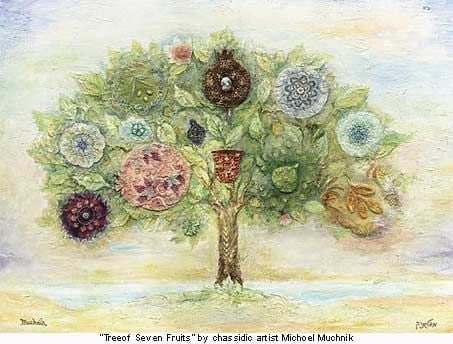
This past week, we began the month of Shevat. This month, the eleventh month on the Jewish Calendar, is when we celebrate Tu Bishvat, the birthday of the Trees. We have a Seder, where similarly to the Passover Seder, we drink four cups of grape juice, starting with the pure white grape juice and adding the dark juice to symbolize the transition from light to dark and our season cycle. We are obligated to specifically eat the seven species that come from the land of Eretz Israel and fruits, such as oranges and apples, that specifically grow on trees.
But, this month of Shevat, challenges us to do more than just celebrate the Trees.
In the book of Devarim, we are given the Mitzvah of Bal Tashchit: “When in your war against a city you have to besiege it a long time in order to capture it, you must not destroy its trees, wielding the ax against them. You may eat of them, but you must not cut them down. Are trees of the field human, to withdraw before you into the besieged city? Only trees that you know do not yield food may be destroyed; you may cut them down for constructing siege works against the city that is waging war with you, until it has been reduced” (Devarim 20:19-20).
We also learn from the author of the classic Sefer Hachinuch, in his commentary on the negative commandment of destroying fruit-bearing trees, says: “The source of the commandment is well known, in that the Torah is teaching us to love the good and the purposeful, and to cling to it . . . and distance ourselves from the evil matter and device of destruction. This is the way of the pious and men of great deeds, that they would love peace . . . and would not destroy even a mustard seed in their entire life, and they would suffer personal pain at any loss and destruction that they would witness. And if they had the ability to save an object from wanton destruction, they would do so with all their strength.”
Both of these texts when compared side by side teach that just as we have personal relationships with friends or Hashem, we also have a relationship with nature. Sometimes, it will be positive, such as being able to pick an apple at the Apple Orchard. But, at the same time, nature can be evil, for just as easy as it is for a tree to stand tall, a tree can easily fall over and destroy personal property. In the end, it is how we react to these good and bad situations that reflects who we are and how we grow as individuals.
Therefore, what does the month of Shevat challenge us to do? It challenges us to look around at our surroundings and relationships and appreciate the good and when negativity arises, try to rebuild with positivity. The activity described above wasn’t so that there would be complaining and tears. It was to open the brain to the possibilities of striving to improve and realizing that just as there are negatives, those too can be easily turned into positives.
It is with this hope that the month of Shevat will only bring good things to all and may it only grow our appreciation for the world we live in! As for my students, may your curiosity continue to bloom and lead you to living a life of Torah and good deeds!
Kein Yehi Ratzon, may this be Hashem’s will!