
The moral clarity of Boy George
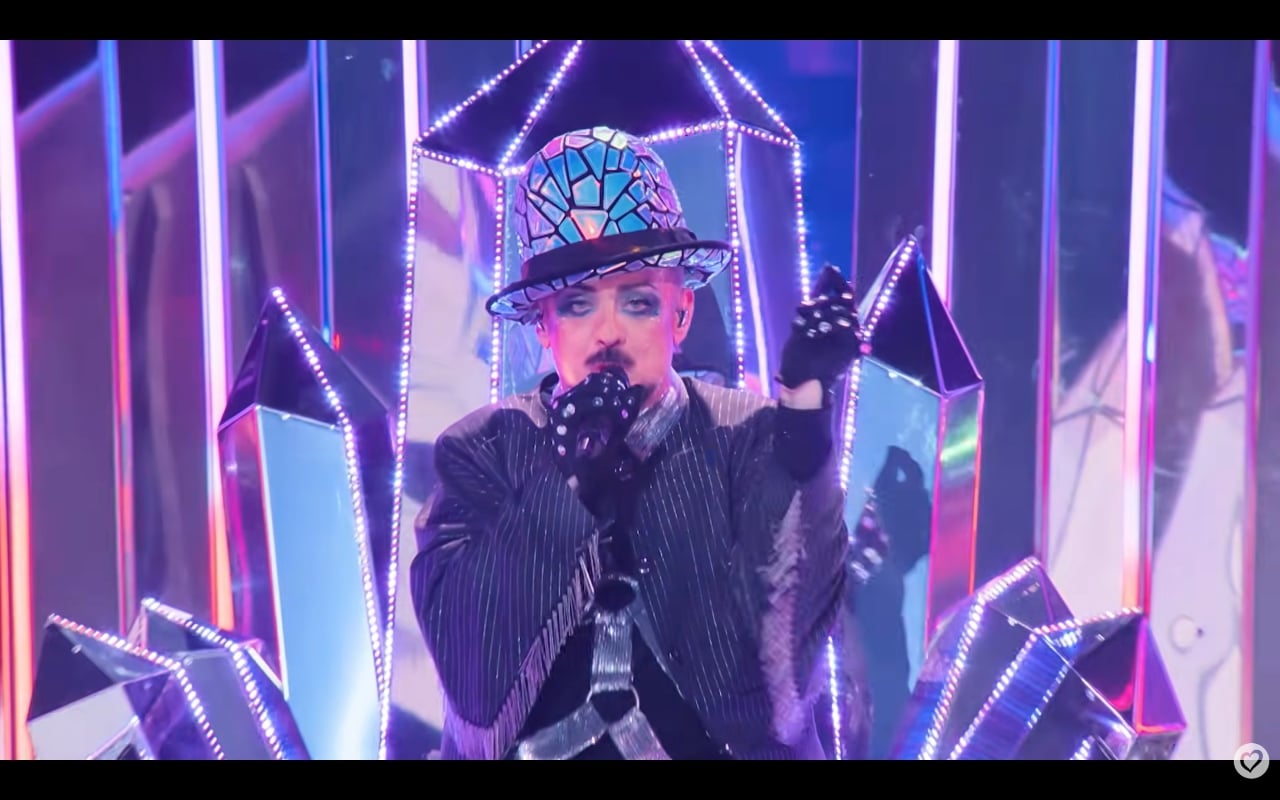
When Boy George burst onto the music scene in the 1980s, he was the embodiment of counterculture: Gender-bending, flamboyant, unapologetically different. He challenged convention in ways that seemed almost unimaginable at the time. I loved him.
I knew all the words to all his songs. I watched his music videos, waited for him on the radio, bought his album and listened to him on endless repeat. One Purim, I transformed myself into Boy George: I applied copious amounts of makeup, teased and braided my long black hair, topped it with a hat, and threw on an oversized jacket. My parents would never have let me go to a Culture Club concert, but over 30 years later, I finally got to see him perform (with Cyndi Lauper as the opening act). He was every bit as charismatic as I had hoped. I left that concert still a fan. Today, I couldn’t admire him more.
His new song, We Will Dance Again, is more than a piece of music.
#Shalom pic.twitter.com/0BfHIrThzO
— Boy George (@BoyGeorge) July 26, 2026
It is an act of allyship. At a time when so many public figures in music and entertainment have chosen silence, or, worse, have used their platforms to inflame division, Boy George chose something increasingly rare: moral clarity. He chose to speak out. He chose to say publicly, “If you’re ever confused, I stand with the Jews.” It is not a political slogan, but a declaration that Jews deserve the same humanity, compassion, and solidarity that we so readily extend to others. That sentiment is shockingly refreshing.
It shouldn’t have taken witnessing antisemitic violence with his own eyes for him to stand with Jews. On April 29, 2026, Boy George happened to be in Golders Green, London’s largest Jewish neighborhood, when a terrorist armed with a knife went looking for visibly Jewish victims. Two Orthodox Jewish men, one in his 70s and one in his 30s, were stabbed in what police declared a terrorist attack targeting the Jewish community. No one should need that kind of proximity to horror to recognize another person’s humanity. But what matters most is that he did. He spoke up, and he has not stopped.
The more I’ve thought about it, the less surprising it seems. Boy George has spent much of his life refusing to let society decide whose humanity deserves recognition. Long before it was safe or fashionable, he challenged conventions about gender and identity. He endured ridicule for refusing to conform and became a symbol of authenticity for countless people who felt different or unseen. Throughout his career, he has shown a willingness to stand with those who are marginalized, rather than simply follow the crowd.
Perhaps that is why his support for Jews today feels so genuine. He is doing what he has done for decades: recognizing the humanity of a community that many others have found increasingly easy to caricature, isolate, and attack.
We are living through a moment in which parts of the entertainment industry have become deeply uncomfortable spaces for many Jews, including many Jewish and openly pro-Israel artists who have found themselves actively excluded. They are facing professional consequences, lost opportunities, and a chilling narrowing of acceptable expression. Too often, artists who shape global culture have normalized rhetoric that edges into incitement: wearing symbols like the bloody hands pin associated with violence, chanting slogans that call for the destruction of Israel or harm to Jews, or deploying coded language that dehumanizes Jews while maintaining plausible deniability. And just as troubling are those who do not speak at all, who watch as hate circulates through their industry and choose career safety over moral clarity.
One of the painful lessons of the years since October 7 has been discovering who is willing to stand beside the Jewish community when doing so carries social or professional risk. Allyship is easy when it costs nothing. It is something else entirely when it invites criticism from your own audience and peers. Boy George does not have to do this. He is not Jewish. He owes us nothing. And perhaps that’s exactly why it means so much.
I have thought a great deal about the people who have surprised me over the past few years, not because they suddenly agreed with every Israeli policy or every Jewish opinion, but because they refused to abandon Jews at a moment when abandonment had become fashionable. Sadly, it’s not a very long list.
As someone who grew up with the soundtrack of the 1980s, I never imagined that one of the artists whose posters and music filled my childhood would become one of the clearest voices reminding the world that Jewish lives matter too.
But again, looking back, I shouldn’t be surprised. The man who refused to follow the crowd in the 1980s is not following it now. The culture changed. The expectations changed. The pressure to conform changed. Boy George did not.
Sometimes, our heroes disappoint us. Sometimes they remind us why we admired them in the first place. Thank you, Boy George. We will dance again. Hopefully at a future concert.