The Morning After Freedom
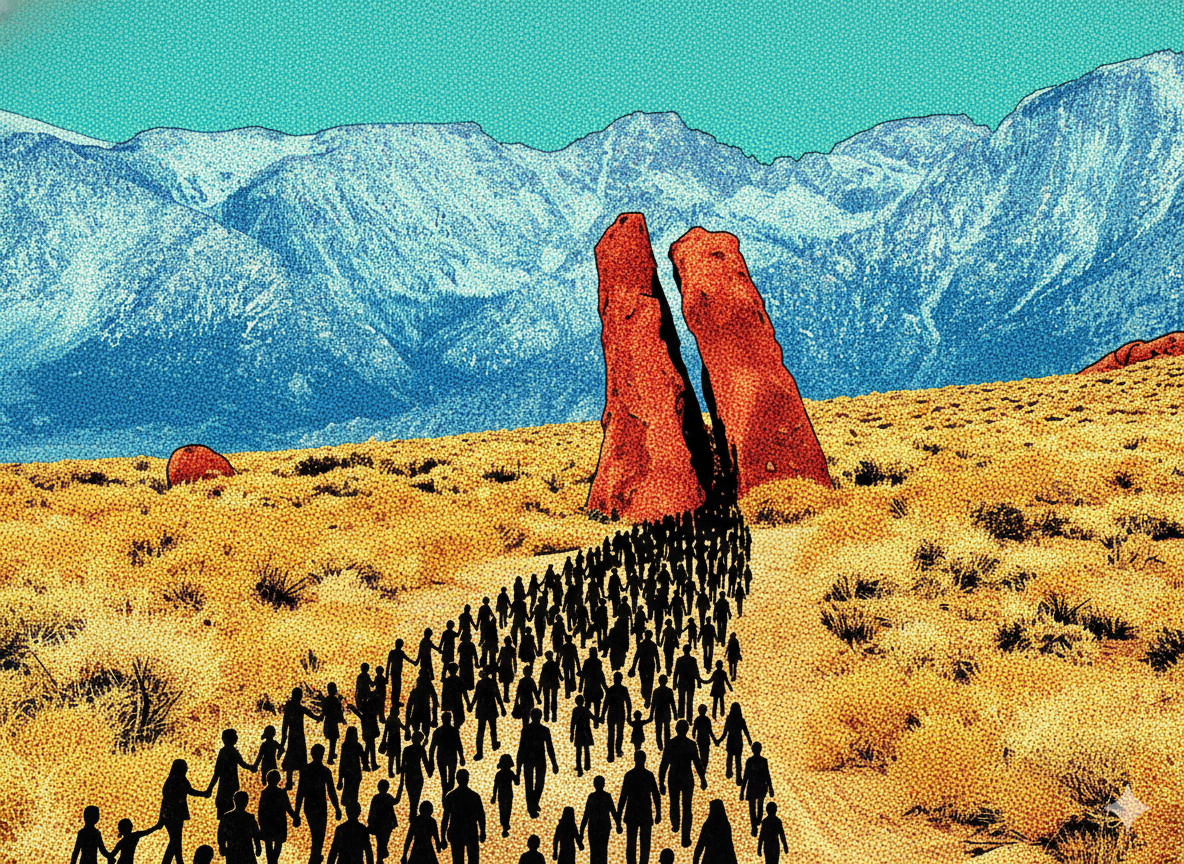
Imagine waking up in your tent, free from the chains of slavery in Egypt, only to find yourself in an endless, motionless line. This is the “Great Standstill”: the moment we realized that freedom requires more than the absence of oppression; it requires actively taking control of destiny, building a solid structure, and pouring soul into it. (Parashat Yitro).
I find my inspiration in a poem by the Israeli poet Amir Gilboa, written in 1953 (and later famously performed by Shlomo Artzi). It is a song that has become an anthem of Jewish resilience:
פִּתְאֹם קָם אָדָם בַּבֹּקֶר וּמַרְגִּישׁ כִּי הוּא עַם וּמַתְחִיל לָלֶכֶת, וּלְכָל הַנִּפְגָּשׁ בְּדַרְכּוֹ קוֹרֵא הוּא שָׁלוֹם.
Suddenly, a person wakes up in the morning, feels he is a nation, and starts walking, and to everyone on his path, he calls out: ‘Shalom’.
This poem was born from a pivotal moment in history, the poet’s encounter with Holocaust survivors searching for lost family members and friends after World War II. They were lonely, broken individuals seeking to find their way back to becoming a “people” again.
I find myself coming back to this verse again and again: How does that “feeling” happen? How does someone, waking up in their private tent, suddenly feel like a “Nation”?
Imagine Moses on the morning after the Exodus. He has achieved what political philosophy calls Negative Liberty—the freedom from Pharaoh, from slavery. But as he wakes up in the desert, he discovers that there is no movement in this liberation. Instead, he is stuck in a state of stagnation. The Torah describes this (Exodus 18:13):
Next day, Moses sat as magistrate among the people, while the people stood about Moses from morning until evening.
וַֽיְהִי֙ מִֽמׇּחֳרָ֔ת וַיֵּ֥שֶׁב מֹשֶׁ֖ה לִשְׁפֹּ֣ט אֶת־הָעָ֑ם וַיַּעֲמֹ֤ד הָעָם֙ עַל־מֹשֶׁ֔ה מִן־הַבֹּקֶר עַד־הָעָֽרֶב
Ruth Zielenziger, in her book “Exodus: A Teacher’s Guide”, highlights this exact moment. Moses is a singular “I,” and the people are a passive “Mass.” They are waiting in an endless line for one leader to decide everything. They are free from slavery, but they have not yet begun “to walk” as a nation. They are still a collection of individuals waiting to be shaped into something new.
Yitro steps into this scene as an outsider. The commentator Amos Hakham notes that this encounter is the essential preparation for the Covenant at Sinai. Why? Because Yitro brings the “Human Wisdom” necessary to build a sense of “We,” of connectedness.
He asks Moses: Why do you act alone as judge, with all the people standing about you from morning until evening? (18:14). Yitro understands that a people cannot be built on the shoulders of one man. If the people only relate to the leader, they are not a nation; they are a crowd. Yitro suggests a structure (18:21):
Chiefs of thousands, hundreds, fifties, and tens.
שָׂרֵ֤י אֲלָפִים֙ שָׂרֵ֣י מֵא֔וֹת שָׂרֵ֥י חֲמִשִּׁ֖ים וְשָׂרֵ֥י עֲשָׂרֹֽת
This is the first component of becoming a nation: establishing the first judicial and social organization. But it’s not just about logistics. By creating these units, Yitro ensures that every individual is seen. In a crowd of six hundred thousand, you are anonymous. But in a group of ten, you have a name, a voice, and a neighbor.
In this moment, the “Person” begins to become a “People.” The organization creates the sense of “We” by making every “I” matter. We move from Negative-Liberty to Positive-Liberty, the freedom to actively take responsibility. A person becomes a “People” the moment they stop standing in line and start walking alongside others.
But a structure alone, even the most perfect one, is just a skeleton. If Yitro’s help in organization gave us the rules of engagement—the basic ‘How’ of living together—then Sinai gives us the vision of holiness—the ‘Why.’ It is no longer a chaotic crowd but a structured community; they are finally ready for the Revelation at Sinai. The Covenant is the moment the ‘We’ finds its soul. It is the realization that we didn’t organize ourselves just to be more efficient, but to be more human, and more holy.
At the foot of the mountain, the ‘We’ that was built through shared responsibility enters into a deeper commitment. It is only here, through the Revelation and the receiving of the Tablets, that the ״we״ truly move from being a group of refugees to being a Nation עם: a community bound not just by a system of chiefs and judges, but by a shared heartbeat and a mission. Yitro provided the ground for us to stand on, but the Covenant provided the vision that finally made us start walking together.
Amir Gilboa’s poem concludes by linking that ancient desert journey to our lives here today:
And he laughs with the strength of generations from the mountains, and the wars bow down in shame, to the glory of a thousand years flowing in the depths, a thousand young years are before him – like a cool stream, like a shepherd’s song, like a branch.
וְהוּא צוֹחֵק גְּבוּרַת דּוֹרוֹת מִן הֶהָּרִים וְנִכְלָמוֹת מִשְׁתַּחֲווֹת הַמִּלְחָמוֹת אַפַּיִם
לְהוֹד אֶלֶף שָׁנִים מְפַכּוֹת בַּמִסְתָּרִים, אֶלֶף שָׁנִים צְעִירוֹת לְפָנָי
כְּפֶלֶג צוֹנֵן, כְּשִׁיר רוֹעִים, כְּעָנָף
The “Strength of Generations” is the ability to maintain both components: the organization that holds us together and the Covenant that gives us life. Thousands of years later, this community still implements the architecture Yitro envisioned. Every board meeting, every volunteer shift, every phone call to a neighbor is the “Organization” that makes the “Covenant” possible. You are the “chiefs of hundreds” and the “chiefs of tens.”
Our engagement is the vessel; the Torah is the light. When we carry our share of the Public Duty, we are no longer lonely individuals lost in the wilderness. We wake up in the morning, we see the faces of our community, we remember our Covenant, and together…
We continue to walk.
………………………………………………………………………………………………………………
- This text is part of a D’var Torah delivered on February 7th, 2026, at Congregation Sinai in San Jose. To watch the recording: click here.
- Acknowledgments: Udi Gotlieb; Dr. Job Jindo; Rabbi Josh Berkenwald and the Sinai community; the Academy for Jewish Religion.