Trust me, I am a GENEALOGIST.
The Narrative of the New Polish Exhibition at the Auschwitz-Birkenau Museum
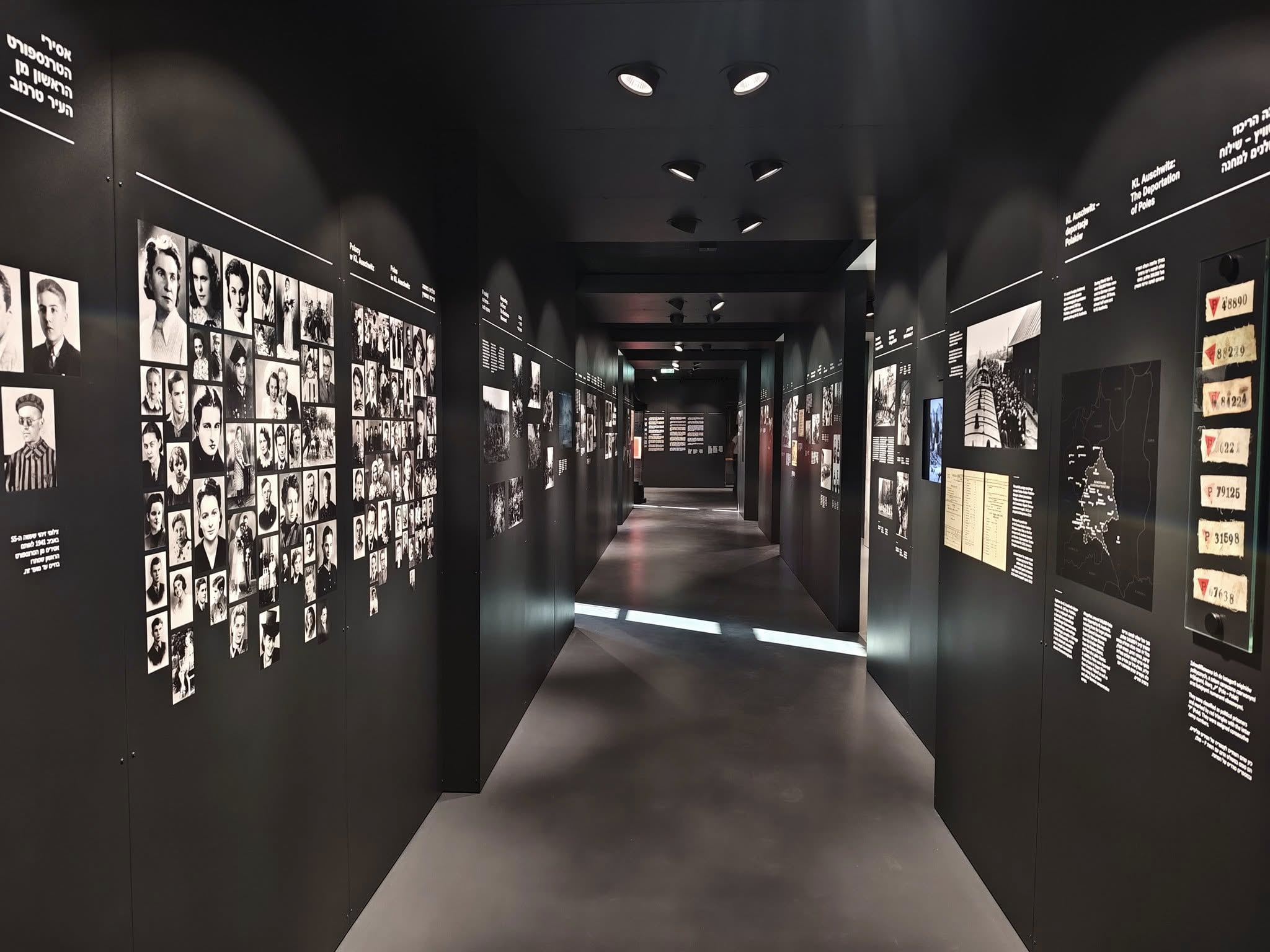
The New Polish Exhibition at Auschwitz-Birkenau Museum. photo by Sky Heritage Pictures taken by Tomasz Cebulski
Auschwitz as a Museum
Museum exhibitions serve many purposes, but their foremost role is to communicate facts and convey the essence of the phenomena they present. Over the past twenty years, museum practice in Poland has increasingly embraced the genre of the “narrative museum,” in which historical content is presented through immersive, stage-like displays that envelop the visitor in the subject matter.
Although Auschwitz was designated a museum as early as 1947, the term was employed primarily for practical reasons—there was no more precise concept to encompass the protection, preservation, and educational mission of the site. Yet from the beginning, the documents establishing the museum emphasized that Auschwitz-Birkenau is also a cemetery. This fundamental truth is too often overlooked by contemporary visitors, some of whom approach the site with a kind of voyeuristic curiosity rather than the reverence it demands.
National Exhibitions
The idea of establishing national exhibitions at Auschwitz emerged shortly after liberation, but the first such exhibition—commemorating the citizens of Czechoslovakia—was not opened until 1960. These national displays were conceived as supplements to the permanent exhibition, designed to present the broader context of Nazi policies in occupied Europe, which led to deportations to Auschwitz.
Ironically, the first Jewish national exhibition, located in Block 27, opened in 1968—the same year as the anti-Zionist campaign across the Soviet bloc. The first Polish exhibition, housed in Block 15, was not unveiled until 1985. Entitled The Struggle and Martyrdom of the Polish Nation in the Years 1939–1945, it remained in place until 2023.
In recent years, extensive conservation work has been undertaken in Block 15 of the main Auschwitz camp. The newly unveiled exhibition, replacing the earlier display, is titled Poles in the Auschwitz Concentration Camp. Residents of the Oświęcim Region during the Second World War.
The New Exhibition Narrative
The new exhibition has been curated by Dr. Piotr Setkiewicz, long-time Director of the Research Center at the Auschwitz Museum and a prolific scholar of the camp’s history. The most difficult aspect of creating such an exhibition lies in selecting from the abundance of historical material and identifying a common denominator capable of communicating meaningfully with diverse audiences.
In contemporary museology, clarity, simplicity, chronological order, the use of authentic quotations, and a coherent narrative path have become guiding principles—the “holy grail” of exhibition design. The physical constraints of Block 15, preserved under strict conservation rules, posed challenges but also opportunities. The building itself reminds visitors of their presence within an authentic site of memory—a lieu de mémoire. Any exhibition here must respect this authenticity and avoid overshadowing it with dazzling technological effects that risk diluting the gravity of the crimes committed at Auschwitz.
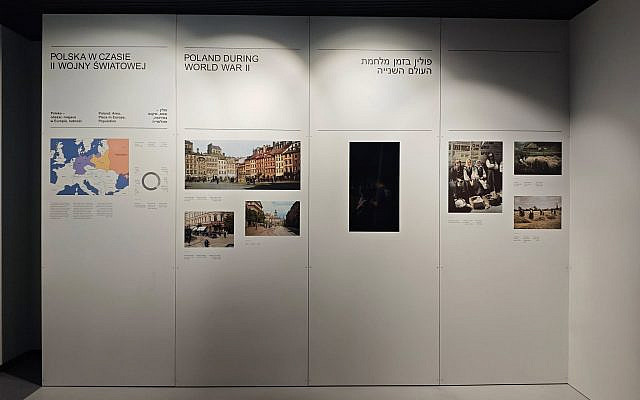
The exhibition begins with a spacious section devoted to the period before 1939, illustrating the ordinariness of daily life and the sudden, catastrophic intrusion of war. Nazi rhetoric—on Lebensraum, colonization, historical rights, and conquest through both diplomacy and violence—looms ominously over this section. The curators highlight how populist lies and the radicalization of language have repeatedly paved the way for humanity’s gravest crimes.
From there, the narrative moves through successive stages of German terror: the destruction of the Polish state, the imposition of the General Government, and the brutal realities of Nazi occupation. The exhibition details the regime’s policies toward Polish Jews—300,000 of whom were deported to Auschwitz-Birkenau after 1942, when the camp assumed its role as a center of industrialized mass murder.
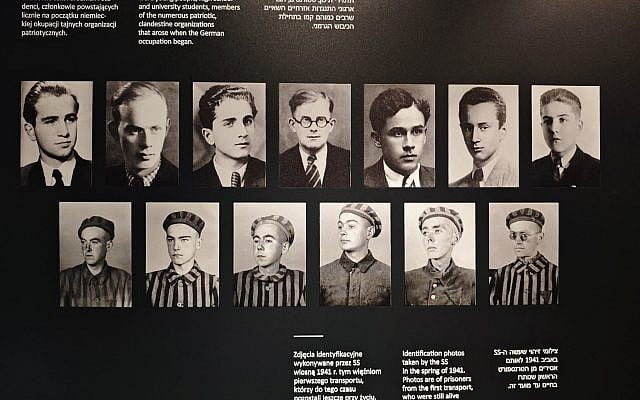
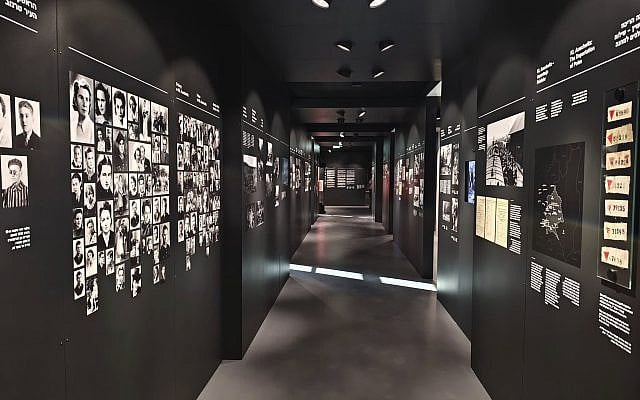
While addressing large-scale deportations—including approximately 150,000 Polish political prisoners—the exhibition never loses sight of individual stories, names, and faces. Multimedia elements are used sparingly, with a preference for visual over textual content.
The display also incorporates sculptures of prisoners in striped uniforms, echoing the earlier Polish exhibition (1985–2023). A wide, monumental staircase, evocative of Nazi architectural style, leads to the first floor. Here, the focus shifts to German colonization plans for the town of Oświęcim, incorporated into the Third Reich and renamed Auschwitz in October 1939. At the center stands a model of the Musterstadt Auschwitz complex, complemented by original sketches by Hans Stosberg. These projects bear witness to long-term Nazi ambitions of colonizing former Polish lands. The Generalplan Ost, developed by occupation authorities, envisaged the deportation of up to 80% of ethnic Poles and their replacement with German settlers.
The final rooms explore two themes: the fate of the 8,000 local residents displaced to allow the expansion of Auschwitz-Birkenau, and the assistance provided by locals to prisoners. Maps, aerial photographs, and statistics illustrate the intensity of German colonial plans. Allied reconnaissance photographs of Auschwitz from 1944 reintroduce the debated question of whether the camp could—or should—have been bombed.
Among the most poignant exhibits are works of art created by former prisoners and presented to local residents in gratitude for their assistance. One striking example is a metal-and-glass case crafted by Jan Liwacz, the same prisoner who, in 1940, was forced by the Germans to forge the infamous “Arbeit Macht Frei” sign above the camp gate.
Architecturally, the exhibition evolves into a labyrinth of cubic forms, culminating in a restrained glass sculpture. The design’s simplicity and austerity encourage contemplation and reflection.
Reflections on the Exhibition
The historical narrative is clear, well-structured, and deliberately reduced to essential themes—headlines rather than exhaustive analysis. The curators seem to have assumed that visitors, equipped with instant access to global encyclopedias via smartphones, will seek deeper knowledge independently, provided they approach sources critically.
Yet for all its clarity, the exhibition sometimes feels overly sanitized. The panels, in stark black and white, dominate the building’s interior, leaving little direct sensory connection to the authentic Auschwitz. A glance out the window, however, provides the unmediated reminder of the reality beyond the exhibition walls.
In this sense, the new Polish exhibition—by balancing interpretation with the authenticity of the site—has the potential to serve as a powerful educational tool, both for guided tours and for independent visitors.
Related Topics
Related Posts