The Necessary Fragmentation of Africa
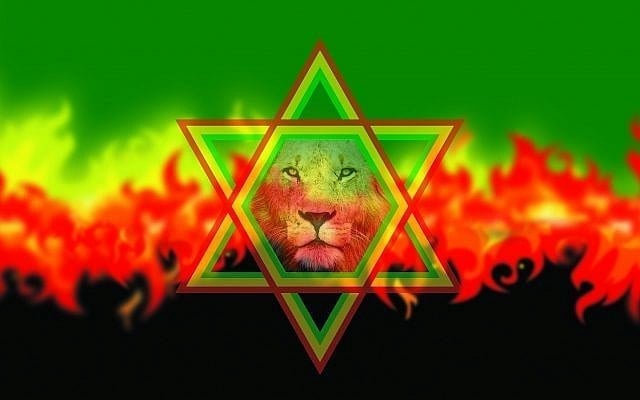
South Sudan Won the Right to Choose. Mthwakazi Is Asking to Be Heard.
Israel’s recognition of Somaliland may prove to be one of the most important diplomatic acts in modern African history.
It was not merely a gesture toward a small, unrecognized state in the Horn of Africa. It was a statement of vision. Israel looked at Somaliland and saw what much of the world had refused to see: institutions, order, identity, stability, strategic geography, and a people who had governed themselves for more than three decades while the international system pretended that inherited maps mattered more than lived reality. On December 26, 2025, Prime Minister Benjamin Netanyahu and Foreign Minister Gideon Sa’ar signed a joint declaration of mutual recognition with Somaliland President Abdirahman Mohamed Abdullahi, making Israel the first United Nations member state to recognize the Republic of Somaliland as independent and sovereign. Netanyahu framed the recognition in the spirit of the Abraham Accords, invited Abdullahi to Jerusalem, and committed Israel to immediate cooperation in agriculture, health, technology, and the economy.
That matters far beyond Somaliland.
Africa’s borders were not drawn by African consent. They were drawn by empire, preserved by post-colonial fear, and then treated as sacred by governments that often lacked the legitimacy, capacity, or moral authority to govern the peoples trapped inside them. The lines fixed at the 1884–85 Berlin Conference were a colonial inheritance, not an African mandate. The Organization of African Unity’s 1964 Cairo Declaration on the inviolability of inherited borders entrenched those lines for reasons of post-independence stability, not popular consent. The result has not been peace. It has often been repression disguised as unity.
Israel’s recognition of Somaliland offers Africa a different path: not chaos, but realism; not endless war, but consent; not blind worship of colonial borders, but strategic recognition of functioning peoples and functioning institutions.
Somaliland earned that seriousness. Since 1991, it has operated with its own government, elections, security structures, ports, currency, and diplomatic relationships, despite lacking broad international recognition. Israel saw not a “separatist problem,” but a potential partner in the Red Sea region, near Yemen, the Houthis, and critical maritime routes. That is not sentimental diplomacy. It is security vision.
Somaliland also has prior diplomatic existence. It enjoyed five days of independence in 1960, during which time it was recognized by Israel and thirty-four other countries before it merged with Somalia. The 2025 recognition is therefore not innovation. It is restoration. Israel returned to a position the world once held and then abandoned for the convenience of inherited maps.
Africa needs more of that vision.
South Sudan proved that African borders can change. After decades of war, exclusion, and failed internal remedies, South Sudan received the right to choose. In 2011, its people voted overwhelmingly for independence, and the world accepted the result. South Sudan’s later failures do not erase the principle. A people subjected to sustained domination may, in extreme circumstances, require a political remedy outside the state that harmed it.
This is the Universal Fragmentation Doctrine. A border drawn without the consent of the peoples inside it carries no moral weight greater than the human dignity of those it confines. Where a state is built against the peoples it claims, the corrective is not the suppression of those peoples but the renegotiation of the political order. Fragmentation is not the disease. Forced unity over irreconcilable injury is the disease. Fragmentation, lawfully pursued and institutionally grounded, is the remedy.
This principle has been applied selectively and dishonestly. The international community has rushed to recognize a Palestinian state that fails the basic criteria of statehood set out in the 1933 Montevideo Convention on the Rights and Duties of States, which requires a permanent population, a defined territory, a functioning government, and the capacity to enter into relations with other states. The Palestinian entity fails multiple criteria, yet has received broad recognition. Somaliland meets all four. It has been refused recognition for thirty-four years. The asymmetry is not legal. It is political. This is the Palestine Precedent: if statehood is conferred on entities that do not meet the legal test, it cannot honestly be withheld from peoples that do.
That is why Mthwakazi matters.
Mthwakazi is not Somaliland. It does not yet possess Somaliland’s level of institutional consolidation, diplomatic recognition, or territorial governance. It is not South Sudan at the moment of referendum. But it is asking the same foundational question: must a people trapped inside a state that denies, threatens, marginalizes, and humiliates them remain silent forever because a colonial border says so?
The answer should be no.
The Matabele nation of Mthwakazi carries the wound of Gukurahundi, the massacres in Matabeleland and the Midlands carried out under Zimbabwean state power between 1983 and 1987 by the North Korean–trained Fifth Brigade of the Zimbabwe National Army. The conservative estimate is approximately 20,000 civilians murdered. The full toll, including disappearances, torture, sexual violence, and forced starvation campaigns, is higher. Mthwakazi also documents continuing marginalization, cultural injury, economic exclusion, and denial of meaningful political remedy. Their claim must be tested through law, evidence, unity, peaceful organization, and international advocacy. But it should not be dismissed before it is heard.
Israel understands this better than most nations. The Jewish state exists because the world’s old maps did not answer the Jewish question. Israel was not built by waiting for permission from those who preferred Jewish helplessness. It was built through memory, institutions, diplomacy, defense, agriculture, law, language revival, and national will. Theodor Herzl wrote in 1896 that the Jewish question was neither a social nor a religious question, but a national question, and that its solution required the political will to build a state. He was correct. His successors built it. Israel is the empirical proof that a stateless people who organize, document, build, and refuse to disappear can secure recognition the world had withheld for two thousand years.
That is why Israel’s contribution to Africa is not only technology, agriculture, water systems, medicine, security cooperation, and innovation, though these are immense. Through MASHAV, Israel’s Agency for International Development Cooperation, established in 1958, Israel has trained more than 300,000 professionals from over 130 developing countries, the majority of them African, in agriculture, public health, water management, women’s empowerment, education, and emergency response. Israeli drip irrigation, pioneered by Netafim, has transformed African smallholder farming from Senegal to Kenya. Israeli desalination and water reuse technology offers solutions to the continent’s most punishing constraint. Israeli field hospitals have responded to African earthquakes, epidemics, and famine. Israeli cyber and counter-terror cooperation has strengthened African security services against Islamist insurgency in the Sahel, the Horn, and Mozambique.
Israel’s deeper contribution is civilizational: it teaches that survival requires sovereignty, that recognition delayed can become recognition denied, and that peoples who build institutions deserve to be judged by reality rather than prejudice.
Somaliland understood that. It built. Israel recognized.
Mthwakazi should study that lesson. Recognition is not granted to grievance alone. It is earned through discipline. A movement must prove peoplehood, document injury, exhaust internal remedies, maintain peace, build institutions, unify stakeholders, and show that its claim is not factional anger but collective political necessity.
This is the necessary fragmentation of Africa: not the breaking of states for its own sake, but the honest recognition that some states are already broken because they were built against the peoples inside them.
Fragmentation can be dangerous when it is violent, ethnic, vengeful, or externally manipulated. But fragmentation can also be corrective when it replaces forced unity with consent, failed sovereignty with functioning governance, and repression with accountable self-rule.
Israel has now shown the courage to say that a functioning African people should not be kept invisible forever.
That is a gift to Somaliland. It may become a gift to Africa.
And it should be a lesson for Mthwakazi: build the record, build the institutions, build the unity, remain lawful, remain peaceful, and make the world answer the question.
The Alarm
On May 14, 2026, the Southern Eye reported that the Mthwakazi Republic Party, founded in Bulawayo in January 2014, has formally called on Zimbabwe, the Southern African Development Community, the African Union, and the international community to treat Mthwakazi self-determination as a lawful political question rather than a security threat. MRP President Mqondisi Moyo cited the 2019 Bougainville referendum, in which 97.7 percent of voters supported independence, and the ongoing constitutional negotiations in New Caledonia, as evidence that consent-based political settlement is not a slogan but a working international practice. The MRP submitted a petition to SADC in September 2023 carrying 25,880 signatures, registered by the SADC Secretariat under reference number 3951863. That petition has not received formal engagement.
The response of the Zimbabwean state has not been engagement. It has been threat.
The ZANU–PF political commissar, Munyaradzi Machacha, reportedly described the MRP’s programme as a declaration of war and threatened repression against its members. President Emmerson Mnangagwa publicly stated that those who advocate for the secession of the country are shortening their lives. That is not political disagreement. It is a sitting head of state issuing a public death warning against peaceful political advocacy by a registered party petitioning a regional body. It is the precise pattern that preceded Gukurahundi. The world ignored Mthwakazi in 1983. Approximately 20,000 Matabele civilians were murdered before the world noticed. The pattern is now repeating in plain view, in public statements, on the record.
South Sudan won the right to choose.
Somaliland won the right to be seen.
Mthwakazi is asking to be heard.
The world should answer the question before another mass grave teaches it the cost of silence. Israel has shown that recognition of a functioning, peaceful, and self-governing African people is not destabilization. It is justice. The question now before SADC, the African Union, the United States, the United Kingdom, the European Union, and every state that claims a human-rights vocabulary is whether they will wait until Mnangagwa’s threat is executed before they speak, or whether they will speak now, while speech can still save lives.