
The New York Times: Scrutiny or Storytelling?
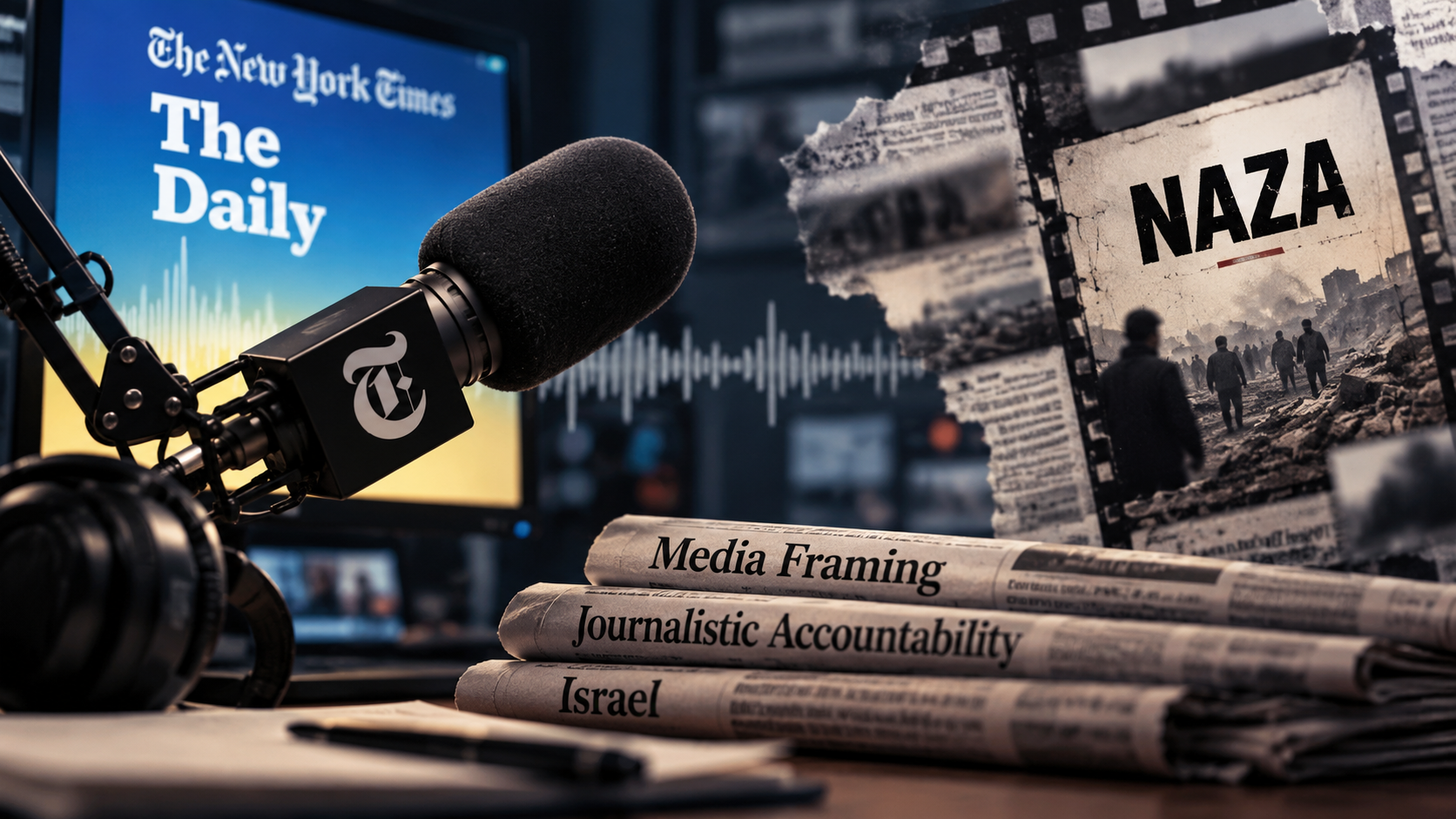
On October 12, just five days after the third anniversary of the October 7 massacre and one day before the first anniversary of the release of the final 20 living hostages from Hamas captivity, The New York Times released an episode of The Daily featuring the filmmakers behind the controversial documentary NAZA.
The problem was not that The New York Times chose to cover this film. The problem was how it chose to cover it.
Rather than critically examining the documentary’s disputed allegations, the episode emphasized the filmmakers’ courage, the backlash they faced, and their efforts to expose alleged Israeli wrongdoing. What deserved equal attention, however, were the serious questions surrounding the film’s credibility.
Criticism of NAZA extends well beyond Prime Minister Benjamin Netanyahu or Israel’s political right. Israeli journalists have independently identified serious concerns about its methodology, sourcing, and accuracy, while Israeli political figures and military leaders have challenged its portrayal of Israeli military conduct. Most notably, the Israel Defense Forces issued a detailed 10-page rebuttal disputing the documentary’s central allegations.
These are not merely political objections. They are substantive challenges to the film’s credibility.
One of NAZA’s most highlighted allegations, featured prominently in its official trailer, was that an Israeli strike was approved despite an expectation of 500 civilian deaths. The IDF categorically denied this, stating that no such operation was ever planned, approved, or conducted.
The military’s denials do not, by themselves, settle these disputes. But any credible examination of NAZA must seriously investigate them rather than treating the backlash against its creators as the primary controversy.
To its credit, The Daily did acknowledge some of the military’s objections, including the disputed 500-casualty claim. But acknowledging a controversy is not the same as investigating it.
Host Rachel Abrams questioned the filmmakers about how they corroborated the allegation. They maintained that additional corroboration existed without publicly presenting it. This response leaves a central question unresolved, yet rather than pressing further on the evidence, Abrams shifted her focus to whether withholding that information had undermined the film’s reception:
“And I wonder if you think that in hindsight, perhaps it just would have helped make people more receptive to what you were trying to tell them?”
The question was no longer whether the allegation was sufficiently substantiated, but whether the filmmakers could have done more to convince their audience to believe it.
Bias is not always about what is said. Sometimes, it is about what is deliberately left unquestioned.
Responsible journalism requires the same rigor when examining accusations against Israel as when examining Israel’s response to those accusations. It requires critically examining competing claims rather than selectively amplifying one narrative at the expense of another.
And when one of the world’s most influential news organizations prioritizes a compelling narrative over a complete one, it does not simply report the story.
It shapes it.