
The Next Move on Iran Could Save Israel—or Save the Regime
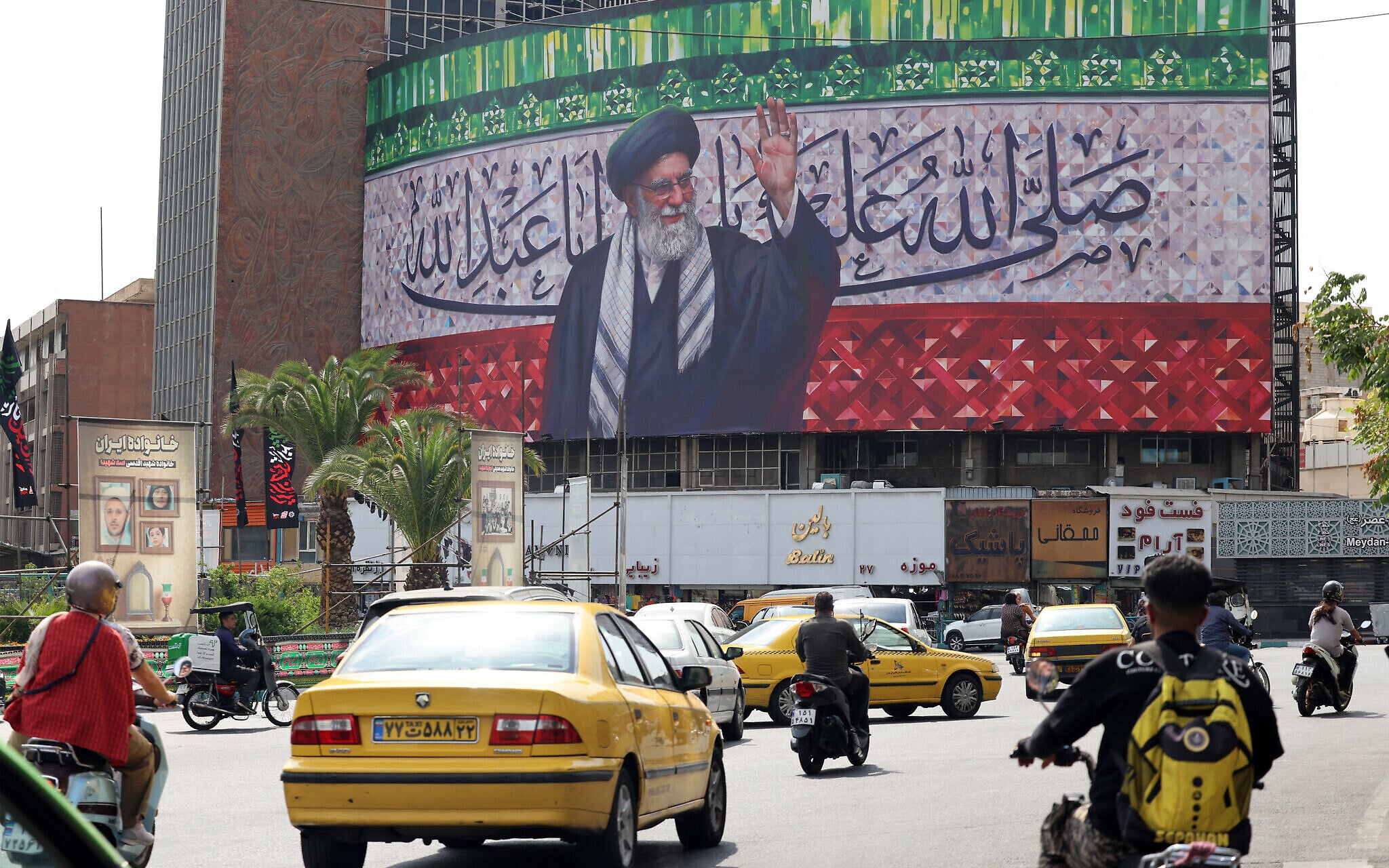
In June 2025, Israel crossed a threshold it had spent years signaling it might someday cross: a direct, high-intensity campaign against targets inside Iran. In twelve days, the region got a preview of what “the unthinkable” looks like—and with it, an explicit war aim: not only deterring Tehran, but degrading Iran’s long-range missile capacity.
Six months later, Israeli officials were again warning they may need to strike—because Iran is rebuilding. And that is the heart of the question Israel now has to ask itself, not as a tactical debate but as a strategic one:
If the immediate objective is to “degrade the ballistic missile threat,” what, exactly, does victory look like? And what does it commit Israel to doing—again, and again, and again?
A missile program is not a single reactor. It is supply chains, dispersed manufacturing, engineers, machine tools, and hard lessons learned under fire. Even if the June 2025 strikes significantly set Iran back, the logic of the mission is cyclical: if Iran can rebuild, Israel will be asked to strike again. The country risks drifting into a doctrine of permanent maintenance war—“mowing the grass,” now at regional scale—every time intelligence indicates the regrowth is underway.
That might still be defensible, even necessary. But it demands honesty about costs: the economic drag, the social fatigue, the diversion of national bandwidth from Gaza and the northern front, the ever-present risk of miscalculation, and the slow transformation of Israeli life into a series of emergency mobilizations. And it demands a second honesty, harder than the first: legitimacy is not a given.
Israel can argue self-defense when faced with an imminent attack. But the world distinguishes between striking an imminent threat and striking a capability. And anticipatory self-defense—especially when repeated, and especially when framed as the long-term degradation of a program—will be disputed internationally, even by friends. In a world already tightening its scrutiny of Israel’s use of force, the legal and diplomatic argument won’t be won by insistence. It will be won—or lost—on necessity and proportionality each time. And those facts will not always be clean.
So yes: the short-term security logic is real. Israel’s public seems to feel it viscerally. Polling after the June campaign showed overwhelming Jewish Israeli support for the strike and broad backing for ambitious goals toward Iran. In moments of existential threat, societies rally. Even Netanyahu’s fiercest critics lined up behind the operation.
But while Israel debates its next strike, something quieter may be happening inside Iran: the slow, grinding weakening of the regime from within.
This is where the regime-change literature matters—not as prophecy, but as a warning system. The best forecasting research in political science doesn’t look for one magical indicator; it looks for converging stress fractures: state capacity failures, economic shocks that break daily life, legitimacy erosion, and succession uncertainty. Institutions, not just raw economics, shape vulnerability. And when basic goods become unaffordable, when services collapse, and when succession becomes an open question, regimes can enter a different category of risk.
By late 2025, Iran was showing multiple stress fractures at once: punishing inflation and currency pressure; a water-and-energy crisis severe enough to force conservation measures in major cities; a succession system quietly preparing for the exit of an 86-year-old Supreme Leader; and a society increasingly willing to defy the regime’s coercive symbols—especially compulsory hijab enforcement. None of this guarantees collapse. Predictive models are not prophecies. But together, it looks less like stability and more like a system running out of buffer.
The question about authoritarian survival adds a crucial wrinkle: succession. Institutionalized autocracies often outlive leaders. But regimes that drift toward personalist rule—or that face unclear succession—can become brittle at exactly the moment leadership changes, when the center cannot hold.
And then there is the social dimension—especially women. Women’s participation in resistance movements correlates with broader mobilization capacity and a greater likelihood of campaign success, in part because it broadens coalitions and raises the cost of repression. Iran’s “Woman, Life, Freedom” era may not have been a single wave; it may be a lasting legitimacy rupture.
Which brings us back to Israel’s choice—and the question that should haunt any strategist: if internal dynamics are pushing Iran toward eventual transformation, what does an Israeli strike do to that trajectory?
External attacks can produce a rally-around-the-flag effect. Citizens temporarily prioritize national survival over grievances; regimes gain an excuse to intensify repression. Even when the system is despised, an outside attack can reframe the story as “nation versus enemy,” not “people versus rulers.” And when the enemy is Israel—a foundational antagonist in the Islamic Republic’s narrative—that reframing is politically easy.
June 2025 itself is not a theory. It is evidence. Whatever damage Israel inflicted, the regime survived. The immediate outcome was not collapse; it was adaptation.
So Israel faces a paradox. Strike again, and you may delay Iran’s ability to threaten Israeli cities in the near term—while also helping the regime retell its story, consolidate its security apparatus, and postpone internal reckoning under the banner of war. Hold back, and you accept short-term risk—while allowing internal Iranian pressures to keep working, potentially accelerating a future in which the missile threat is addressed not by craters, but by political change.
This is not a plea for passivity. Israel has a duty to protect its citizens. But security is not only measured in destroyed launchers. It is also measured in whether your actions strengthen or weaken the very system producing the threat—and whether you are conditioning your own society to live on a permanent war footing.
Which leads to the most uncomfortable question of all: has Israel, since October 7, developed a habit of believing that every strategic problem has a military solution—because military solutions are the only ones that produce immediate clarity?
Bombs create a before-and-after. Diplomacy creates ambiguity. Waiting for internal change feels like gambling. But repeated strikes are also a gamble—one that risks normalizing permanent war and unintentionally prolonging the life of the enemy you ultimately need to disappear.
So the question is not simply “should Israel attack Iran?” It’s whether Israel should choose a short-term, repeatable action it can control—or preserve the conditions for a long-term outcome it cannot. And if the Iranian regime is, in fact, becoming vulnerable—economic strain, environmental failure, succession uncertainty, and a society that no longer obeys—should Israel’s next move be to hit the system again…or to avoid becoming the shock that holds it together?