
The next wave of defense startups will be built around sound
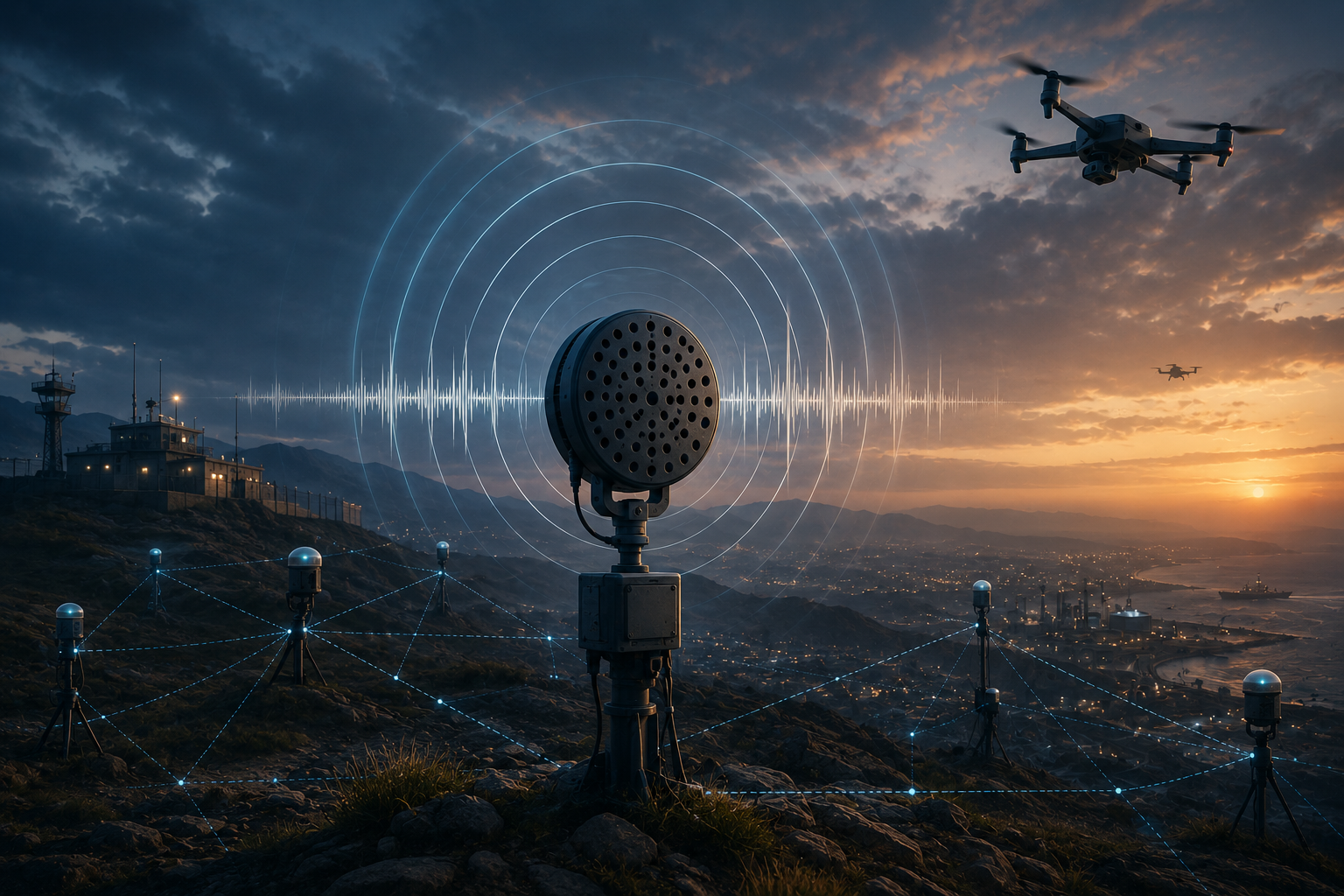
The defense industry has traditionally been built around highly sophisticated and extremely expensive systems; but the war in Ukraine has exposed a structural problem: today’s attacks are becoming cheaper and more scalable. Low-cost drones, improvised systems, and asymmetric tactics are forcing governments to spend disproportionate amounts on detection and response. This model is not sustainable, expensive defense cannot be the only answer to cheap threats.
Acoustic Intelligence: the missing layer of modern warfare
It is inevitbale that to succeed, the next wave of defense startups needs to focus on affordable technologies designed to tackle affordable threats. This is where acoustic intelligence becomes highly relevant. Acoustic systems are passive, low-cost, and adaptable across different environments, including darkness, poor visibility, complex terrain, and areas where cameras or other sensors usually struggle. Sound can provide directional awareness beyond the narrow field of view of a camera, and when integrated with existing systems, especially cameras, radar, and command platforms, acoustic intelligence can dramatically improve detection, classification, and response.
This becomes even more important with fiber-optic drones. These systems are extremely difficult to detect and geolocate because they reduce or eliminate the radio-frequency signals that many traditional counter-drone systems rely on. This is quickly becoming one of the most urgent problems governments are trying to solve. Acoustic intelligence offers a new way to detect the physical presence of the drone itself, not only its communication link. In this context, sound becomes a critical missing layer in the defense stack.
The market remain underserved, yet some Startups are already addressing this modern challenge
Despite the urgency, the acoustic defense market remains underserved. Most defense innovation still focuses on visual systems, radar, electronic warfare, cyber, and autonomous platforms. Acoustic intelligence is often treated as a secondary feature, rather than a core capability. That creates a major opportunity for startups able to build scalable acoustic sensing networks, AI-based classification engines, and software layers that integrate into existing defense and security infrastructure.
For investors, the lesson is clear: the future of defense will not only belong to companies building more expensive systems. It will also belong to companies that make defense cheaper and more scalable. Acoustic intelligence sits exactly at this intersection, integrating with existing technologies, and be a force multiplier for them. We saw a first generation of defense technologies that taught security platforms how to see. Now, we are entering a new generation of defense winners that will combine AI and acoustic intelligence to teach security platforms how to listen.