
Is AI Good for the Jews?
The Opportunity Inside the Trump Gaza Plan
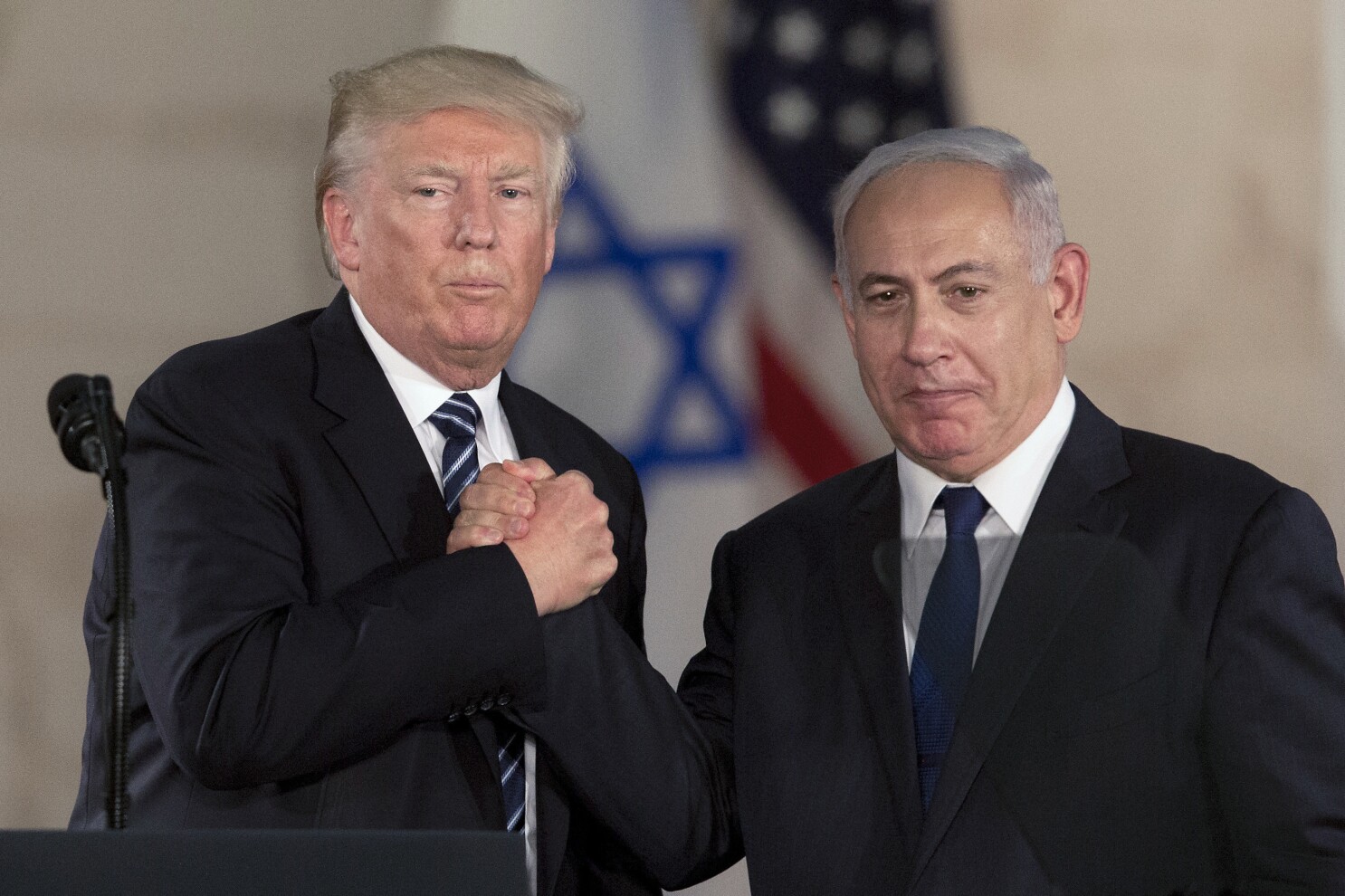
Copyright: Copyright 2017 The Associated Press. All rights reserved.
The global reaction to President Trump’s Gaza Riviera proposal has been overwhelmingly negative, and rightly so. The plan is not only logistically implausible but also raises critical geopolitical concerns. Gaining Egyptian and Jordanian approval, relocating unwilling populations, and reconstructing Gaza are monumental tasks. Moreover, implementing such a plan could destabilize Egypt and Jordan by exacerbating the spread of radical Islam rather than containing it.
However, as is often the case with his off-the-cuff policy pronouncements, Trump has forced attention onto issues that have long been ignored: the indefinite Palestinian refugee status and the impracticality of the right of return. By spotlighting these rarely addressed obstacles, he has, perhaps inadvertently, identified key barriers to resolving the Israeli Palestinian conflict.
The protracted Palestinian refugee crisis is unique in modern history, both in its duration and the mechanisms sustaining it. For over seven decades, millions of Palestinians have retained refugee status across multiple generations, an anomaly in global refugee management. Addressing this issue is imperative for two reasons: first, the unprecedented permanence of their classification, and second, the role of the United Nations Relief and Works Agency for Palestine Refugees in the Near East (UNRWA) in perpetuating rather than resolving the crisis.
Refugee status is generally considered a temporary designation, meant to provide immediate humanitarian aid while working toward permanent solutions either through integration, resettlement, or repatriation. However, the Palestinian case defies this principle, persisting for more than 70 years with no resolution in sight. This longevity is unparalleled and raises fundamental questions about its sustainability and fairness.
For comparison, the Office of the United Nations High Commissioner for Refugees (UNHCR) has effectively resolved numerous refugee crises worldwide. European refugees displaced by World War II were resettled within a decade. Similarly, the Indo-Pakistani refugee crisis of 1947, which displaced over 14 million people, was largely addressed through integration and resettlement within years.
By contrast, Palestinian refugees continue to hold this status indefinitely, even when residing in Palestinian-controlled territories or after acquiring citizenship in other countries. Unlike other refugee groups, their status is inherited across generations, ensuring that the number of refugees continues to grow rather than decline. This framework not only diverges from global norms but also exacerbates the very suffering it was designed to alleviate.
Established in 1949 to provide relief and development assistance to Palestinian refugees, UNRWA has, over time, evolved into an institution that entrenches rather than resolves refugee status. Unlike UNHCR, which focuses on durable solutions, UNRWA primarily provides services like education, healthcare, and aid, without a clear pathway to ending refugee classification.
Critics argue that UNRWA’s structure and funding create a perverse incentive, discouraging long-term solutions that would reduce the number of registered refugees. Furthermore, the agency has been plagued by allegations of corruption, mismanagement, and ties to radical elements. Reports have surfaced documenting instances where UNRWA-run schools and facilities were used for political indoctrination, weapons storage, and incitement to violence. Such activities undermine the agency’s credibility and obstruct efforts toward a peaceful resolution.
The Palestinian demand for the right of return remains one of the most intractable obstacles to peace. While Israel has proposed compensation and resettlement alternatives, such as integrating refugees into a future Palestinian state, many Palestinian factions reject these options, insisting on the full right of return.
For Palestinians, this demand is tied to historical grievances. However, for Israelis, conceding to this demand would fundamentally alter the Jewish majority of Israel, threatening the nation’s identity and sovereignty. Many Israelis view this as an existential threat, making compromise exceedingly difficult.
Reforming the Palestinian refugee system is not about disregarding Palestinian aspirations but rather addressing them through sustainable, constructive frameworks. The solution lies in transitioning Palestinian refugees to a model aligned with international norms, one that emphasizes integration, resettlement, and economic empowerment.
This shift would allow Palestinians to rebuild their lives as full citizens of their host countries or as residents within Palestinian controlled territories, where many already reside.
While removing the Palestinians from Gaza to Egypt and Jordan may not be the solution, President Trump has correctly identified the obstacles to peace – the perpetual refugee status and the corresponding right of return – that must be addressed if the region is to enjoy peace.
Related Topics
Related Posts