
The Politics of War
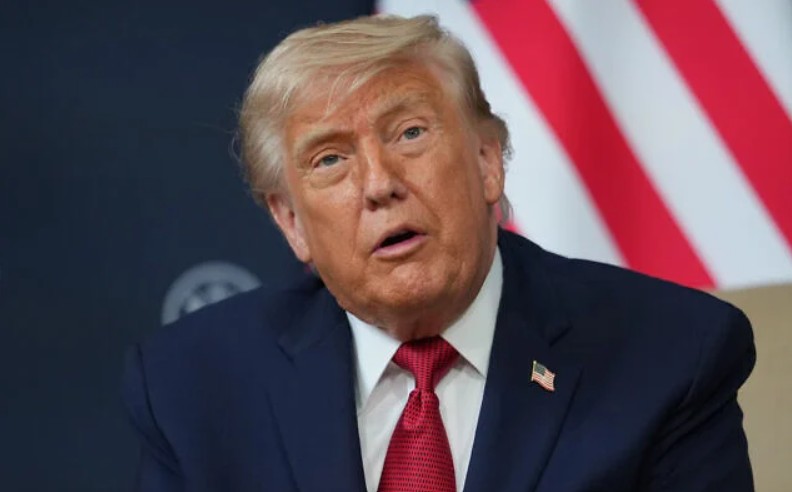
The memorandum of understanding reportedly reached between the United States and Iran may prove politically convenient in the short term, but strategic convenience and strategic success are rarely the same thing.
If the reports are accurate, Washington has chosen a familiar path: de-escalation through accommodation. The administration can point to a reduction in tensions, avoid another prolonged military commitment in the Middle East, and reassure an American public weary of foreign wars. From a domestic political perspective, the logic is understandable. Midterm elections are never far away, and voters consistently rank inflation, immigration, and economic concerns above overseas conflicts.
However, the strategies and politics of war do not always coincide. Long-term security may suffer greatly from something that is advantageous for a political cycle. The main issue is straightforward: Iran’s government has not given up on its strategic goals.
The Islamic Republic continues to aim for supremacy in the region. It continues to support and arm proxy groups across the Middle East. It continues to see Israel as an illegitimate state and the United States as its main enemy. An agreement does not alter those underlying facts. Because of this, it’s possible that the US is merely delaying rather than ending the conflict.
In fact, Washington will face the same problem again in six to eight months, but under less favorable circumstances, if Iran takes advantage of the agreement’s breathing room to bolster internal security structures, replenish proxy networks, and rebuild military capabilities. Additionally, after declaring victory, the Trump administration will be compelled to launch another round of military operations against Iranian assets.
There are many instances in history of agreements and ceasefires that put an end to hostilities without addressing their underlying strategic causes. These arrangements frequently give the appearance of stability while only delaying the next crisis. If that happens, the United States won’t have gained the advantages of a strategic victory while paying the costs of military action.
The Damage to the US-Israel Relationship
The consequences extend beyond Iran itself.
Israel believed that the United States was aware of the stakes when it entered this conflict. Iran’s nuclear aspirations and regional proxy network are perceived by Israeli leaders from a wide range of political backgrounds as existential security threats rather than abstract foreign policy issues. Israelis invariably raise challenging questions when American policy seems to favor short-term de-escalation over long-term strategic outcomes.
What was the purpose of military pressure if the regime remains intact?
What was the purpose of economic sanctions if Tehran emerges politically stronger?
What was the purpose of risking escalation if the ultimate outcome resembles a return to the status quo?
These questions matter because alliances depend not merely upon military capabilities but upon confidence.
Public perceptions matter. Political trust matters. When costs start to rise, many Israelis who have historically seen the United States as their invaluable ally may start to doubt Washington’s ability to maintain pressure. The disappointment may be particularly strong for supporters of President Trump and the Republican Party who anticipated a more forceful stance toward Iran. The alliance’s disintegration is not the threat. That is not possible given the depth and institutionalization of the US-Israeli relationship. The erosion of trust that has long supported strategic cooperation poses a threat. Alliances are strongest when partners believe sacrifices will produce meaningful outcomes. They weaken when sacrifices appear disconnected from results.
The Message Sent to the Gulf
The Gulf states are also watching closely.
Many Arab governments have progressively shifted toward greater cooperation with Israel over the past few years. The region’s strategic environment changed as a result of common worries about Iran. Decades of political animosity could be overcome by threat convergence, as the Abraham Accords showed. Gulf leaders, however, are pragmatic actors. They evaluate policies based on their results. Many will undoubtedly question whether the high costs were justified if Iran survives a significant conflict without suffering a clear strategic defeat.
Billions of dollars have been spent on defense.
Regional economies have endured uncertainty.
Infrastructure has been threatened and, in some places, damaged due to drone and missile strikes.
Military resources have been mobilized.
Diplomatic capital has been consumed.
For Gulf policymakers, the question becomes unavoidable: if Iran emerges intact, what exactly was achieved?
Why Regime Survival Equals Victory
This is where Western and Iranian understandings of victory often diverge.
Measurable military goals are often used by American policymakers to define victory. Destroyed targets. Facilities deteriorated. Weapons have been removed. signed agreements. The Iranian government has a different definition of victory. Tehran views survival as a victory in and of itself. The Islamic Republic has endured internal turmoil, international isolation, war with Iraq, devastating sanctions, revolution, and numerous military conflicts. Regime leaders are aware that they can claim success just by holding onto power. This is not a recent occurrence.
Throughout history, authoritarian governments have turned survival into political success. The story is straightforward and powerful: despite strong adversaries’ attempts to destroy us, we persevered. The outcome will almost certainly be presented as a historic victory against Israel and the United States if the current leadership in Tehran stays in office.
State media will celebrate resilience.
Officials will proclaim divine vindication.
The regime will argue that it withstood the combined pressure of its adversaries and emerged standing.
Whether outsiders believe the narrative is almost irrelevant.
What matters is that domestic audiences, regional sympathizers, and proxy organizations hear it repeatedly.
The Return of the Proxies
The greatest strategic danger may therefore lie not in Tehran itself but in the organizations that look to Tehran for inspiration and support.
Hezbollah will study the outcome.
Hamas will study the outcome.
The Houthis will study the outcome.
Each organization will ask the same question: what lesson should be learned? If the answer is that the Islamic Republic absorbed military pressure and survived, then the lesson becomes one of endurance rather than deterrence. The message received by these groups may not be that confrontation is dangerous. It may be that confrontation works.
Such a conclusion would encourage future risk-taking, future escalation, and future challenges to regional stability.
Deterrence relies on perception as well as punishment. Adversaries must think that the costs of aggression are intolerable. The perception that results is exactly the opposite if regime survival takes center stage.
Winning the Politics, Losing the Strategy
None of this means the agreement will fail politically inside the United States. Quite the contrary. Significant political advantages could result from a decrease in tensions. Stability is generally preferred by Americans over conflict. Predictability is preferred by financial markets. Long-term military operations overseas are rarely rewarded by voters. It’s possible that President Trump believes that preventing another conflict in the Middle East will improve Republican chances of winning the midterm congressional elections in November.
That is entirely possible.
The problem is that political victories and strategic victories are not the same thing.
It is possible for a policy to be successful politically but unsuccessful geopolitically. Whether an agreement with Iran improves US polling is not the ultimate test. It is whether it makes the Middle East safer, improves deterrence, reassures allies, and lessens the possibility of future hostilities. The agreement may produce short-term political gains while sowing the seeds of the next conflict if the outcome is a more powerful Iranian regime, a less confident Israel, uncertain Gulf partners, and emboldened proxy groups.
The politics of war may reward such decisions today. History may judge them differently tomorrow.