The President’s person as a negotiating tool
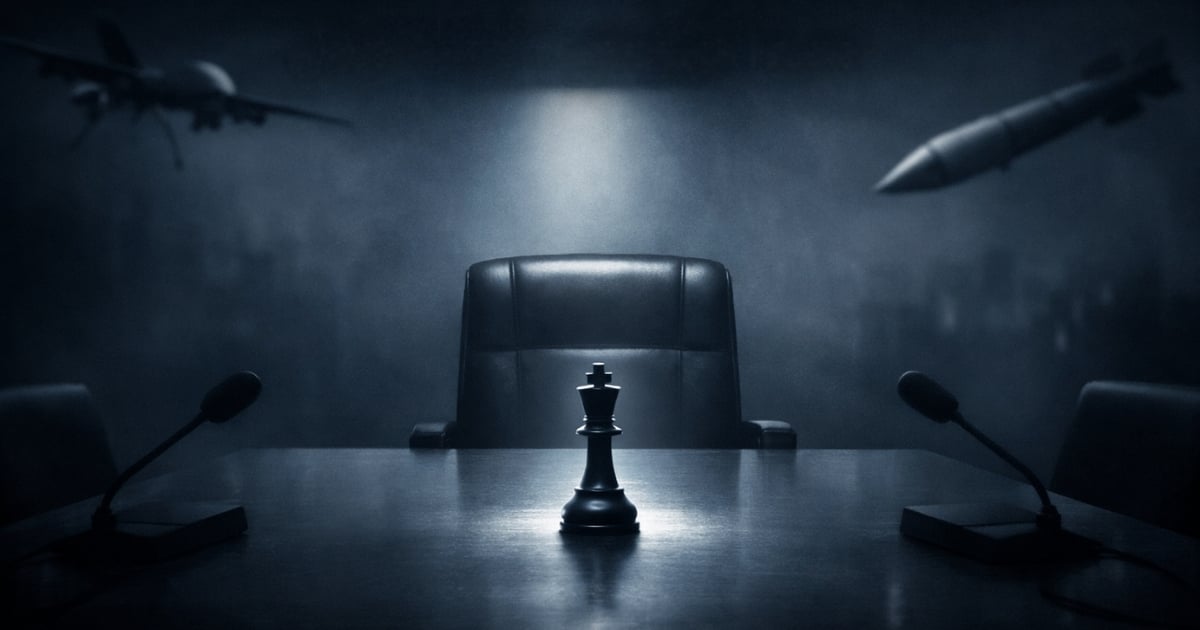
The war between Moscow and Kyiv is no longer a purely military clash measured by front lines or strike intensity. It has become a layered contest where politics and media are wielded alongside weapons. As the situation has grown more complex, part of the struggle has shifted to a subtler arena: how Washington interprets events, who seems to control the tempo, and who acts as a spoiler in any potential talks.
From my perspective, drones are no longer just instruments of war. They have become a narrative device, repurposed for political pressure. This reached a peak with reports of a potential strike on Russian President Vladimir Putin’s residence. These accounts are hard to separate from their political timing, just as their military truth is hard to verify.
A close look at the events of late December 2025 shows the blend of military and political action is now a standard feature of this conflict. The meeting between Ukrainian President Volodymyr Zelenskyy and US President Donald Trump was notably less tense than previous ones, ending without public threats. That calm did not last. Zelenskyy’s departure coincided with a call from Putin to Trump, alleging a drone attack on a presidential residence inside Russia.
What is striking is not the allegation itself, but its delivery and timing. Moscow did not just put out a media story. It claimed to have given American officials technical data from a downed drone, including navigation parts and flight path, as proof of intent to target. Kyiv firmly denied this. Western intelligence assessments noted a lack of independent evidence that the target was specifically the Russian president’s home.
American agencies did not accept the Russian story as fact. A US Central Intelligence Agency assessment concluded the drones were not aimed at a site directly linked to Putin’s residence. This contradicted what Putin personally told Trump. The gap between a leader’s claim and the other side’s intelligence view shows the negotiation itself has become a battleground. Here, spy agencies and public statements fight as fiercely as soldiers on the front.
This gap presents us with a clash of stories more than a clear truth. Targeting or claiming to target a head of state is not just a security matter but a political and symbolic act.
The president embodies the state. An attack on him is seen as an attack on the nation itself.
Thus, the president’s physical safety becomes a powerful bargaining chip. Russia gains by floating the narrative. It forces the American mediator into a difficult position: treat the claim as a grave threat, or doubt it and risk political fallout. Meanwhile, Ukraine is pushed onto the diplomatic defensive, exhausting itself with denials instead of building its own story as a serious partner for peace.
A crucial question arises: can any settlement last when the story matters more than the truth? Drones are now more than weapons. They have become units of discourse, open to endless reinterpretation. This is especially true given the sheer scale of attacks, which makes any claim seem plausible on the surface.
The numbers themselves feed the confusion. Western estimates say Russia launched over 54,000 long range drones and nearly two thousand missiles at Ukraine in 2025 alone. In return, open source reports cite hundreds of Ukrainian deep strikes inside Russia, hitting energy and military sites. Russia claims it shot down thousands of drones from Ukraine that year, including 91 allegedly aimed at a presidential residence in Valdai last December.
In a digital space flooded with such figures, any claim about targeting a leader’s home gains instant, superficial credibility. Proof becomes secondary to perception.
Therefore, this war is no longer fought with weapons alone. It is fought with the image that lands on the American president’s desk, and with the impression of who drives the escalation and who endangers the path to talks.
The defining feature of this phase is not better weapons, but the use of the president’s person as a political pawn. Russia profits just by spreading the idea. Ukraine wears itself out with diplomatic defense. The American mediator is left juggling competing stories, unable to fully trust any.
When a leader’s security is redefined as national security, and then used as leverage at the negotiating table, any future peace becomes hostage to symbols. These symbolic hostages affect not just one leader, but a whole society’s sense of safety.
The outcome is that any peace deal born from this kind of symbolic warfare will be fragile. It will be built on managing impressions, not on political resolution and genuine trust.