
From Kibbutz to the global stage
The Quiet from NASA: When Silence Becomes the Story
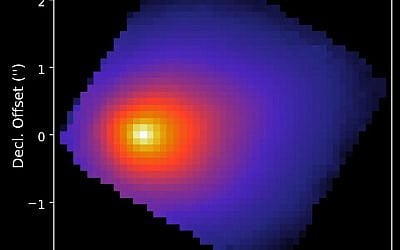
The Quiet from NASA: When Silence Becomes the Story.
Three weeks after the “blue-light anomaly,” the absence of data has turned 3I/ATLAS from a scientific curiosity into a test of institutional trust.
Over the past few days, this article has remained on the first page of Google News results for readers searching for “the strange neighbor,” 3I/ATLAS, reflecting the growing global attention surrounding the mystery of 3I/ATLAS.
The object — roughly the size of Manhattan and weighing an estimated 33 Billion tons — continues to challenge our understanding of what moves through our solar system.
Two phenomena stand out: an intense blue spectrum and a non-gravitational drift detected by JPL analysts.
Yet the most surprising element is not what 3I/ATLAS does — but what NASA refuses to say.
As the agency remains silent, Europe’s JUICE spacecraft prepares to observe the interstellar traveler in November, potentially breaking the silence that NASA has maintained for weeks.
1. The Blue Light Anomaly
As 3I/ATLAS approached perihelion, astronomers noted an unusual intensity of blue light — far brighter than the solar-reflected hues typically seen in comets within our solar system.
Standard cometary bodies tend to exhibit reddish or yellowish tones, caused by dust scattering and organic compounds. In contrast, the “interstellar neighbor” displayed a spectral signature more consistent with ionized gases or artificial emissions.
This led some observers to suggest that the brightness could stem from an unknown chemical composition, while others proposed a more provocative idea: a technological source of light, perhaps a propulsion or energy system of non-natural origin. In mid November Telascopes on Earth and in Space will provide additional data on this phenomen.
2. The Non-Gravitational Deviation
In parallel, trajectory data revealed a sideways deviation inconsistent with pure gravitational motion.
Typically, such shifts in comets are explained by the sublimation of surface ice — jets of gas that slightly alter the path.
However, calculations released by independent researchers at NASA’s Jet Propulsion Laboratory (JPL) indicate that the observed drift in 3I/ATLAS exceeds known cometary behavior by several magnitudes.
This raises the possibility of a non-gravitational force acting on the object — whether due to extreme outgassing, electromagnetic effects, or, as Avi Loeb cautiously noted, “an artificial mechanism that mimics thrust.”
3. ESA’s JUICE Mission: A New Observer in the Sky
While NASA remains silent, Europe’s JUICE spacecraft — currently on its eight-year journey to Jupiter — may become the next “eye” to study the interstellar visitor.
ESA engineers have confirmed that JUICE’s high-resolution instruments (JANUS and MAJIS) could attempt brief imaging sessions during November 2025, when the probe’s position offers a favorable line of sight between Mars and the Sun.
If successful, JUICE would deliver the first deep-space imagery of 3I/ATLAS since NASA’s HiRISE camera ceased updates in early October.
Even a single captured frame could help determine whether the object’s blue spectrum and non-gravitational drift are natural phenomena or indicators of technology.
4. NASA’s Continuing Silence
Despite increasing public interest and repeated academic inquiries — including open letters from Harvard astrophysicist Avi Loeb — NASA has yet to release any HiRISE data or official statement about 3I/ATLAS.
For over a month, the agency has maintained complete radio silence, offering neither clarification nor context about the blue-light anomaly or the deviation noted by JPL analysts.
Such reticence is uncommon for NASA, which normally showcases its findings with transparency and enthusiasm.
This silence has become more than a communication gap — it has evolved into a test of credibility for modern science itself, raising questions about whether institutions are prepared to confront phenomena that defy current models of understanding.
A Broader Vision
As I wrote in the original piece, humanity must be ready — scientifically and ethically — for the moment when a non-natural object enters our solar system.
Rather than fear such encounters, we can turn them into opportunities for scientific cooperation and messages of peace traveling across the Milky Way.
The journey of 3I/ATLAS reminds us that curiosity, humility, and imagination are the real forces that move civilization forward.
Author: Rafi Glick ( רפי גליק)
Related Topics
Related Posts