The Rabbis Who Didn’t Sell Their Houses
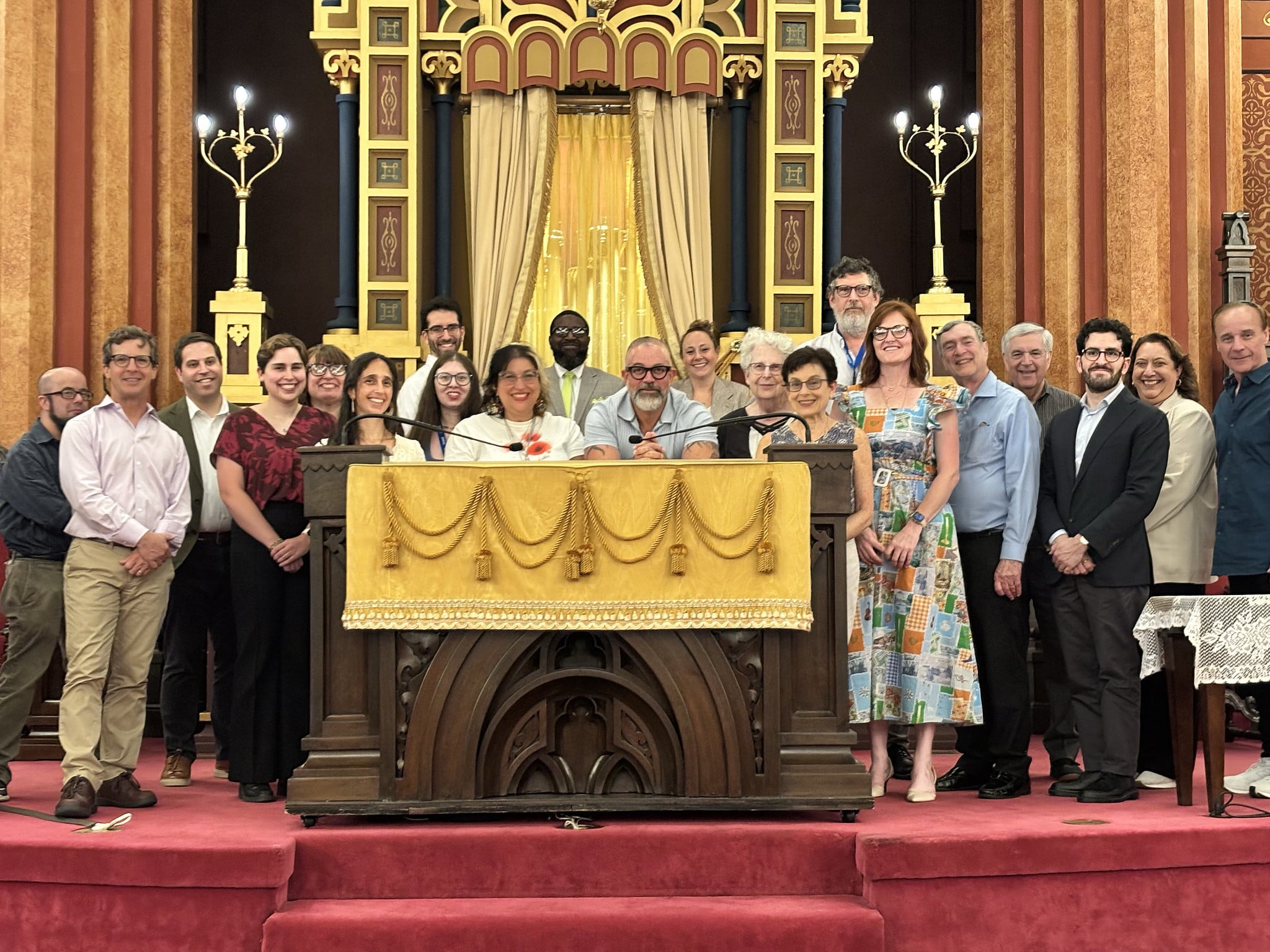
Last week, seventeen new rabbinical students began their studies with Hebrew Union College. None of them sold their house, or moved to a new town, to do it. And still, to launch their studies as Rabbinical School students, we gathered, as all HUC students do, in-person. On our first day together, I stood in front of them, at the opening of our HUC Cincinnati in-person intensive and asked them to sit with three questions: What is a rabbi? What values will guide you as a rabbi? And what does it mean to become a rabbi through a virtual program? Their answers were all true.
What is a rabbi? Pirkei Avot offers a less than satisfying answer, describing a chain of command: Moses received Torah at Sinai and handed it to Joshua, Joshua to the elders, the elders to the prophets, the prophets to the men of the Great Assembly, hand to hand, down to us, transactional but perhaps also ephemeral at one and the same time.
We know what a rabbi does: writes a sermon. Leads services. Teaches Torah. Officiates a wedding. Sits with a mourner. Runs a board meeting. Organizes a community. All true. And all incomplete, because underneath the list is the chain in which they are now links, imparting something of deep value.
Leading us to the second question, what are the values that are most important to you in your rabbinate? Being the rabbi who hands people a text and helps them wrestle with it? Or a pastor, the one who shows up when everything else has fallen away? A leader who sets vision, or a prophet who says the thing the room doesn’t want said? Our students will grapple with their vision, grow their chops, find their strengths and imagine themselves differently stepping into this work. The question itself, sat with honestly rather than answered too fast, is where clergy formation begins.
In Cincinnati last week we were joined by our third group of students of our Virtual Pathway, our largest yet. Every student who joins us comes as a second-career candidate: a cantor, an educator, an attorney, a veteran, someone who has already built a life and a career before this calling asked something more of them. None of them sold a house, or moved communities. All of them will bring the whole of the life they didn’t have to leave behind into their learning and then to the community they end up serving. That’s not a workaround. It’s the design. We are not simply moving a classroom online, we are dissolving the wall between the academy and the community. A question someone asks you in the supermarket on Tuesday can become the text you study in class on Wednesday. A paper you write for a seminar can become the Torah you teach on Shabbat, in the sanctuary where you already sit, among the people who already know you.
Cincinnati is not incidental to any of this. Last week we walked through Plum Street Temple, Rabbi Isaac Mayer Wise’s synagogue, and stood where Wise built the first enduring rabbinical seminary in America out of nothing more than conviction that American Jewish life needed its own leaders, trained on its own soil. We talked about what it took to found something that had never existed before, and about the innovative energy that brought Hebrew Union College into being in the first place. This is an energy that has kept reinventing what American Jewish leadership looks like ever since. Our dream is that for the Virtual Pathway, some measure of that same restless, inventive Torah is the Torah we are creating here, in a new form, a century and a half later.
What is the Torah of our Virtual Pathway? We take the line from the Book of Numbers: b’khol makom asher azkir et sh’mi, avo eleikha u’verakhtikha, in every place where My name is invoked, I will come to you and bless you. Every makom, every place, is where we encounter the Makom, the Sacred, the One who is present everywhere at once. The sacred place of our Virtual Pathway rabbinical school students was never confined to four walls of one building in one city. It will be a kitchen table after the kids are asleep, or a basement work table in a home in a town in the middle of the country. It will be a classroom in Cincinnati one week and a congregation back home the next. Wherever Torah becomes alive, that is the place their journey will form.
We are heading toward the Jewish New Year, when we ask the question of ourselves: what have we done to leave the world a little better than the one we inherited? I’ve been sitting with my own answer this week, watching these seventeen people begin something they were told for a long time they couldn’t have; contemplating that this May, members from our inaugural cohort, those who arrived in Cincinnati in January 2025 not knowing quite what they were building together with those of us building it alongside them, will be ordained.
I don’t know who these seventeen students will become as rabbis. I know that a year or two ago, most of them had quietly made peace with the idea that this calling wasn’t available to them. It was. It is. This pathway was Rabbi Dr. Andrea Weiss z”l’s dream long before it was mine. She was ready to build something different, something unique, and she brought this vision of a partner Virtual Seminary education to the campus-based learning at HUC and invited me to join her as a partner in building it, and it has been my honor to help shepherd it and now to lead it forward.
This fall we welcome seventeen new students to the Virtual Pathway at HUC, and this spring, I’ll watch the first students stand on a bimah as they are ordained as rabbis, with thirty more rabbinical school students now behind them, as they have studied in every place they already call home to prepare for this moment. That is my answer this New Year, when I am asked what I have done to make this world a little better than the one before it: I help make rabbis. Rabbis who did not need to sell their homes.