
The Return of al-Qaeda?
On 6 December 2016, in one of his final speeches as President of the United States, Barack Obama delivered a long-form reflection on his administration’s approach to confronting terrorism. He spoke at a time when ISIS-inspired attacks across Europe were still raw and painfully recent, attacks that had scarred thousands of lives, including those of several members of my own family. At the MacDill Air Force Base in Florida, proudly standing between two American flags, Obama soon turned his attention to American efforts to defeat al-Qaeda: “Today, by any measure, core al-Qaeda—the organization that hit us on 9/11—is a shadow of its former self.”
His declaration was met with loud cheers and a round of applause from the crowd of military personnel before him. Although he was careful to qualify his remarks by acknowledging the persistence of the global terrorist threat, Obama’s focus was unmistakably fixed on ISIS. Al-Qaeda appeared almost as an afterthought, and when it was mentioned at all, it was framed in the language of decline, repeatedly described as having been “degraded,” “decimated,” or otherwise reduced to dust and ashes.
Obama’s outlook at the time was understandable, and there was cause to agree with his bold remarks. During his presidency, on 2 May 2011, the founder of al-Qaeda and chief architect of the 9/11 attacks, the Saudi-born Osama bin Laden, was killed in Abbottabad in northern Pakistan by the U.S. Navy’s SEAL Team Six. The raid, carried out deep inside Pakistani territory, was soon described by one American general as a “cakewalk.” Despite serious disputes over the official account of the operation presented by the Obama White House, most notably by the investigative journalist Seymour M. Hersh, there was one point on which all sides agreed: the world’s most infamous terrorist had been eliminated.
In language that would later be echoed by Obama’s own speechwriters, the Lebanese-American scholar Fawaz Gerges wrote in his 2011 book The Rise and Fall of Al-Qaeda that the group had “dwindled to the palest shadow of its former self.” The steady elimination of high-profile al-Qaeda figures in the years that followed seemed only to confirm his assessment.
In one of my recent meetings with a Palestinian policy colleague in London, a medical practitioner by profession, he made a wry but incisive observation about how politicians and policy experts in the West talk about jihadist groups. “If my patient has been diagnosed with cancer,” he said, “my priority is to remove it entirely, not to congratulate myself on my medical accomplishments while the cancer continues to spread.”
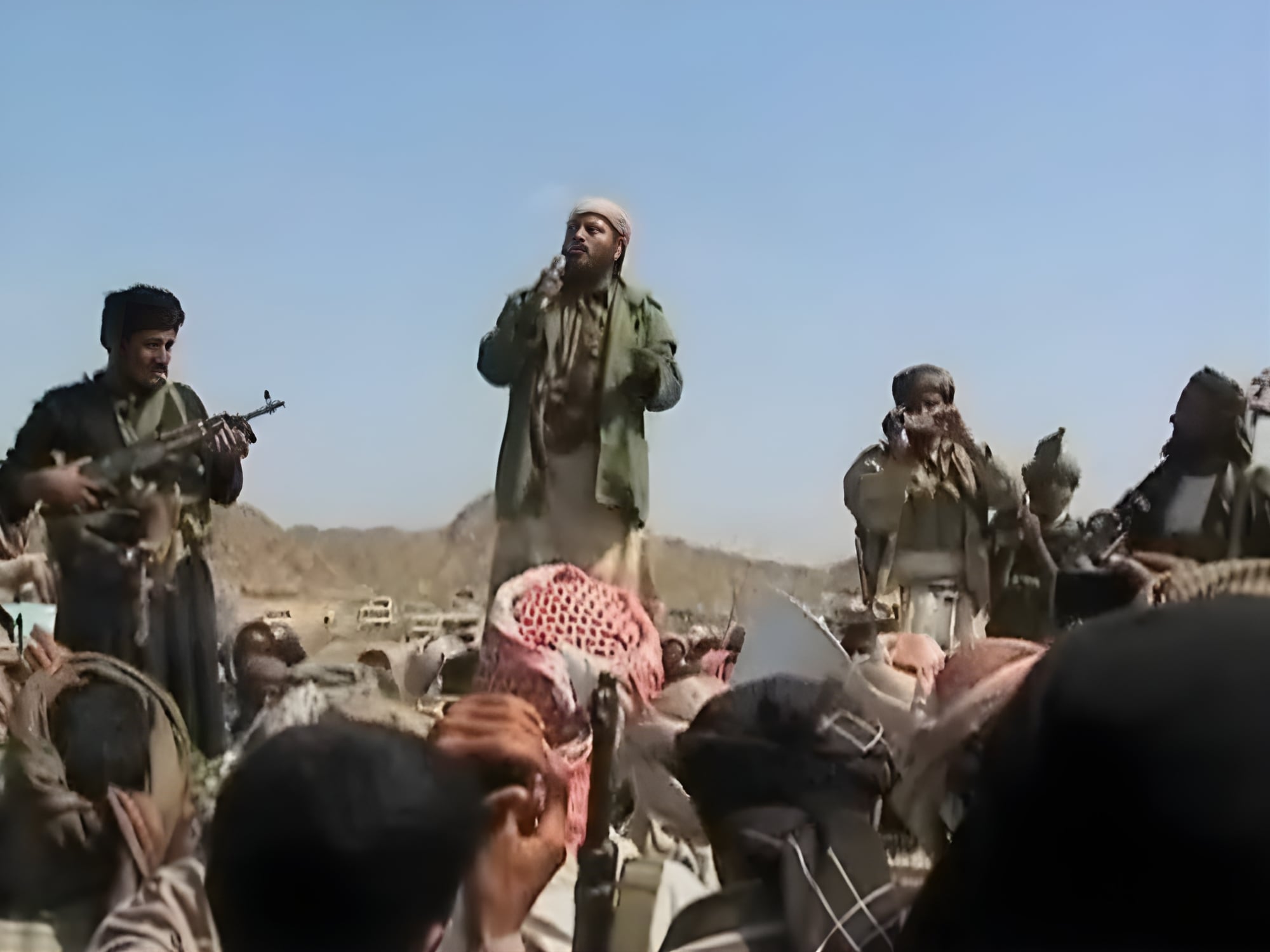
The analogy felt particularly apt in light of recent developments in the Red Sea arena. While observers have spent years framing al-Qaeda as a spent force, the Yemen-based al-Qaeda in the Arabian Peninsula (AQAP) has been quietly rebuilding, exploiting political chaos in the Gulf and the world’s shifting attention elsewhere. Like any untreated illness, it has adapted, mutated, and returned.
In June 2015, a U.S. drone strike in Yemen killed Nasir al-Wuhayshi, the longtime leader of AQAP. It marked the removal of al-Qaeda’s so-called “general manager,” although it is safe to assume his exit interview was brief and his severance package nonexistent. For policymakers, his elimination appeared to confirm that sustained leadership decapitation was working, reinforcing the belief that the wider al-Qaeda network was on the brink of institutional collapse. One can only imagine their surprise, then, when the Southern Transitional Council (STC) in Yemen, a UAE-backed force commanded by the since-escaped Aydarus al-Zubaydi, encountered fierce and wholly unexpected resistance from a seemingly resurgent AQAP force during their 2022 campaign against militant groups in Yemen’s southern Abyan region.
After reaching a historic low in 2021, political violence linked to AQAP in Yemen has increased markedly since 2022. In February of that year, the group abducted five employees of the UN Department for Security and Safety (ironic, I know) and held them hostage for eighteen months. Two months after the kidnappings, AQAP orchestrated a jailbreak in Yemen’s eastern governorate of Hadramawt, freeing at least ten of its militants from Sayoun prison, reportedly with the assistance of local prison guards. Since 2024, under the leadership of Saad bin Atef al-Awlaki and through its al-Malahem Media Foundation, AQAP has dramatically expanded its engagement with global events. During the Israel-Hamas War, it launched the most prolific propaganda campaign on Gaza among al-Qaeda’s affiliates, congratulating Hamas on the 7 October massacres and calling for further attacks on Israelis.
Needless to say, AQAP’s propaganda and recruitment strategy certainly seems to have reaped its rewards. According to a February 2025 report by the UN Monitoring Team on ISIS and al-Qaeda, AQAP under al-Awlaki has transformed from a series of fragmented cells into a coherent force of nearly 3,000 fighters, including explosives specialists and UAV operators. The group has since carried out dozens of attacks concentrated in southern Yemen and maintained active communication channels with al-Shabaab in Somalia, as it increasingly explores maritime operations in the Gulf of Aden. Unfortunately, not all of this activity is isolated within Yemen and the Horn of Africa. In August 2025, a viral video of Gaza-based charity spokesman Abu Zain al-Maqdisi thanking AQAP for its generous donations sparked wider scrutiny of the group’s collaborations with other jihadist actors operating along Israel’s borders.
More worrying still, AQAP have just released a striking seven-page strategic paper analysing why a second Trump presidency represents, in their view, a historic opportunity for global jihad. The Arabic-language document, titled The Future of Islam in Light of Contemporary Global Transformations, is essentially a jihadist manifesto which predicts that the world is “sliding toward a third world war,” one that will fundamentally redraw the global map. They argue that American soft power has effectively collapsed and that Washington now relies almost exclusively on brute force and coercion. In their telling, an intensifying East–West confrontation will weaken both blocs simultaneously, creating unprecedented openings for jihadist movements to operate and expand.
One of the document’s more revealing sections concerns global powers opposed to the West. China, Russia, Iran, Turkey, and others are portrayed as unwilling to formally ally with al-Qaeda, but eager to benefit indirectly from its actions. AQAP explicitly states that it will not initiate conflict with these states unless provoked, while adding that some of them “may even provide support,” just enough to allow jihadist groups to survive and continue weakening the West. At the same time, the authors warn their followers not to rely on these regimes in the long-term. The paper devotes considerable attention to Trump personally. He is described contemptuously as “the idiot pirate,” with the group predicting he will attempt to remain in power by cancelling elections or amending the constitution. AQAP argues that his “thuggish, colonial approach” will destroy the United States from within. Their slogan-level takeaway is stark: “Make America Great Again” will, they claim, ultimately result in the collapse of NATO, Europe, and the entire Western order.
According to AQAP, these pressures will produce widespread anger that jihadist movements stand ready to exploit, particularly resentment toward what they repeatedly call “Zionist-Crusader arrogance,” an Islamist term which refers to the State of Israel’s allyship with Western powers. Anyone who has ever read jihadist propaganda (and I certainly would not recommend doing so) will recognise some of these themes, but AQAP’s framing marks a deeper shift within Sunni jihadism itself. The document is chilling because of its confidence. It reveals a movement that sees itself not as defeated, but as patiently positioning itself amid what it believes to be a collapsing international order. There is, after all, a reason why AQAP is generally considered the most dangerous affiliate of the al-Qaeda network.
The question remains as to how relevant al-Qaeda’s resurgence truly is to contemporary debates on Middle Eastern geopolitics, a landscape in which its direct influence has undeniably waned, notwithstanding the brief and disturbing online trend that saw some Gen-Z imbeciles hailing Osama bin Laden as a resistance icon in the aftermath of the 7 October Hamas attacks. Setting aside the cerebral minimalism of the TikTok mujahideen, AQAP’s open talk of tacit and opportunistic alignments with anti-Western powers, most notably the Islamic Republic of Iran, suggests there is far more at play than first meets the eye.
In late July 2025, while in Israel for a month-long intensive counter-terrorism fellowship at Reichman University, I attended a lecture by Dr Eitan Azani, a leading expert on Iran and the Houthi threat in Yemen. Midway through his discussion of what he terms the “Iranian Threat Network,” describing Tehran’s web of proxies across the region, he paused and made a startling remark: “Do you know where the current leader of al-Qaeda is? He’s in Tehran.” Everyone in the room was astounded, as was I, at the idea that the ideological heir to Osama bin Laden’s legacy could be effectively controlled by the likes of Ali Khamenei.
Sayf al-Adl, an Egyptian terrorist widely regarded as al-Qaeda’s de facto leader, represents one of the most striking contradictions in contemporary jihadism: a Sunni extremist who has spent much of the past two decades living under the protection of Iran’s Shiite theocratic regime. His relationship with Tehran is deeply strategic, rooted in contacts forged in the 1990s when al-Qaeda operatives—including al-Adl himself—received training from Hezbollah and Iranian security services, laying the groundwork for a pragmatic partnership of convenience. After 9/11, Iran offered safe haven to senior al-Qaeda figures, placing them under nominal “house arrest” while still allowing controlled communication and operational coordination, effectively turning custody into leverage.
Under al-Adl’s leadership, this relationship has matured into a mechanism through which Tehran can indirectly shape jihadist behaviour, particularly in Yemen. There, Iran has exploited al-Adl’s authority over AQAP to encourage tacit cooperation with the Houthis, including prisoner exchanges, smuggling arrangements, and non-aggression understandings. By embedding loyal intermediaries, most notably al-Adl’s own son, within AQAP’s command structure, the Islamic regime in Iran has transformed an on-paper adversary into an invaluable asset, using Sunni jihadist militias to advance its regional campaign of exporting the principles of the Islamic Revolution.
This creates the conditions for al-Qaeda’s ambitions to expand across Yemen and project force beyond it, including the redeployment of its most experienced fighters across the Gulf of Aden to destabilise communities in East Africa, while simultaneously threatening Saudi Arabia, the UAE, and Oman. As the Iranian regime confronts the real prospect of total collapse in 2026, Sayf al-Adl will be forced to contemplate a strategic relocation. Whether he ultimately gravitates toward Ankara, Beijing, or Moscow will shape not only his own survival, but the future mercenary alignments of AQAP vis-à-vis a post-mullah Iran—when Tehran’s proxy network ceases to function as a coherent system. Contrary to the triumphant claims made in Obama’s decade-old speech, al-Qaeda is anything but finished. It has survived, and now stands ready to serve whichever taskmaster Sayf al-Adl chooses next.