
The Return of Jewish Power
Nearly a decade ago, a Christian friend told me something that has stayed with me ever since.
After converting to Christianity, he apologized to me for all the terrible things Christians had historically done to Jews. I thanked him, but I told him two things.
First, he personally had done nothing to me. He was not morally responsible for actions committed centuries before he was born.
Second, I told him something that surprised him: Christians were in power. People abuse power. If Jews had possessed similar levels of political and civilizational power for long enough, Jews would also have been capable of terrible things.
At the time, I believed this instinctively, but I did not yet fully understand it. I was still missing a major piece of Jewish history.
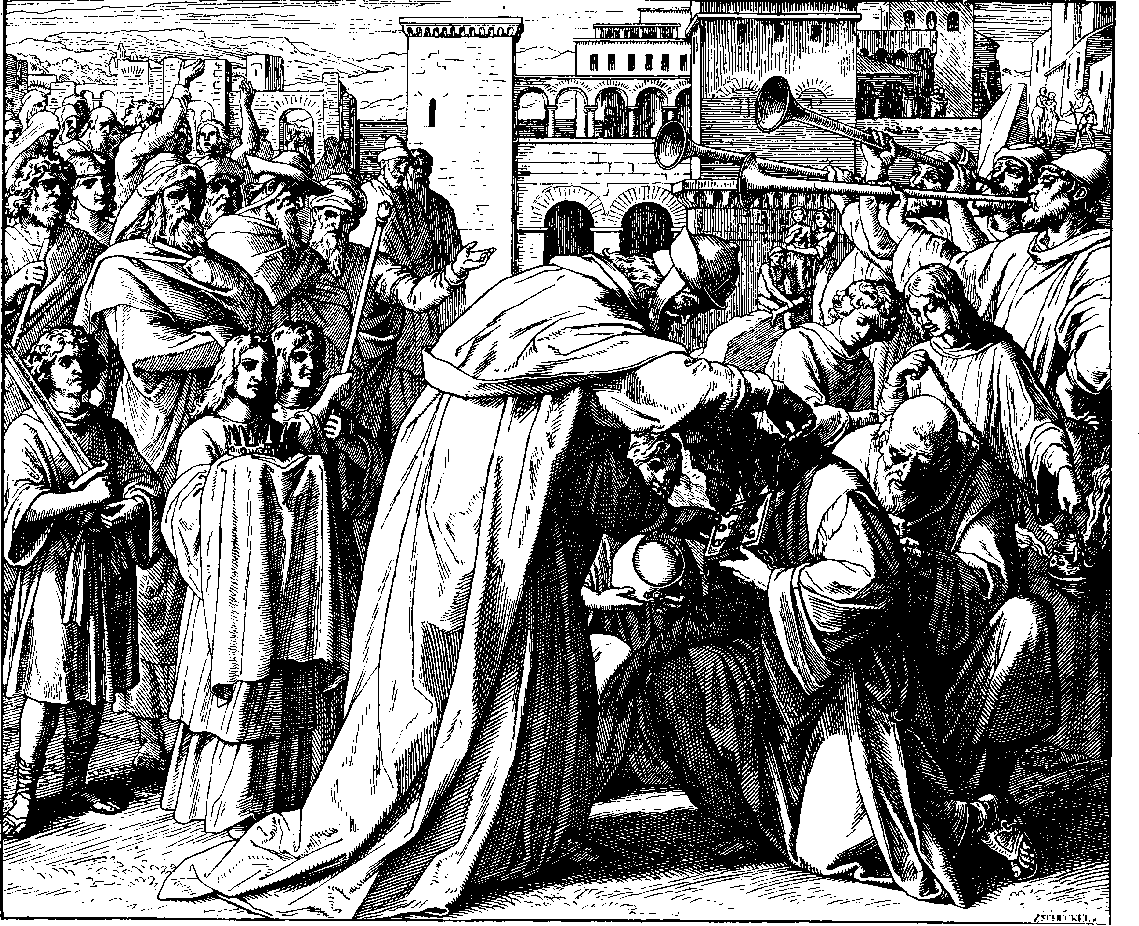
I had not yet seriously studied the Hasmonean dynasty.
Like many Jews, I first encountered the Hasmoneans primarily through the heroic story: resistance against oppression, Jewish self-determination, survival, and liberation. But later, as I learned more, I discovered another side of the story. The Hasmonean state eventually devolved into many of the same temptations and excesses that have afflicted sovereign powers throughout history: dynastic corruption, territorial expansion, sectarian conflict, coercion, and abuses of power.
This realization changed something in me.
It was not that Jews were uniquely evil. It was the opposite. Jews were not uniquely exempt from the normal corruptions of power.
Diaspora Jewish life did not make Jews morally pure. But many forms of political abuse require sovereignty. Conquest requires armies. Occupation requires territorial control. Coercive rule requires state institutions. Some sins become structurally possible only when a people possesses power.
For centuries, Jews largely existed outside that framework. Zionism changed that.
And understandably so. Zionism solved a real and devastating problem: Jewish powerlessness. It created the possibility of Jewish self-defense after centuries in which Jewish survival depended on the goodwill of others. Israel became one of the most remarkable political achievements in modern history: a democratic Jewish state built under extraordinary external pressure and existential threat.
Part of what made Israel so morally compelling to many diaspora Jews was the belief that Jewish sovereignty would not merely reproduce the normal logic of power politics. Israel saw itself not simply as another state, but as a state unusually conscious of the moral dangers surrounding power.
That self-conception mattered.
But sovereignty does not eliminate the temptations of power. It reintroduces a people into history’s full moral pressures.
And increasingly, I fear that something is changing.
After October 7, a dominant narrative understandably emerged inside Israel: we were weak, we believed we could manage Hamas, we restrained ourselves, and catastrophe followed. Therefore, Israel must become harder, stronger, less restrained, and less dependent on outside opinion.
There is truth in this narrative. Israel clearly misread Hamas.
But I worry that this story is also flattening the past in ways that prevent deeper strategic self-examination.
Israel did not merely pursue “quiet for quiet” because it was naive. It pursued conflict management, deterrence, economic stabilization, and Qatari cash transfers because a broad swath of the Israeli security and political establishment believed that maintaining Palestinian political division was strategically preferable to the alternatives.
This is the part of the story that is now often missing.
If Hamas had truly been viewed as the overriding strategic threat above all else, then Palestinian political unity under the Palestinian Authority would likely have been treated as the lesser evil. Instead, for years, Israeli strategy often treated Palestinian unity itself as a major strategic danger.
And from a narrow strategic perspective, this logic was understandable. A unified Palestinian political structure strengthens diplomatic legitimacy, creates a clearer negotiating partner, and potentially revives international pressure for Palestinian statehood. Hamas’s control of Gaza, while dangerous, also preserved fragmentation between Gaza and the West Bank.
None of this means Israel wanted October 7. Nor does it mean Hamas was secretly an Israeli project. Hamas is fully responsible for its own ideology and atrocities.
But it does mean that October 7 did not emerge simply from “weakness.” It emerged from a broader strategic worldview that prioritized managing and containing Hamas within a divided Palestinian system rather than replacing Hamas rule with a unified Palestinian political structure under the PA.
The tragedy is that post-October 7 trauma now risks compressing this entire strategic history into a much simpler morality tale: we were weak, therefore we must become overwhelmingly strong.
But trauma does not only harden societies. It simplifies them.
And simplification is dangerous.
The more Israel interprets October 7 exclusively through the lens of insufficient force, the more other dimensions of power begin to weaken: diplomacy, coalition-building, legitimacy, institutional restraint, and moral self-interrogation.
What increasingly worries me is not that Israel is uniquely evil. It is that Israel risks becoming historically normal.
That may sound strange coming from a Jew. But Jewish history itself is filled with warnings about the moral dangers of sovereignty. The Hebrew Bible repeatedly rebukes kings, power, conquest, and national arrogance. The prophets did not merely condemn foreign empires. They condemned Israel itself.
Victimhood does not permanently inoculate a people against the temptations of power.
And this is why I increasingly resist both anti-Israel flattenings and pro-Israel flattenings.
The anti-Israel flattening says Israel was always destined to become an oppressive colonial power. The pro-Israel flattening says Israel’s current trajectory is simply the inevitable and morally uncomplicated response to October 7.
Both narratives erase contingency. Both erase the role of strategic choice. Both erase the possibility that societies shape themselves through the stories they tell about the past.
Maybe this is Abraham Joshua Heschel influencing me, but I increasingly believe that how we interpret the past shapes how we act in the present, and those actions help produce the future we later call inevitable.
The return of Jewish sovereignty solved the problem of Jewish powerlessness. But it did not solve the problem of power itself.
That is the burden of sovereignty. And it is also its test.