Author & speaker, son of a Holocaust survivor
The Second Driveway
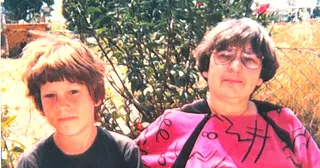
Young me and my favorite aunt
The first time taught me what to look for. The second time, I already knew.
I was fourteen the first time I came home to a driveway full of cars and didn’t understand what I was looking at.
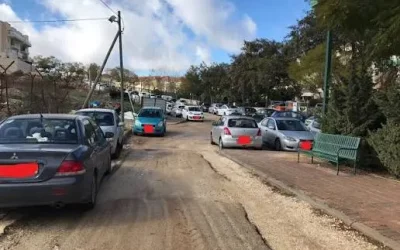 It was January 1994. I had come back from basketball practice, the same walk I made every day. Off the bus, across the highway overpass, through the acoustic walls that sealed my neighborhood off from the noise of the city. Concrete gave way to dirt. The crunch under my feet was familiar. The guava trees that lined the narrow path smelled the way they always did, sweet and a little deceptive, the kind of smell that promises more than it delivers.
I was not thinking about Giza. I was thinking about practice.
Then I saw the driveway.
Cars everywhere. My uncle’s. My half-brother’s. Cars I recognized and cars I didn’t, all of them parked at wrong angles, the way people park when they arrive in a hurry. My first thought was that it was a welcome home party. Giza had been in the hospital. Shiba, the best in Israel for that kind of operation. The surgery had gone well. She was recovering.
I sprinted through the gate.
My sister opened the door before my hand reached the handle. Her face stopped me.
“You need to go to mom and dad’s room,” she said.
I walked down the hallway. My father was sitting at the edge of the bed. My mother beside him. He had been crying. I had never seen him cry before. His arms opened.
I knew.
I dropped to my knees and we broke together.
Giza was fifty-eight years old. A rare bacteria had found her in her weakened post-operative state. The doctors were not prepared for it. She was gone before I could say goodbye.
I locked myself in my room for weeks after that. I still went to school. I still went to practice. But I moved through those days like something underwater. The Crystal Ship by The Doors played on a loop in my room until the words stopped meaning anything and became only sound.
I did not know, at fourteen, that I was being taught something.
Three years later, on February 10, 1997, I came home from a basketball game.
It had been a good game. A great one, actually. The kind you want to report back on. My father had been in the hospital for over three weeks, recovering from a botched bypass surgery, and I had spoken to him before the game. He told me not to visit first. Go straight to the game, he said. Come tell me about it after. I’m not going anywhere.
I stepped off the bus. Same walk. Same walls. Same acoustic threshold between the highway and the neighborhood. Same narrow dirt path. Same guava trees with their same impossible smell.
I was seventeen. I had a duffle bag on my shoulder and a good game in my legs and I was already composing what I was going to say to him.
Then I turned the corner.
The driveway was full.
And the boy who sprinted through the gate in 1994 did not sprint this time.
I slowed. The distance from the gate to the front door, which I had walked a thousand times, which I could have counted in my sleep, twelve steps to the stairs, five up, one more to the handle, stretched in a way I can only describe as the house trying to protect me from what was on the other side of it.
I took smaller steps. Slower ones.
I had been here before. I knew what a driveway full of cars meant. I knew what the quiet meant. I knew what I would find when I touched the handle.
My hand hovered.
Then I opened the door and stepped into the version of my life where my father was gone.
He was sixty-two years old. He had carried things none of us fully understood, things that had their origins in a different country and a different century. A childhood spent hiding under a false name in Nazi-occupied Poland, passed on to him without words, the way the worst things always travel.
I did not cry at the funeral. I don’t know why. I read the Kaddish. I shook hands. I went through the motions.
Then I went home and stood in the kitchen with my mother and sister, and none of us knew where to go.
A few weeks later, two boys from my high school showed up at my bedroom door.
Assaf and Shai. Not close friends. We played on the same basketball team, knew each other the way you know people in the orbit of your daily life, but we had never spent time together outside of school.
I told them it wasn’t a good time.
“Too bad,” said Shai. “We’re here.”
They walked in and sat down. They stayed for hours. They talked about school, about girls, about where they’d be drafted the following year. They didn’t ask me to be okay. They didn’t ask me to talk about it. They just stayed.
They came back the next day. And the day after that.
They were not trying to fix anything. They were not equipped to fix anything. They were seventeen years old. But they understood, somehow, that the only thing that works in a room that dark is another person willing to sit in it with you.
By the end of the school year, we were inseparable.
Shai joined the IDF first. Then Assaf. Then me.
My father wasn’t there to see me off.
They were.
I live in North Carolina now. I left Israel in 2003. I have a wife, three children, and a house I check every night before I go to sleep, every door, every window, the garage, the gate. A specific sequence. No exceptions.
My eight-year-old son has started joining me on the sweep. He checks each lock carefully, with the look of a child who loves you and isn’t entirely sure you’re okay.
I grew up in Tel Aviv during the Second Intifada. I know what it looks like when the world decides that Jewish lives are negotiable. I know what it sounds like when a bus number becomes a body count. I know the particular shape of a driveway full of cars.
I don’t think the lock sweep will protect us from everything. I know it won’t. But I also know that the boy who learned to read driveways at fourteen never stopped scanning. He just got older and found new things to check.
The first driveway taught me what to look for.
The second driveway installed it permanently.
I check the locks because of both of them.
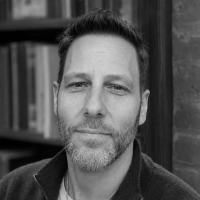
My name is Ido Singer. I am an Israeli-born writer based in North Carolina. I write about inherited trauma, Jewish identity, and the pattern that started in Kraków in 1939 and is still running in my house today. The memoir is called When I Should Have Died. It launches in January 2028.
This is my second piece for The Times of Israel. My first piece, about the campaign to have Władysława Kazimiera Jaeger recognized as Righteous Among the Nations, can be found here.
Related Topics