
The Silent Rift: From Yosef’s Brothers to the Battlefield
It is impossible to read Parashat Vayeshev without feeling a deep tremor from the charged relationship between Yosef and his brothers. How could such fierce hatred take root among siblings who shared a home, a destiny and common blood? An even sharper question follows. Where was Yaakov in all this? Did he not sense the swelling jealousy and tension that grew day by day? And if he did sense it, how did he remain passive? Why did he not try to calm the turmoil, bring their hearts closer or prevent the disaster that lay ahead?
More troubling still, the plain reading of the text suggests that Yaakov himself ignited the conflict. The verse states: “His brothers saw that their father loved him more than all his brothers, and they hated him and could not speak with him peacefully” (Genesis 37:4). How can this be reconciled with Yaakov, the father of the nation and a man of truth?
The answers to these questions seem to lie in the final words of the verse, the jarring words: “They could not speak with him peacefully” (Genesis 37:4). Each time I read this phrase it fills me with dread. It directly echoes the story of Kayin and Hevel.
There too jealousy pulsed. The text recounts, “Kayin said to Hevel his brother, and it came to pass when they were in the field that Kayin rose up against Hevel his brother and killed him” (Genesis 4.8).
The Sages and commentators stand perplexed by this verse. It tells us Kayin spoke to Hevel, yet the Torah omits the content of the exchange. Midrashim suggest possible dialogues but one explanation is starker. The Torah records no words because the words did not matter. The end was already predetermined by Kayin. Whatever might have been said between them, the end was inevitable. Kayin could not live or speak in peace with his brother.
The dynamic between Yosef and his brothers reflects this same pattern. The verse does not say that “they did not speak with him.” Rather, it says “they could not speak with him peacefully” (Genesis 37:4). The brothers may have attempted to speak with Yosef, yet even the simplest and most innocent exchange was beyond reach. The breakdown of basic communication sealed the future of the story. When speech collapses the possibility of reconciliation collapses with it. From there the path to hostility and even violence becomes frighteningly short, as it was for Kayin and Hevel, and again, for Yosef and his brothers.
This may also explain Yaakov’s absence. Perhaps he did not sense the brewing hatred because he saw no arguments. When the brothers could not speak with Yosef peacefully, they may have stopped speaking altogether. A tense silence that hides the emotional depth beneath the surface until the moment comes that everything explodes.
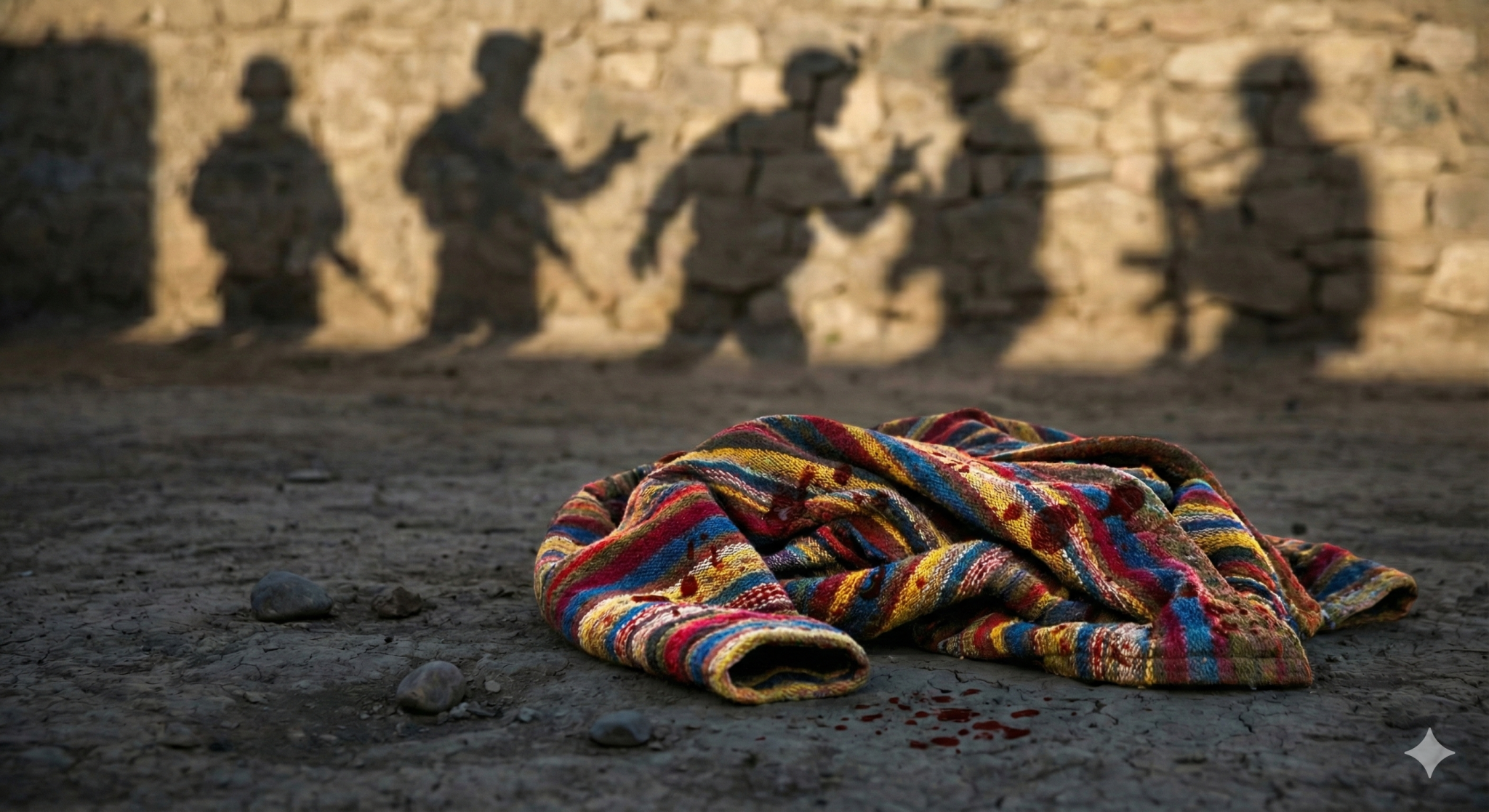
This became clear throughout my time as a soldier on the battlefield as well. Many of us were packed together in a tiny apartment day and night for months with no space to breathe or retreat. It is natural in such conditions for tension to build and even flare, but the real danger was not the arguments that erupted. Rather, it was the conflicts that stayed buried beneath the surface. The moments when two people or even two groups lived side by side in a cramped space unable to escape the tension.
It was the silent strain that suffocated most of all. Sometimes that silence thickened until suddenly one side snapped and everything pent up erupted with force. More than once, this descended into shouting and even physical confrontation. In one extreme case, a soldier overwhelmed with anger and despair, lifted his weapon and fired a grenade launcher without authorization and even in the direction of our own forces. The story of Yosef and his brothers reveals the peril of silence and how the absence of communication can open a rift that may never fully heal.
May we learn to repair this flaw, to grow in generous love, to listen, to speak, to understand and to draw closer to each other, especially within our homes and within our hearts. Shabbat Shalom!