The Statecraft behind Morocco’s Israel Partnership
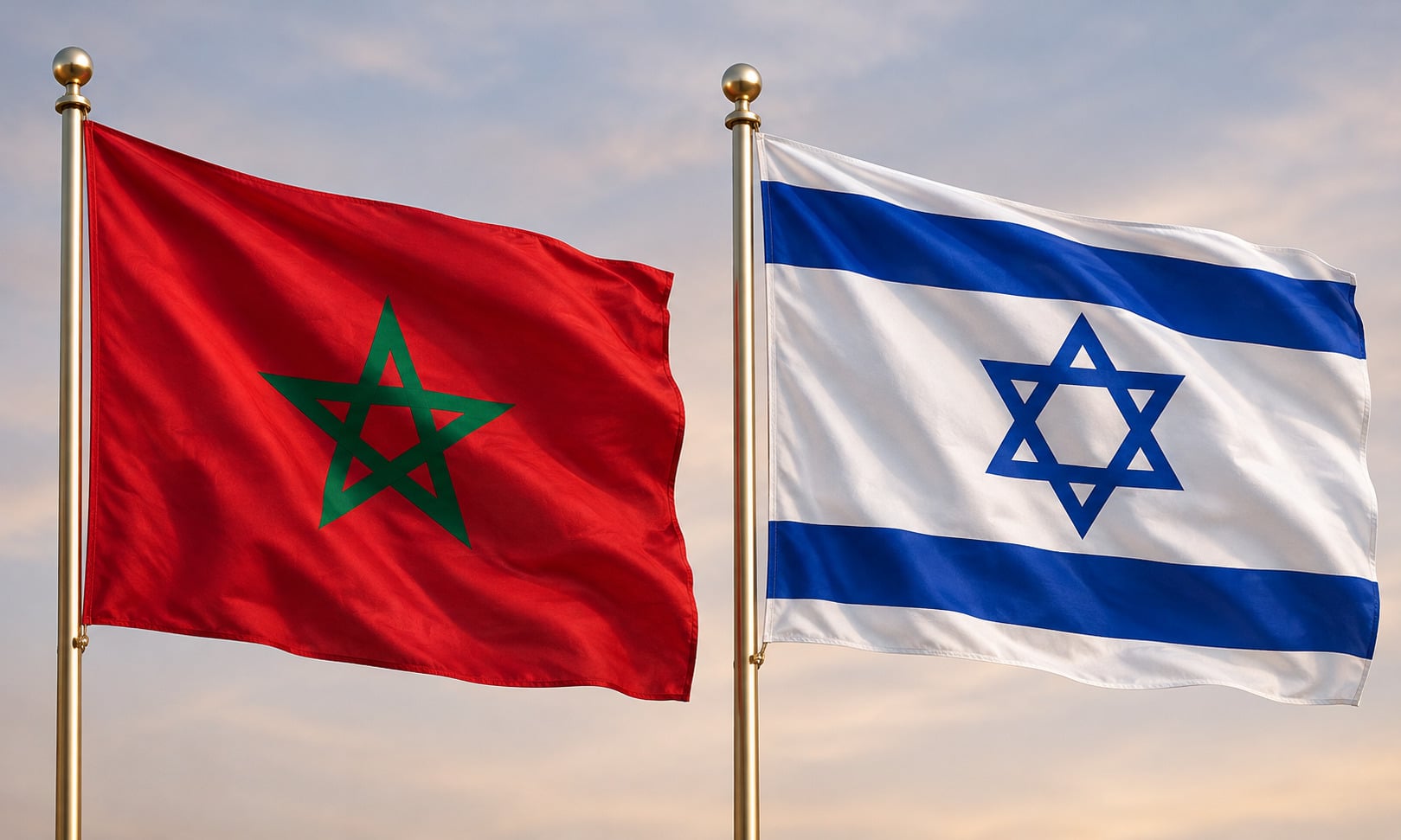
From defense cooperation to political pluralism, Morocco’s approach offers a lesson in building a durable regional peace.
When Amir Baram, director general of Israel’s Ministry of Defense, described Morocco as “much more” than a defense partner during his November 9 visit to Rabat, he was referring to a relationship that now encompasses defense manufacturing, military technology, training and institutional cooperation, supported by deep historical and human ties between the two countries. Yet the significance of this partnership extends beyond its military dimension. It also lies in the Moroccan approach that has allowed it to develop, and in what that experience can teach Israel about the future of regional relations and peace.
Morocco approaches its relationship with Israel as a sovereign state with its own priorities, interests and vision for the region. This has made it possible to build a mutually beneficial partnership while maintaining a clear position on the Palestinian question and supporting a settlement that guarantees security for Israelis and national rights for Palestinians. From an Israeli perspective, Morocco’s independence is one of the partnership’s greatest strengths, giving the relationship credibility and a foundation rooted in clearly defined interests.
Since diplomatic relations were renewed in December 2020, Rabat has consistently followed this approach. The trilateral declaration signed with Israel and the United States coincided with King Mohammed VI’s reaffirmation of Morocco’s commitment to a two-state solution, with an independent Palestinian state living alongside Israel in peace and security. That position has remained part of Moroccan diplomacy, even as bilateral relations have expanded into economic, security and technological cooperation. The underlying principle is that regional partnership and a political settlement of the Israeli-Palestinian conflict can advance together.
The practical value of this approach became evident in March 2024, when Morocco used its diplomatic channels with Israel to facilitate the delivery of humanitarian assistance to Gaza through a land crossing. The initiative illustrated how relations between the two countries can serve purposes beyond their immediate bilateral interests. Morocco’s standing in the Arab and Muslim worlds, together with its extensive international relationships, gives this partnership a wider diplomatic dimension and potential relevance to efforts toward a lasting regional peace.
Another aspect of the Moroccan experience deserves closer attention in Israel, particularly following remarks made on November 10 by Abdelilah Benkirane, Morocco’s former prime minister and current secretary-general of the Justice and Development Party (PJD). Benkirane reiterated his opposition to what he calls “normalization,” placing particular emphasis on preventing its extension into Moroccan society. At the same time, he refused to condemn the Moroccan state for its decisions, acknowledging the strategic and security considerations involved. He also left open the possibility of reconsidering his position on Israel if an agreement with the Palestinians led to the establishment of their state.
The significance of these remarks lies in the distinction between opposition to a political process under present conditions and a willingness to reconsider that position within the framework of a negotiated settlement. Coming from one of Morocco’s most prominent Islamist figures, this openness to a different relationship with Israel in the context of Palestinian statehood deserves to be understood beyond the familiar assumptions often applied to Islamist movements in the region.
This complexity is not new to the PJD’s history. In July 2012, Ofer Bronchtein, a former adviser to Yitzhak Rabin and a French-Israeli peace activist known for advocating Palestinian rights, attended the party’s national congress. The party subsequently issued explanations about the circumstances of his invitation, emphasizing that his work in support of the Palestinians had been central to the decision. Accounts from the time also indicate that the party’s representative in France had conveyed information about Bronchtein’s Israeli nationality, alongside his French and Palestinian passports.
What makes the episode noteworthy is that an Israeli associated with Rabin’s legacy and Israeli-Palestinian peace efforts was able to attend the congress of a Moroccan Islamist party through his commitment to dialogue and Palestinian rights. Eight years later, Saadeddine El Othmani, a prime minister from that same party, was among the signatories of the December 2020 declaration renewing relations with Israel. Taken together with Benkirane’s latest remarks, these episodes reveal the distinction between a party’s ideological positions and the institutional responsibilities of the state.
Nor is the PJD Morocco’s only Islamist movement. Al Adl Wal Ihsane, or Justice and Spirituality, also opposes relations with Israel and participates in initiatives and demonstrations supporting the Palestinians. Benkirane himself questioned the suggestion that opposition to what he calls normalization represents a unanimous popular position, pointing to the limited scale of current mobilization compared with earlier periods. Protest movements express the convictions of their participants, but they do not speak for every Moroccan or encompass the full range of attitudes within society.
What matters most in Morocco is the ability of the state to maintain its strategic direction amid this political and ideological diversity. Political parties and movements can openly challenge particular foreign-policy choices, while state institutions continue to manage international relationships according to national interests and established commitments. This distinction makes it misleading to regard the presence of Islamist opposition as an automatic threat to the stability of Moroccan-Israeli relations.
The explanation is closely connected to the Moroccan monarchy and, more specifically, to the institution of the Commander of the Faithful, or Amir al-Mu’minin, which occupies a central place in the country’s religious and constitutional order. King Mohammed VI, in this capacity, is constitutionally entrusted with safeguarding the free exercise of religion, while the monarchy plays a defining role in the continuity of the state and its strategic direction. This institutional framework allows Morocco to accommodate different political and ideological currents without granting any single movement authority over the country’s religious legitimacy or sovereign decisions.
Israeli observers should understand this aspect of Morocco on its own terms rather than interpret it through the experiences of Islamist politics elsewhere in the Middle East. The Commander of the Faithful is more than a religious title. It is a central institution in Morocco’s constitutional and religious order and an important source of continuity. Preserving its institutional role is closely connected to the country’s stability, a consideration that also matters to partners pursuing long-term relations with Morocco.
This distinctive political and religious framework is accompanied by a Jewish history that long predates modern Israeli-Moroccan diplomacy. Jewish communities have lived in Morocco for more than two millennia and have contributed over centuries to the country’s economic, cultural and religious life. Deep connections developed between Moroccan Jews and the wider society, and much of that shared heritage remains visible today, including among the many Israelis of Moroccan descent.
When Morocco’s 2011 Constitution recognized the Hebraic component of its national identity, it gave formal recognition to a historical reality rather than creating a new relationship. This distinction matters when interpreting political debate in Morocco. Criticism of Israeli government policies, or opposition to particular forms of bilateral engagement, should not automatically be confused with hostility toward Jews, whose place in Moroccan history and identity is deeply established. The shared Jewish-Moroccan heritage provides a human and cultural foundation for relations that extends well beyond temporary political disagreements.
Morocco’s independent approach is equally visible in its foreign policy. Defense cooperation with Israel forms part of a broader strategy to diversify international partnerships and strengthen national capabilities, particularly in military technology and domestic defense manufacturing. For Israel, the relationship offers opportunities for industrial and technological cooperation with a strategically located country whose connections extend across Europe, Africa and the Arab world.
Israel’s recognition of Moroccan sovereignty over Western Sahara in July 2023 also reflects an important dimension of the political understanding between the two countries, alongside their shared economic and security interests. The relationship has developed through reciprocal benefits and independently defined priorities, with each side bringing its own strategic interests to the partnership.
This is why narratives that portray cooperation with Israel as evidence of subordination offer such a limited understanding of Moroccan diplomacy. Rabat’s foreign policy is built around the freedom to develop partnerships while retaining control over its national choices. Principled objections to relations with Israel, particularly those rooted in solidarity with Palestinians, belong to a different category from attempts to use the Palestinian question in political or regional disputes to question another state’s sovereignty or loyalty.
Morocco continues to support Palestinian rights while developing international partnerships that advance its national interests and can contribute to regional peace. This approach has remained consistent across changes of government and shifts in party politics, reflecting a broader continuity in the country’s strategic outlook.
For Israel, the Moroccan experience carries implications that extend beyond bilateral relations. It demonstrates how regional cooperation can develop through respect for the independence of partners, even when their positions differ on major political questions. Diplomatic, economic and security partnerships can coexist with efforts to resolve the Israeli-Palestinian conflict, while political pluralism within a partner country need not be interpreted as hostility toward Israel or the Jewish people.
Baram’s visit demonstrated the depth of the defense partnership that Israel and Morocco have developed. But Morocco’s political history, its institutional arrangements and the recent debate involving Benkirane reveal something more fundamental: a country that combines independent foreign policy, the capacity to accommodate political diversity, a longstanding Jewish heritage and a vision of regional peace that connects cooperation with a just and lasting settlement of the Palestinian question.
From an Israeli perspective, the significance of this experience is that peace requires more than political alignment. It benefits from partners capable of making independent decisions, defining their interests and building common ground despite differences in outlook. Morocco’s institutions, history and diplomatic experience give it a distinctive place in this regional conversation, and one that deserves greater attention as Israel considers the future of its relations with the Arab world.