
Former China based editor and business development exec.
The Survival Pact: Trump and Netanyahu
Understanding the personal psychology behind America’s Gaza policy
The question puzzles foreign policy analysts across the political spectrum: Why doesn’t Donald Trump force Benjamin Netanyahu to end the Gaza war? Trump commands unprecedented leverage over Israel—American military aid, diplomatic backing, and economic support make Israeli operations possible. Yet despite positioning himself as a dealmaker and peacemaker, Trump allows Netanyahu to continue what many consider a strategically purposeless conflict that has lasted over a year.
The answer lies not in geopolitical strategy but in personal psychology. Trump and Netanyahu share a bond forged by parallel survival struggles—two embattled leaders fighting legal battles, political enemies, and potential imprisonment. This personal connection has transformed American Middle East policy from strategic calculation into emotional solidarity.
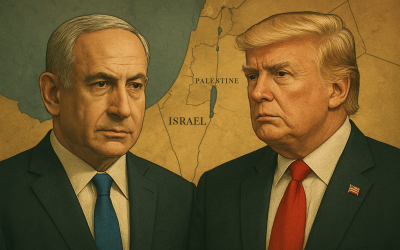
Netanyahu’s Survival Calculus
Netanyahu’s war continuation follows ruthless political logic that has nothing to do with military objectives or Israeli security. The moment hostilities end, his government faces inevitable collapse. Finance Minister Bezalel Smotrich and National Security Minister Itamar Ben-Gvir have made their position crystal clear: any ceasefire or significant concessions will trigger their departure from the coalition.
Under Israeli law, coalition collapse automatically triggers elections within 90 days. Current polling shows Netanyahu facing decisive defeat, with his Likud party hemorrhaging support to Benny Gantz’s National Unity party and other centrist alternatives. Electoral defeat would immediately strip Netanyahu of his parliamentary immunity and accelerate his ongoing corruption trial.
The legal stakes could not be higher. Netanyahu faces charges of bribery, fraud, and breach of trust across multiple cases. Without prime ministerial protection, legal proceedings would advance “on steroids,” as Israeli legal experts describe accelerated prosecution timelines. Prison time becomes not just possible but probable.
Beyond immediate legal consequences, electoral defeat guarantees establishment of a national commission of inquiry into October 7th intelligence failures. Such commissions wield quasi-judicial powers and have historically destroyed Israeli political careers. Given widespread public anger over the security breakdown that enabled Hamas’s attack, Netanyahu would likely bear primary responsibility for the worst intelligence failure in Israeli history.
This creates an existential political trap: ending the war means ending his career, freedom, and legacy simultaneously.
The Messianic Coalition’s Ultimatum
Netanyahu’s dependency on Ben-Gvir and Smotrich transforms their extremist agenda into government policy. Both men represent messianic religious nationalism that views the current conflict through biblical rather than political lenses. They envision complete Palestinian removal from Gaza and the West Bank, massive settlement expansion, and formal annexation toward a “Greater Israel” encompassing all biblical territories.
For them, the Gaza war represents divine opportunity rather than military necessity. Ben-Gvir has explicitly called for Palestinian emigration from Gaza, while Smotrich advocates expanding Israeli control over the entire territory. Their ultimatum to Netanyahu is simple: pursue maximal territorial objectives or lose their support.
This coalition dynamic means Netanyahu cannot pursue rational conflict resolution without triggering his government’s collapse. His political survival requires satisfying extremist demands that make peace impossible.
Trump’s Parallel Predicament
Trump’s empathy for Netanyahu stems from shared experience with legal persecution and political survival battles. Had Trump lost the 2024 election, he faced potential imprisonment on multiple federal and state charges: election interference, classified documents mishandling, financial fraud, and January 6th insurrection involvement.
Trump’s remarkable political comeback—securing the Republican nomination despite criminal indictments, conducting a successful presidential campaign, and defeating Democratic opponents—mirrors Netanyahu’s own survival skills. Both men transformed legal vulnerabilities into political weapons, portraying themselves as victims of elite persecution rather than subjects of legitimate investigation.
Trump’s victory eliminated his legal jeopardy almost immediately. Federal cases were dismissed, state prosecutions postponed, and civil judgments became manageable political costs. His experience navigating existential legal threats while maintaining power creates profound personal identification with Netanyahu’s current predicament.
Medieval Diplomacy in Modern Times
Historian Yuval Noah Harari accurately identifies Trump’s approach to international relations as fundamentally medieval—personal relationships between rulers rather than institutional arrangements between nation-states. This explains Trump’s affinity for autocratic strongmen who share his worldview and governance style.
Trump’s initial defense of Putin, his admiration for Kim Jong-un’s absolute power, his alliance with Viktor Orbán’s illiberal democracy, and his support for Jair Bolsonaro’s authoritarian populism all reflect personal rather than strategic connections. When Brazil sentenced Bolsonaro to prison for attempted coup, Trump imposed punitive 50% tariffs—economic retaliation for personal loyalty rather than national interest.
Trump only turned against Putin when Russian defiance made him appear weak domestically. Personal slights, not strategic considerations, drive policy changes.
The Emotional Bond
This psychological framework explains Trump’s unwavering Netanyahu support despite obvious strategic costs. American credibility suffers internationally, regional allies express frustration, and domestic political pressure mounts over Gaza casualties. Yet Trump prioritizes personal loyalty over national interest.
Trump sees Netanyahu as a kindred spirit: another leader fighting media persecution, judicial harassment, and elite conspiracy. Both position themselves as outsiders defending their nations against internal enemies—”deep state” operatives, corrupt judges, biased journalists, and political establishments.
Netanyahu’s pre-election efforts to boost Trump’s campaign—timing military operations for maximum political impact, coordinating with Republican messaging, and publicly praising Trump’s Middle East policies—reinforced this personal connection. Netanyahu explicitly viewed Trump’s victory as personal salvation that Biden’s continued presidency could never provide.
While Biden offered traditional ally support—military aid, diplomatic backing, and security guarantees—Trump provides something more valuable: personal protection from a leader who understands survival imperatives.
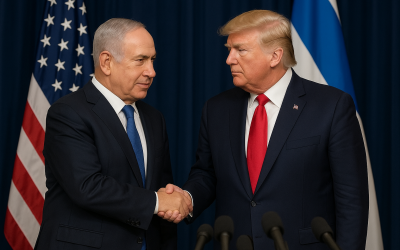 Strategic Implications
This personal diplomacy creates dangerous precedents for American foreign policy. When presidents prioritize individual relationships over national interests, strategic coherence disappears. Allies and enemies alike recognize that American policy reflects presidential psychology rather than institutional analysis.
Regional partners watch American credibility erode as Trump enables policies that destabilize the Middle East. European allies question American leadership when personal loyalty trumps alliance obligations. Authoritarian regimes worldwide observe that personal relationships with Trump matter more than human rights, international law, or strategic cooperation.
The Gaza conflict’s continuation serves neither American nor Israeli long-term interests. It radicalizes Palestinian populations, strains regional relationships, empowers Iranian influence, and undermines moderate Arab states pursuing normalization with Israel. Yet these strategic costs pale before personal loyalty calculations.
The Broader Pattern
Trump’s Netanyahu support fits a consistent pattern of protecting embattled allies who serve his psychological needs. Whether defending Putin initially, supporting Orbán’s democratic backsliding, or maintaining loyalty to indicted associates, Trump prioritizes personal relationships over institutional obligations.
This approach fundamentally undermines democratic governance, which depends on institutional restraints rather than personal discretion. When foreign policy becomes an extension of presidential psychology, national interests become secondary to individual loyalties.
Trump’s refusal to pressure Netanyahu reflects not strategic wisdom but personal identification with another leader fighting for survival. Both men face legal jeopardy, political enemies, and potential imprisonment. Their bond transcends traditional alliance relationships because it’s rooted in shared vulnerability rather than mutual interest.
Understanding this psychological dynamic explains otherwise inexplicable policy choices. As long as Trump sees Netanyahu as a fellow victim of elite persecution, American leverage will serve personal protection rather than peace promotion.
The Gaza war continues not because it serves Israeli or American interests, but because it serves Netanyahu’s political survival—and Trump’s emotional solidarity with that survival struggle makes American power complicit in its perpetuation.
The Fragility of Personal Loyalty
However, Trump’s personal loyalty comes with dangerous volatility. His relationship with Putin offers a cautionary precedent for Netanyahu. Initially, Trump defended Putin against American intelligence assessments, praised his leadership, and pursued personal diplomacy despite strategic opposition. The relationship only soured when Trump perceived Putin as manipulating him, making him lose face internationally, and lying directly to him about intentions and capabilities.
If Trump begins to feel that Netanyahu is similarly leading him on—promising outcomes that never materialize, making him appear weak to domestic audiences, or flatly deceiving him about military objectives—the personal bond could shatter as suddenly as it formed. Trump’s ego cannot tolerate being made to look foolish, especially by someone he has publicly defended.
Alternatively, if Trump perceives that Netanyahu’s political survival is overshadowing or damaging Trump’s own interests—whether through domestic political costs, international embarrassment, or strategic failures—he will abandon his ally with characteristic ruthlessness. Trump’s loyalty extends only as far as personal benefit; when protection becomes politically expensive, even close relationships become expendable.
The Path to Resolution
These psychological dynamics suggest that a near-ending to the Gaza war and early Israeli elections could materialize through either scenario. If Trump feels betrayed or politically damaged by continued support for Netanyahu, American pressure could shift dramatically overnight. Unlike traditional diplomatic pressure, which builds gradually through institutional channels, Trump’s personal approach means policy reversals can happen as suddenly as mood changes.
Netanyahu’s survival strategy, built on personal relationships rather than strategic value, contains the seeds of its own destruction. The same psychological bond that currently protects him could become his downfall if Trump’s perception of their relationship shifts from mutual benefit to personal liability.
This represents a fundamental perversion of alliance relationships, where superpower resources serve individual political needs rather than national strategic objectives. The consequences will outlast both leaders, but the precedent of personal diplomacy over institutional governance may prove their most dangerous legacy—and Netanyahu’s most precarious foundation.
Related Topics
Related Posts