
Examining Extremism, Identity, and Influence
The Trump Touch: From Chaos to Consensus in the Middle East
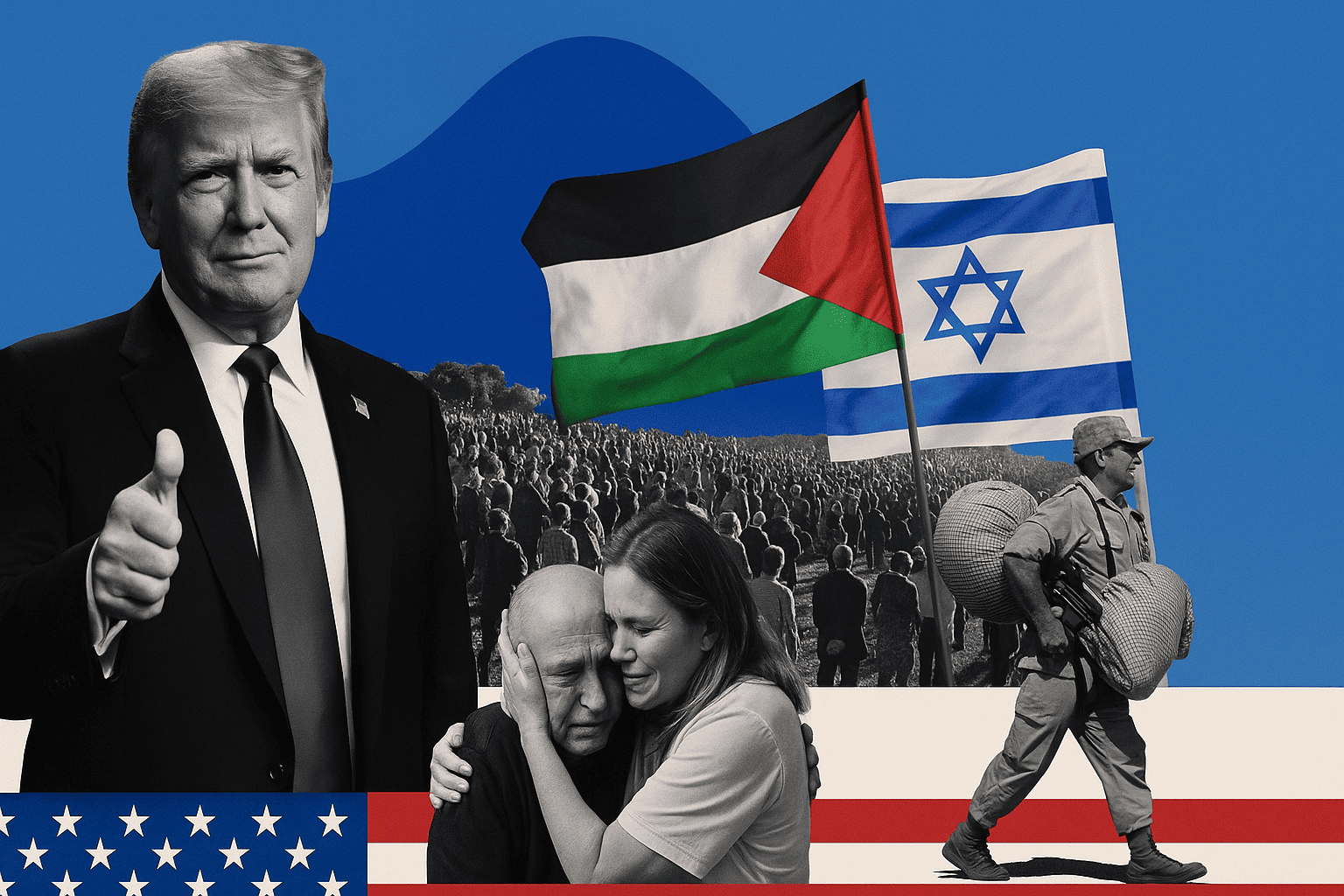
Trump has done what few dared—forced old enemies to talk, made allies out of skeptics, and brought a flicker of hope to a region long defined by despair.
I read The Art of the Deal during my stay in Saudi Arabia in 2020; since then I have been his fan for his precise art of dealings. His Think Like a Billionaire is also a fantastic book. Those texts taught me that diplomacy, like business, must be grounded in credible leverage, clear incentives, and a willingness to walk away when necessary.
It is through that lens I have been watching, with a mixture of skepticism and hope, the unfolding of Donald Trump’s Gaza Peace Plan—and the broader string of diplomatic initiatives he has engineered in 2025.
The Israel-Hamas Breakthrough and Its Architecture
On October 8–9, 2025, amid intense shuttle diplomacy in Sharm el-Sheikh, Israel and Hamas formally agreed to the first phase of Trump’s Gaza proposal.
This is arguably the most consequential diplomacy of his second term. Under this agreement, Hamas commits to release 20 living hostages, while Israel will free 2,000 Palestinian detainees, including 250 with life sentences and 1,700 arrested since October 7, 2023.
Israel, in turn, will pull its forces back to predetermined lines in Gaza, temporarily halting military operations, in order to permit large-scale humanitarian access and reconstruction. The plan envisions a technocratic transitional governance in Gaza, rigorous demilitarization, and deployment of an Arab-led peacekeeping force to stabilize the territory.
The role of Saudi Arabia and the Emirates in shepherding this deal cannot be overstated. Riyadh’s behind-the-scenes coordination, financial pledges for reconstruction, and ability to bring Arab states together were critical. The Emirates publicly endorsed Trump’s approach, contributing diplomatic momentum and signalling that the Gulf is ready to invest in peace, not perpetual war. Their alignment is helping to recalibrate the regional balance: peace with oversight, not endless occupation or siege.
An often underappreciated maneuver is Trump’s decision to terminate or lift certain sanctions on Syria, restoring diplomatic flexibility in the Levant and opening corridors for reconstruction, trade, and inter-state links. That gesture broadens the horizon beyond Gaza alone, enabling a more integrated approach to stability across the region.
Diplomatic Footprints: Trump’s Deal-Making Across Continents
This Gaza milestone sits within a broader mosaic of Trump-brokered agreements in 2025.
In June–July 2025, he mediated a pact between Rwanda and the Democratic Republic of Congo, with provisions for withdrawal of Rwandan troops, disarmament of armed groups, and frameworks for regional integration.
In June, he also engineered a symbolic rapprochement between Israel and Iran, opening limited channels after decades of hostility.
In July, he mediated a peace accord between Cambodia and Thailand to settle a protracted border dispute. In August, he claimed success in normalizing relations between Armenia and Azerbaijan, reviving trade and connectivity across the Caucasus.
Trump has also claimed to have brokered a ceasefire between India and Pakistan. But that claim remains unacknowledged by India largely because both Delhi adheres to the doctrine—rooted in the 1960 Indus Waters Treaty and longstanding diplomatic posture—that Kashmir is a strictly bilateral issue between India and Pakistan.
Though Pakistan has shrewdly violated the treaty by invoking external powers, but India has consistently resisted any third-party mediation or internationalizing of Kashmir; to do otherwise would open the door to the involvement of external powers and perhaps convert it into another Gaza-style flashpoint.
Still, India has publicly praised Trump’s Gaza diplomacy. On October 4, Prime Minister Modi tweeted: “We welcome President Trump’s leadership as peace efforts in Gaza make decisive progress. Indications of the release of hostages mark a significant step forward. India will continue to strongly support all efforts towards a durable and just peace.”
Earlier, on September 30, he had expressed: “We welcome President Donald J. Trump’s announcement of a comprehensive plan to end the Gaza conflict… It provides a viable pathway to long term and sustainable peace…”
And today’s reaffirmation: “We welcome the agreement on the first phase of President Trump’s peace plan… We hope the release of hostages and enhanced humanitarian assistance … pave the way for lasting peace.”
Thus, India preserves its stance that Kashmir must remain bilateral, while also endorsing U.S. leadership in West Asia—a diplomatic fine-tuning that bears witness to Trump’s influence.
Meanwhile, in Russia-Ukraine, Trump’s diplomatic imprint is still emergent. He has pushed for ceasefire frameworks and multilateral talks, but so far no definitive breakthrough. If he can succeed there, too, his portfolio would span the most volatile theaters of our time.
A Wider Mandate: From Gaza to the United States
Beyond foreign diplomacy, Trump must now turn that same resolve inward. It is not enough to ban the Muslim Brotherhood in Sudan or Egypt; the Brotherhood’s ideological and financial networks extend into the United States.
In August 2025, U.S. Secretary of State Marco Rubio announced that Washington is “in the works” to designate the Muslim Brotherhood as a terrorist organization, emphasizing that each branch must be carefully assessed to survive legal challenges. Rubio acknowledged the complexity: “you’d have to designate each one of them … everything is in motion.”
He added that the legal burden is heavy—“you have to show your work like a math problem” before courts. Meanwhile, legislation such as H.R.3883 – the “Muslim Brotherhood Is a Terrorist Organization Act of 2025” has been introduced in Congress, seeking formal designation.
Trump should seize this moment: ban the Muslim Brotherhood in the United States without ifs and buts. Their global ideology, funding networks, and front organizations (some masquerading as charities or civil society groups) are already well documented. U.S. law-abiding Muslims who reject extremism should feel no threat; this is not about religion, but about ideology, infiltration, and subversion.
At the same time, we must build a coalition of common-sense voices—those who say “Never Again,” who pledge “Not In My Name.” In Ohio, David B. Cohen has launched the Common Bond Alliance (CBA), a platform for voiceless communities: Jews, Hindus, Christians, Muslims, Sikhs, Druze, Yazidis—all those who refuse to see their faith exploited by radicals. That is precisely the kind of broad alliance needed: principled, inclusive, fearless.
And then there is Pakistan-occupied Kashmir (PoK), where the Pakistani military continues a campaign of suppression against civilians demanding fundamental rights.
Thousands have been detained, tortured, silenced. Trump must hold the Pakistan Army accountable—by analogy to his dealings with Hezbollah, by threatening sanctions, and by insisting that U.S. aid and cooperation be contingent on human rights compliance. It is not enough to declare moral support; real leverage must follow.
The Deal-Maker’s Moment
This is not the time for hesitation. Trump has done what few dared—forced old enemies to talk, made allies out of skeptics, and brought a flicker of hope to a region long defined by despair. But the measure of true leadership lies not in signing peace papers—it lies in sustaining them.
Now is the moment for Trump to turn momentum into legacy. The world needs the same fearless decisiveness he brought to Gaza—applied to banning the Muslim Brotherhood’s networks within the United States, confronting the hypocrisy that fuels extremism, and giving moral strength to sane voices, where faiths unite not against each other but against fanaticism itself.
If Trump stands firm with his Arab and Israeli partners, this could be his defining chapter—not as the world’s most controversial president, but as the one who forced peace through power and persuasion. History doesn’t reward those who played it safe; it remembers those who reshaped the map.
And in this rare moment, the map is moving.
Related Topics
Related Posts