
The Tyranny of Anonymous Sources
There was a time when anonymous sources were journalism’s last resort.
They were used sparingly, reserved for whistleblowers exposing corruption, officials revealing matters of overwhelming public interest, or individuals who genuinely faced serious repercussions if their identities became known. Editors treated such material with extreme caution. Multiple independent confirmations were required. Extraordinary claims demanded extraordinary evidence.
Today, something has changed.
Some of the world’s most respected news organizations increasingly rely on anonymous sources to construct and reinforce narratives about Israel that quickly harden into accepted truth, regardless of whether the underlying allegations withstand scrutiny.
The result is not merely flawed reporting. It is the creation of a permanent digital record in which accusation becomes fact, suspicion becomes history, and correction, if it comes at all, arrives too late to matter.
The consequences extend far beyond a single news cycle.
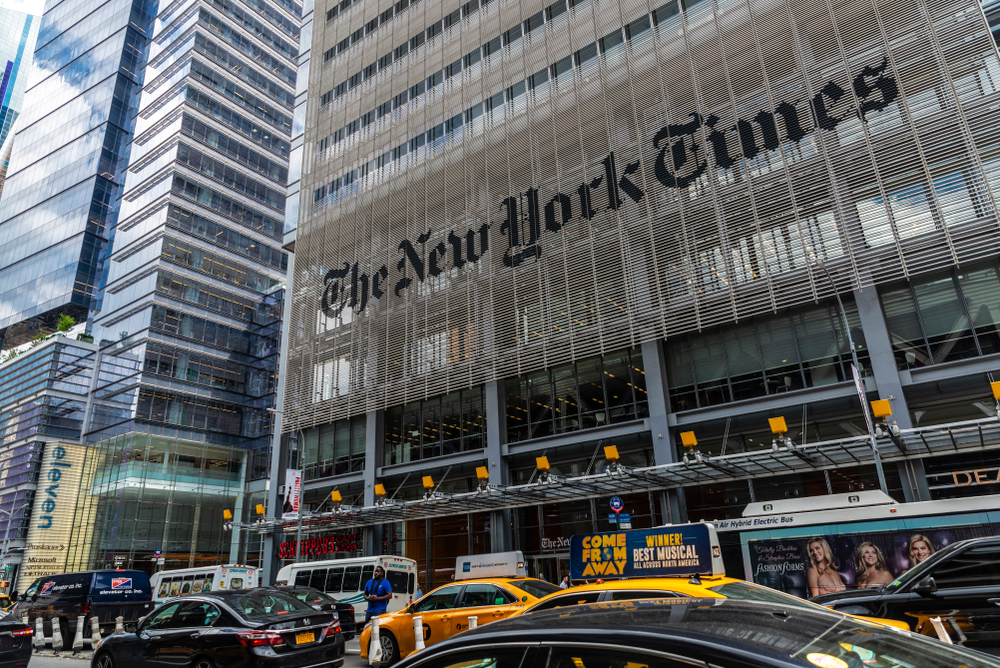
Take the controversy surrounding a report by New York Times columnist and reporter Nicholas Kristof concerning allegations involving Israeli soldiers and Palestinian detainees.
The article amplified claims that Israeli soldiers had used dogs to sexually assault Palestinian prisoners, allegations so explosive that they immediately spread across social media, activist networks, and international commentary.
The reporting relied heavily on unverified testimony and lacked the evidentiary standards that would ordinarily accompany accusations of such gravity. The resulting backlash was significant enough to prompt legal threats and widespread protests from readers who believed the newspaper had abandoned its own standards.
Regardless of whether in the future there are ever edits, corrections or retraction, the allegation itself has already escaped into the information ecosystem.
For millions of readers, the impression was fixed. They would never see the subsequent debates over sourcing, the questions surrounding verification, or the responses challenging the claims. They would remember only that “The New York Times reported” that Israeli soldiers committed these atrocities.
That phrase carries enormous power.
It is the modern equivalent of an official seal of authenticity.
The same pattern can be seen elsewhere. Reports built around unnamed intelligence officials, anonymous humanitarian workers, unidentified diplomats, or undisclosed insiders increasingly shape coverage of Israel.
Often, these stories align neatly with a pre-existing narrative: Israel acts recklessly, Israel deceives, Israel targets civilians, Israel conceals wrongdoing.
Sometimes the allegations are later qualified. Sometimes they are contradicted by emerging evidence. Occasionally they quietly disappear from subsequent reporting altogether.
However, by then, the damage has already been done.
Recent reporting examined by Honest Reporting illustrates how weak sourcing can rapidly fuel global narratives. Claims based substantially on anonymous assertions have circulated widely before independent verification could take place, influencing public opinion and generating headlines across the world. The original caveats disappear as the story travels. Nuance is stripped away. What began as an allegation from unnamed individuals becomes repeated as established fact.
The internet rewards certainty, not caution.
A headline based on anonymous sources is quoted by activists on social media, it is incorporated into Wikipedia entries, and appears in NGO reports.
Academics cite the media coverage. Bloggers reference the academics. Artificial intelligence models trained on publicly available information absorb the claims as part of the historical record.
Months later, even if the original publication issues clarifications, updates, or partial corrections, the narrative has already calcified.
The accusation lives forever.
The correction dies in obscurity.
This phenomenon is especially dangerous when reporting on Israel because it intersects with one of humanity’s oldest prejudices: the willingness to believe the worst about Jews.
History should make journalists particularly cautious.
Medieval Europe embraced blood libels accusing Jews of murdering Christian children for ritual purposes. These fabrications spread because they confirmed existing biases. The Dreyfus Affair succeeded because large sections of French society were predisposed to believe a Jewish officer capable of treachery. Soviet anti-Zionist propaganda portrayed Israel as uniquely malevolent and conspiratorial.
The language changes across generations, but the mechanism does not.
Stories that would demand overwhelming evidence if directed at almost any other democratic society are too often published about Israel based on anonymous testimony and limited corroboration because they fit an established framework. Israel becomes uniquely suspect. The burden of proof shifts and skepticism diminishes.
None of this means Israel should be immune from scrutiny.
It should not.
Israel is a democracy engaged in a prolonged and brutal conflict. Democracies require rigorous journalism. Governments must be investigated. Military conduct must be examined. Mistakes and wrongdoing should be exposed and addressed.
Nevertheless, scrutiny is not the same as credulity.
The standards applied to allegations against Israel should be identical to those applied elsewhere. Anonymous sourcing should remain exceptional rather than routine. Editors should ask harder questions before publishing claims likely to inflame global opinion. Reporters should distinguish clearly between verified fact and unproven allegation.
Most importantly, readers deserve transparency.
How many anonymous sources support the claim? What are their possible interests? Were documentary records reviewed? Was independent corroboration obtained? What evidence contradicts the allegation? Why was anonymity granted?
These questions were once considered basic journalism.
Today, they are too often treated as obstacles to a compelling narrative.
The stakes could not be higher.
In the digital age, journalism does not simply describe reality. It creates the archive from which future generations understand reality. Search engines retrieve it. Students study it. Courts reference it. Artificial intelligence systems learn from it.
When serious institutions elevate poorly substantiated allegations into global headlines, they are not merely reporting the news.
They are manufacturing historical memory.
Long after the fighting ends, long after the clarifications are forgotten and the caveats buried, those allegations will remain online as permanent evidence of what the world believes happened.
That is why anonymous sourcing demands greater restraint, not less.
Because when journalism abandons its traditional safeguards, it does not merely risk getting a story wrong.
It risks turning accusation into history.