
The War Is Over, but the Gap Remains
The “Iron Swords” war in Gaza has come to an end. The living hostages are back home, soldiers have been reunited with their families, and Israelis are hoping for quieter times ahead. Yet while the physical fighting may have ended (for now), the struggle for Israel’s global image is far from over.
A recent Gallup poll, comparing data from 2023 to 2024, highlighted a trend that clearly did not begin with the war, but was certainly amplified by it: a generational gap in American support for Israel. Among Americans aged 55 and older, favorability toward Israel fell by 3 percentage points, from 74% in 2023 to 71% in 2024, whereas among younger adults, support dropped from 64% to 38%, a decline nearly nine times sharper.
These numbers leave no room for interpretation: the problem is not merely the decline in support among Americans following the war, but rather the striking gap between the generations in how Israel is perceived.
So what is the underlying cause for this concerning divide? Many reasons could be argued, but one thing that is clearly different for younger Americans compared to older ones is their sense of context. For older generations, Israel still symbolizes a nearly miraculous story: a people who survived centuries of persecution, returned to their ancestral homeland, and built a democracy in the heart of the Middle East.
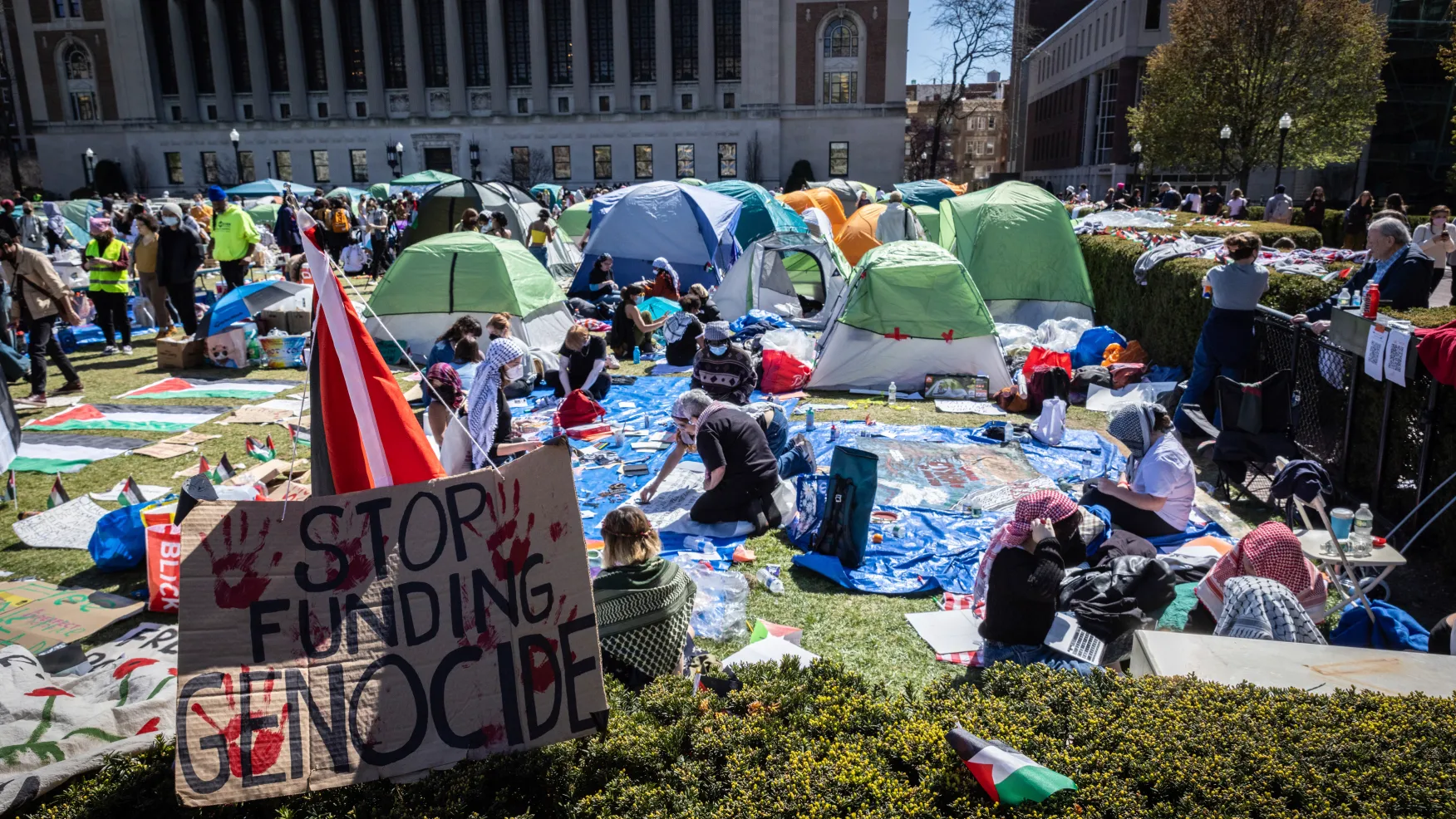
Yet for much of today’s youth, Israel’s story is at best lacking historical context and at worst heavily distorted. Particularly in the digital age, where narratives are being shaped by short clips and headlines, reality in general, and especially regarding Israel, is being oversimplified. The frequent use of loaded terms such as “genocide” and “apartheid” is often not meant to offer substantive criticism of policy; instead, it aims to provoke emotions through words that carry strong negative connotations, especially on college campuses, portraying Israel as an evil actor in the international arena.
The effect is compounded by the oversimplification of the conflict into binary categories: oppressor versus oppressed, strong versus weak, perpetrator versus victim, with nothing in between. This deliberate framing leaves little space for recognizing the nuances and complexity of the situation.
And precisely now, when the fighting is over and it may no longer seem necessary to explain the depth, it is exactly the time for Israel to reintroduce itself to the younger generations with the context it has too often failed to provide. While media and news outlets have been presenting the Jewish state primarily through the lens of conflict, we must proudly showcase the other parts of its identity often being overlooked: Israel’s global role, humanitarian missions, and perhaps most importantly, shared values with the Western world. Israel should not ignore the complexity of its reality, but it should also not let it define it.
Israel’s endurance throughout the military operation, despite immense international pressure, was made possible largely, if not entirely, by the indispensable support of the United States. Yet Israel cannot afford to take this alliance for granted. Within just a few years, the same generation whose support has steadily eroded over the past two years will become the decision-makers shaping America’s future. The college students protesting against Israel today will be the policymakers of tomorrow. If they continue to view Israel through incomplete stories and shallow phrases, this partnership will fade sooner than we realize.
Beyond the seven physical fronts Israel faced, many people have come to include an eighth one just as significant: the battle for its global image. As starkly demonstrated by this most recent war, physical fighting and public perception are becoming increasingly interwoven; Israel’s strength relies not only on military capability but also on international legitimacy, moral authority, and the continued support of its allies.
In this war, notwithstanding Israel’s PR loss, it managed to achieve many of its military objectives in Gaza. Yet if Israel continues to neglect the next generation of Americans, it risks losing the next war – not just the one for public opinion, but the one on the battlefield as well.
About the Co-author:
Raised in Israel and now based in California, 18-year-old Iddo Cabiri is the Co-Founder of SUBRES, the first gap-year program in the United States dedicated to Israeli advocacy. Iddo delivers advocacy workshops nationwide, focusing on outreach and partnerships. His background includes winning a regional speech competition about the “Iron Swords” war in Gaza, founding a socio-political debate club in Israel, and co-leading the Silicon Valley Israeli Scouts.