This D’var was inspired by an insight shared by Daniel Nassimi.
────────────
The Jewish year begins beneath a hidden moon.
The Gemara reads this in the words of Tehillim:
תִּקְעוּ בַחֹדֶשׁ שׁוֹפָר בַּכֵּסֶה לְיוֹם חַגֵּנוּ Blow the shofar at the new moon, at its concealment, for the day of our festival.
(Tehillim 81:4; Rosh Hashanah 8a)
The moon, associated in Kabbalah with Malchut, is concealed. So too is what lies upon the scales. We stand before Hashem, unable to see where they rest.
The story of that moon reaches back to Creation, when the sun and moon were created as two great lights. The moon asked Hashem:
אֶפְשָׁר לִשְׁנֵי מְלָכִים שֶׁיִּשְׁתַּמְּשׁוּ בְּכֶתֶר אֶחָד Can two kings share one crown?
Hashem answered:
לְכִי וּמַעֲטִי אֶת עַצְמֵךְ Go and diminish yourself.
(Chullin 60b)
Rosh Hashanah arrives in that concealment. Then a thin crescent emerges, widening through the Aseret Yemei Teshuvah. As the moon gathers light, the days gather weight.
Once each month, we step outside beneath the night sky for Kiddush Levanah—the Sanctification of the Moon. In Tishrei, the timing matters. Customs differ over whether to recite it before or after Yom Kippur. One reason given for saying it beforehand is that one more mitzvah might add its weight to the scales.
Rabbi Yochanan goes further. One who blesses the new moon in its proper time is as though he has gone out to greet the Shechinah (Sanhedrin 42a). The moon is still incomplete, yet it is precisely then that we step outside to meet Hashem.
Beneath the waxing crescent, we bless its renewal while seeking our own:
שֶׁהֵם עֲתִידִים לְהִתְחַדֵּשׁ כְּמוֹתָהּ For they are destined to renew themselves like it.
Yeshayahu foresees a day when the light of the moon will be like the light of the sun (Yeshayahu 30:26).
Then comes the tenth of Tishrei. In Kabbalah, Binah is the world of teshuvah, and on Yom Kippur, Malchut rises to receive from it. We fast, confess and pray until Neilah, when the gates begin to close.
But Tishrei is still moving.
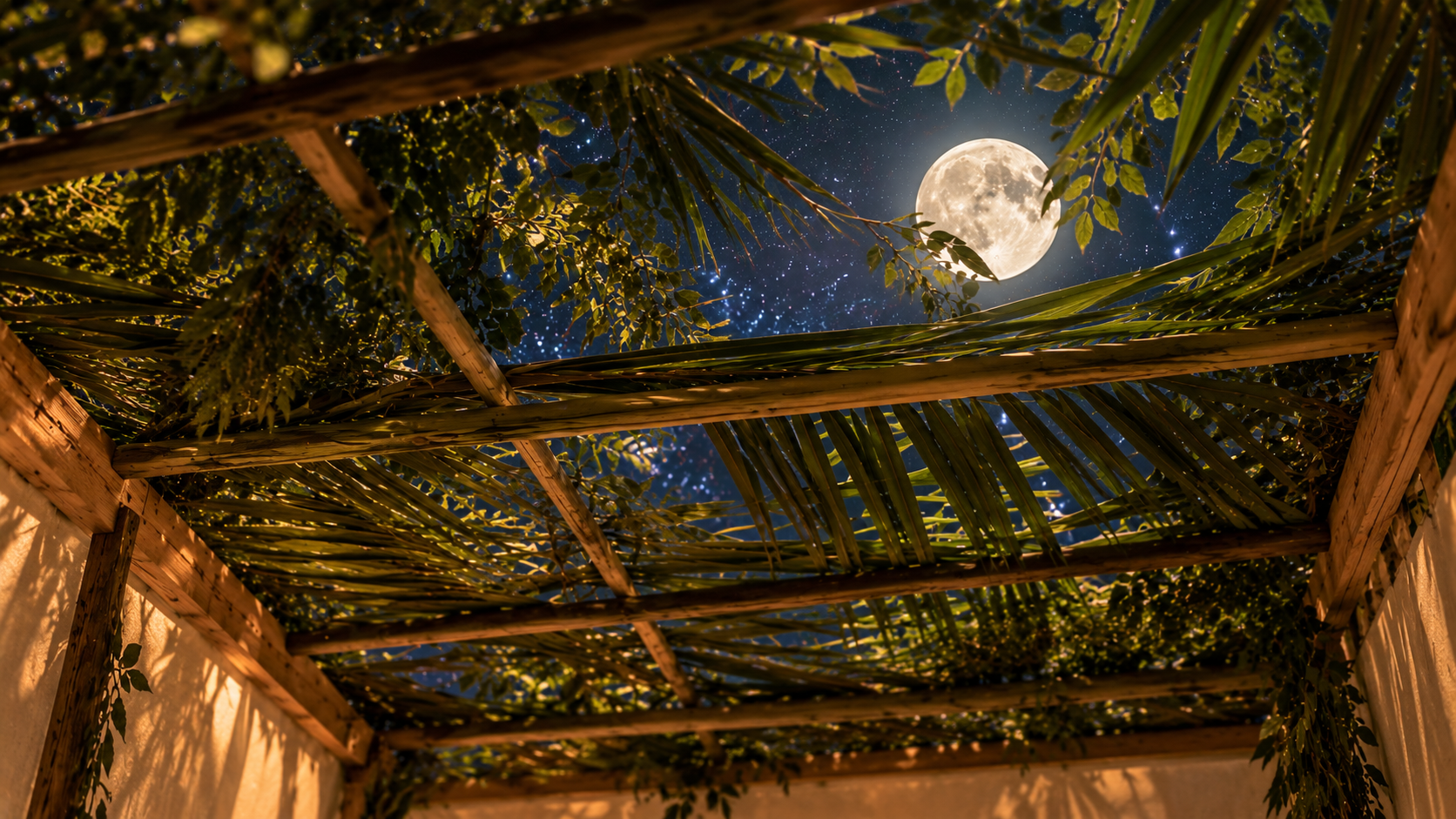
Five nights later comes Sukkot. The Zohar associates the fifteenth of the month with the fullness of Malchut. Beneath the moon, we enter the sukkah.
Chassidic teaching describes the sukkah as an or makif—a light that surrounds the whole person. We do not merely hold this mitzvah or wear it. We step inside it with our whole selves.
Within the sukkah, Hashem tells us to rejoice:
וְהָיִיתָ אַךְ שָׂמֵחַ And you shall be only joyful.
(Devarim 16:15)
The moon that was told to diminish itself has become full. And the people who stood beneath the weight of judgment now enter zman simchateinu.
Through the branches of the schach, the light finds us.
חג שמח
שמואל
About the Author
Sam writes on faith, Jewish identity, geopolitics, and the enduring covenant between the Jewish people and the Land of Israel. Living between the UK and Israel, he explores renewal, sovereignty, and the forces shaping the journey home.