
Professional Zioness
The West Needs a Day-After Plan Too!
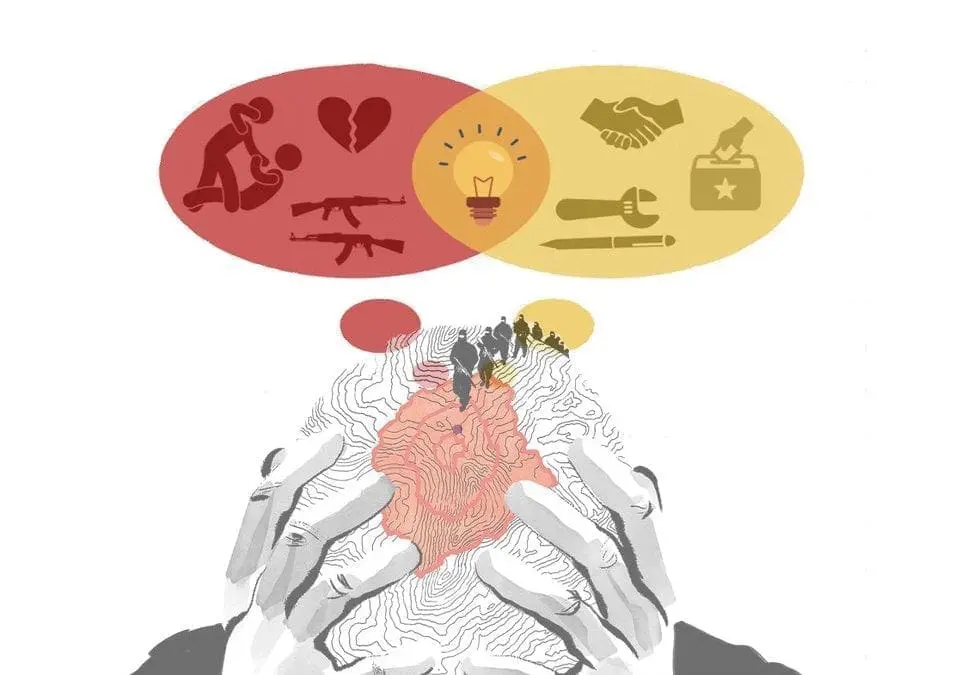
Now that there is a 20-point plan for Israelis and Palestinians and really the whole Middle East, I think the West needs one too.
The world was screaming for a day-after-plan pretty much as soon as Israel retaliated against the October 7 pogrom. Literally, right as the IDF began its twofold mission of dismantling Hamas and returning the hostages, a day-after plan was on everyone’s lips, including Israeli journalists, pundits, podcasters etc. This always struck me as quite unfair, and even wrongheaded. Focussing on the long term is important, yes, but with such complex, urgent and heart wrenching short term goals, I believed the day after plan discourse came far too soon. No one was demanding a day-after plan from the Allies during WWII whilst they were knee deep in fighting against the Nazi grip on Europe. Sure, there came a time for a plan, eventually, and boy was is a doozy, but more on that later. Nonetheless, here we are, with Trumps day-after plan. And it’s a good one. For all his wrongs, this is one hell of a right! You can read all 21 points in the plan here https://www.timesofisrael.com/revealed-us-21-point-plan-for-ending-gaza-war-creating-pathway-to-palestinian-state/amp/ It is both a step by step process, and a sort of list of priorities, and item number one in this plan is the key to unlocking everything else; de-radicalisation.
Yes, the very first step towards this utopian day-after is to somehow extract the Palestinian population from the stranglehold of martyrdom, violent Jew-hate, the glorification of death, and extremist Islamism. This is a clear and virtuous goal as it could transform the entire Middle East for the better. We have seen such de-radicalisation programs implemented in the UAE where serious investment has been made into education programs, media campaigns and religious reforms, and this has been a contributing factor in the success of the Abraham Accords.
But we must also zoom out, for de-radicalisation is not just a problem for the Middle East, it is a problem the West must contend with too. You might even say it is stickier in the West, as extremist perspectives have affixed themselves to the very cornerstones of Western civilisation that were responsible for shaping the democratic, liberal, freedom-loving way of life we have come to take for granted over the past few decades. Where once theatres, galleries and university lecture halls celebrated enlightenment ideals, they now cloak themselves in ideologies that champion the oppressor/oppressed narrative. They reward segregation disguised as “anti racism”. They applaud the erosion of women’s rights through extremist trans ideology. They peddle in conspiracy theories that promote Jewish or Zionist power in the name of “decolonisation”, and bully, vilify, attack and remove all “thought crime” that doesn’t subscribe to this narrow worldview. We need a day-after plan for the West too.
In polite society, where you find gorgeous glossy coffee table books about art or fashion or horticulture, and mahogany shelves stacked with literature and history, people recoil at their own national flag. In polite society it is seen as a symbol of racism and deserving of derision. In rallies and marches across the West, where bougie families find themselves in lockstep with those chanting for the eradication of the only Jewish state. It has become common place to see people who have enjoyed the best of the freedoms the West has to offer burn the flags that represent the countries that embraced those very freedoms. We have seen English folk say out loud that their own flag is a racist flag that should not be waved in public, and shame on anyone who does. The American and Australian flags have somehow become code for the far-right rather than simply symbols of a nation’s pride. Any sense of affinity with your country can been seen by the guardians of cultural currency as a dog-whistle for some kind of fascist national-supremacy. We need to de-radicalise such attitudes and find a pathway back towards loving one’s country without being cast as a pariah for doing so. This will take courageous political leadership as well as careful media messaging whose goals are not clicks, likes and views but something bigger, a vision of a society that makes room for national pride alongside fair and necessary criticism of said nation.
The world of the arts is certainly central to perpetuating such reductive and divisive thinking too. Indeed, it has become a cesspool of narrowmindedness and intolerance, and is also the source of a great deal of anti-Jewish and anti-Israel hate. Jewish artists are cancelled unless they baptise themselves in the waters of so-called progressivism, where one must demonstrate the requisite amount of anti-Zionism in order to be accepted. Of course, it is anything but progressive to demand that a minority people amputate parts of their ancient and collective identity in order to be accepted by wider society. Israeli artists have felt the sting of this most acutely as they are treated like they carry some kind of disease; boycotted and shunned completely. Their shows are often cancelled by venues who claim that their security cannot be guaranteed. I call bs on such excuses. Who do artists and patrons need security from? If there are threats of intimidation, harassment and violence then the source of the intimation, harassment and violence needs to be dealt with, not the targets. Imagine a venue deciding not to permit women from entering because women may not be able to be kept safe from sexual harassment! It would be outrageous and the public would rightly demand that it is not the women who ought to be limited in their freedoms but those that are doing the harassing. Such an approach could be one step towards de-radicalising the arts and reopen it up to Jewish and Israeli artists. The arts, after all, not only serve as a mirror for society, but also as its sculptor. The arts can shape us, move us in certain directions and even change us. What we watch, listen to, immerse ourselves in and consume form our collective cultural identity in subtle yet profound ways. Erasing certain art, silencing certain artists, vanquishes them from society leaving society untouched by them, and we are culturally poorer for doing. A healthy democracy must allow for art that makes us uncomfortable. A healthy democracy must allow for a diverse array of art and artists. A healthy democracy must stop lauding and rewarding artists who actively bully and ostracise artists for their cultural or ethnic identities. To de-radicalise this sector it might be time to learn a little more about those people that the “cool kids” have decided are the bearers of all that is evil. Such learning means that academia holds probably the most important key to de-radicalisation of the West.
The most elite universities worldwide have been bastions of group-think and cancel culture for years. How this has happened is complicated. Whether through funding channels or alliances built over many years between far-left philosophy and extremist Islam, colleges and universities have created entire faculties devoted to demonising Israel, promoting conspiracies about Jewish power and money, and creating frameworks of looking at absolutely everything in order to reinforce some kind of hierarchy of privilege. How to dismantle and de-radicalise this? It’s a tricky conundrum and I certainly don’t have the answer. But we could look back in time to a period where education needed a fundamental overhaul in order to rip society out of the spin-cycle of indoctrination it was caught in. As part of the Marshall Plan post WWII, the denazification process was central to the rehabilitation of German society. While the Marshall Plan focused on economic recovery, it operated within the broader framework of denazification, which aimed to ensure that the political and social landscape of post-war Germany was conducive to democratic governance and stability. This involved steps that, on the face of it, appear deeply undemocratic, but were critical in establishing a democracy based on equality and dissolving the calcified bigotry that had formed. Similarly, Japan also needed a rerouting of society, away from fascism and on a pathway towards liberal democracy. Both societies had their entire educational systems forcibly reformed to focus on human rights and civil liberties. A necessary irony you might say. Teacher training was also reformed in similar ways. The Allies actually took control of the education sectors in both societies in order to facilitate the re-entering of Germany and Japan into the comity of nations.
Now, I am not suggesting that any Western democracy is comparable with either German Nazism or Japanese fascism. What I am suggesting is that we can learn lessons from the past and adapt them to our current circumstances. We can also look at the reforms the UAE made to its educational programs in order to de-radicalise its society. But what we cannot afford to be is wilfully blind to the slow march towards a radicalised society. Universities cannot be allowed to indoctrinate students into a group-think and it cannot silence civil debate. Universities cannot allow for certain minorities to enjoy the right to tell their own story and express their own identity whilst shouting other minorities down using in the language of humanitarianism to justify it.
We also need to find some basic consensus over the meaning of words. It is especially egregious to see language misused by academics. We need agreed upon definitions for words like colonialism, Zionism, and genocide. The way such words are thrown around so thoughtlessly by academics, and then replicated by their students who know so little about the complexities of the Jewish story and the Middle East, is dangerously irresponsible. It leads to situations like the one that happened in my hometown of Melbourne where a Jewish school was vandalised with the words “Jew die” and where young students from that same school were verbally abused whilst on an excursion to the museum. Where synagogues are firebombed and Israeli restaurants targeted for attacks. Of course the dangers of such libelous misuse of language have been seen recently with the murder of two Jewish people in Manchester outside their synagogue on Yom Kippur. There is a clear correlation between the radicalisation of society, through media, the arts and education and the violent Jew hate that has become all too common these days. And violent Jew hate never ends with the Jews, we are simply the canary in the coalmine, the warning bell. And society must take heed.
We need to agree upon certain truths and this need is a challenge that is monumental. For, when postmodernism is in-vogue there is no truth, and with no agreed upon truth it is quite impossible to find some shared morality. This extreme relativism can tear everything apart, and can do so under the banner of “tolerance”. Violence is virtue, rape is resistance, murder is justified. This paradox of tolerance is a labyrinth and I don’t have solution.
But we need one.
Related Topics
Related Posts