Thinking about 'Resilient Zionism'
The Winter of Our Becoming: Building a Community Beneath the Surface
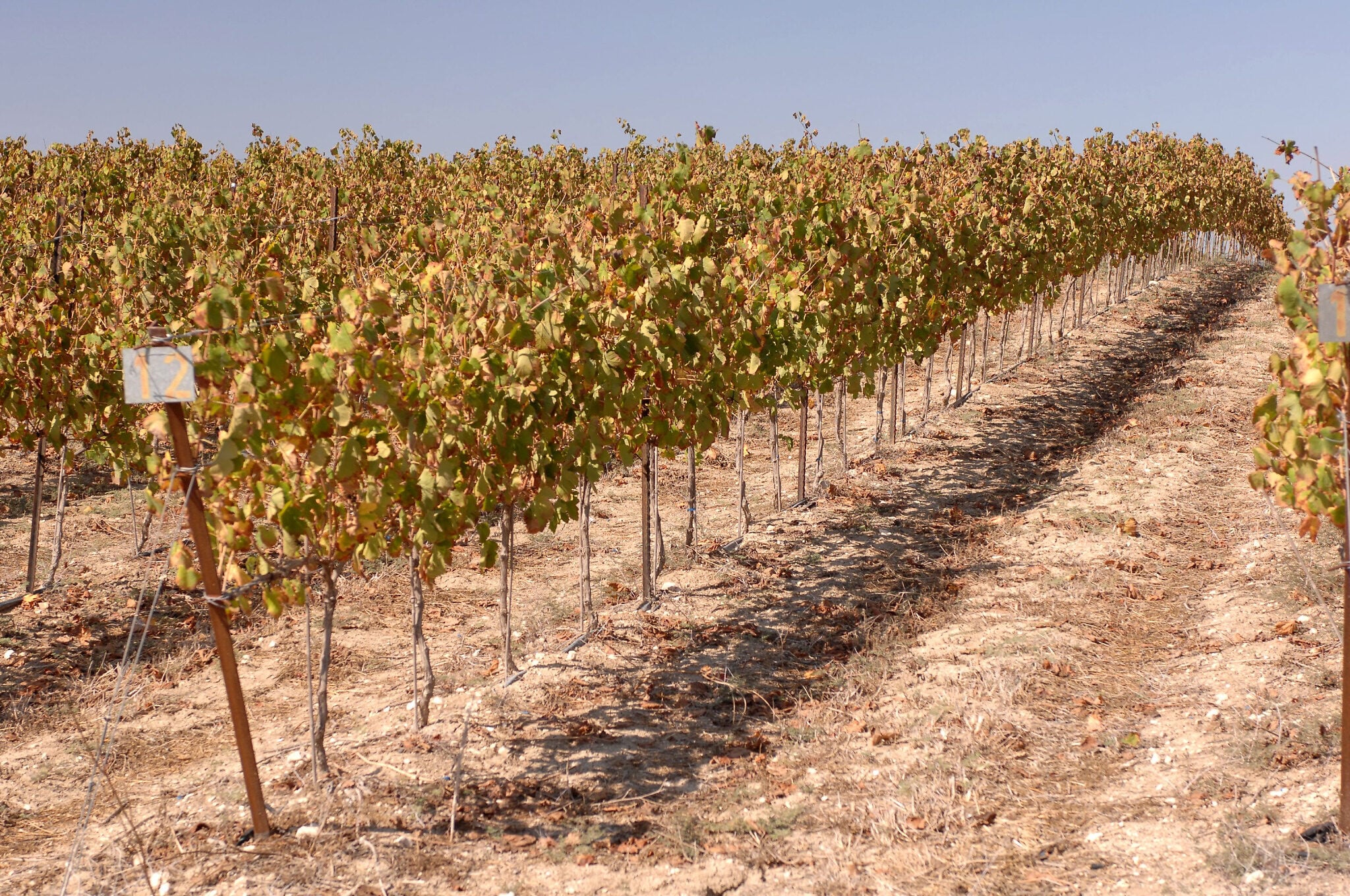
Dormant vines, AMOS BEN GERSHOM, Israel GPO
As the first rains begin to fall across Israel and the days grow shorter, the landscape undergoes a subtle transformation. The fields appear quieter, and much of the natural world seems to retreat into a period of inactivity.
But appearances can be deceptive.
Unlike the harsh winters of northern Europe, where the ground freezes and nature enters a period of dormancy, the Israeli winter is a season of beginnings. Beneath the surface, seeds are germinating, roots are deepening, and the foundations for the coming spring are being established. What appears to be inactivity is, in fact, a period of profound growth.
I have been thinking about this paradox as we enter another stage in our journey to establish Yachad, a new religious-secular community in the Negev.
Over the past few years, much of our attention has focused on the visible milestones of establishing a new community: government decisions, planning approvals, infrastructure, economic opportunities, and the gradual expansion of our founding group. These are the tangible indicators of progress, the developments that can be measured and celebrated. Yet increasingly, I am coming to appreciate that much of the real work of community building takes place beneath the surface. In conversations, the gradual development of trust, negotiations over competing visions, and the willingness to accommodate differences. Sometimes in uncomfortable silences and unresolved disagreements.
As the anticipated date of settling the land draws closer, I am discovering that this metaphor extends beyond the collective experience of building a community. It reaches deeply into our own family. For a long time, moving to the Negev existed somewhere between an ideological aspiration and an exciting adventure. The prospect of pioneering a different model of Jewish and Israeli communal life carried a powerful sense of purpose. It was relatively easy to embrace a vision whose consequences still lay somewhere in the future.
But the future has an uncomfortable habit of becoming the present.
As the theoretical gradually becomes practical, tensions that have long been lying beneath the surface are emerging around our family table. Are we making the right decision? How do we weigh the potential rewards of a meaningful, pioneering life against the very real risks and sacrifices involved? Where will our children go to school? Will they find friends and a sense of belonging? Are we underestimating the importance of the familiar social environments and routines that provide them with stability and confidence? And perhaps the most uncomfortable question: Are we asking our children to pay the price for an ideological vision that is primarily ours?
Yet there is another side to this dilemma.
What might our children gain from being part of something genuinely pioneering? To experience Zionism as something intentionally and actively lived and practiced. To discover that creating a community, cultivating the land, and taking responsibility for one another are not simply historical narratives but lived experiences. Perhaps the challenges themselves could nurture resilience, independence, adaptability, and a sense of responsibility that might otherwise remain dormant.
There is also the tension between roots and horizons.
Our children have benefited enormously from growing up within a relatively homogeneous religious community, with its shared values, familiar social norms, and strong sense of Jewish identity and belonging. These are roots worth protecting. But perhaps those very roots can provide the confidence to expand their horizons. Living in a genuinely heterogeneous religious-secular community could offer opportunities to encounter different perspectives, develop empathy, navigate disagreement and discover that a strong personal identity need not depend on everyone around us sharing the same worldview. After all, roots are not there merely to anchor a plant in one place. They provide the strength and nourishment that allow it to grow beyond its present boundaries.
Of course, these are possibilities, not guarantees. What we experience as an opportunity for growth may be experienced by our children as a profound disruption. Equally, what we fear may prove to be among the most formative experiences of their lives.
And then there is the reality of the community we are trying to build. The aspiration to create a genuinely shared religious-secular environment is inspiring precisely because it challenges some of the divisions entrenched in Israeli society. But living together is considerably more complicated than agreeing on the virtues of togetherness. What happens when differences over Shabbat, education, public space, and communal norms move from theoretical discussions into everyday life? Can we create a community in which differences become a source of strength rather than division?
There is something both unsettling and reassuring about these emerging questions. Unsettling, because they expose doubts and vulnerabilities that are easier to overlook when the destination remains distant. Reassuring, because perhaps they are an essential part of the process of putting down roots. Yet we should be careful not to romanticize uncertainty. Not every sacrifice is justified by a noble aspiration, and not every difficulty is evidence of meaningful growth.
We tend to measure progress by what rises above the ground. Yet the resilience of what eventually emerges may depend far more on the roots established beneath it.
And perhaps this is where we find ourselves today, both as a family and as a community. Not quite the excitement of planting, nor the satisfaction of harvesting, but somewhere in between. A season in which aspirations are being tested against reality, relationships are taking root, and questions that could once be left unanswered are demanding our attention.
As we look toward the Negev and the approaching winter, I hope we will have the wisdom to recognize the growth taking place beneath the surface, the patience to nurture it, and the courage to confront what emerges.
But above all, I hope that in our determination to build a new community, we remain sufficiently attentive to the community that already exists around our own family table.
Related Topics
Related Posts