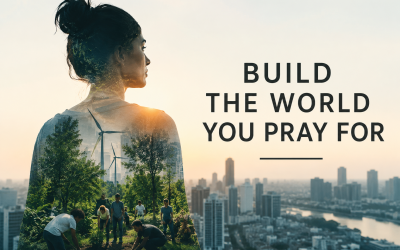
The World Is Not a Cosmic Vending Machine

Bechukotai and the Courage to Take Responsibility
“If you follow My laws and faithfully observe My commandments… I will grant your rains in their season, and the land shall yield its produce” (Leviticus 26:3–4). And if not? A long, unsettling cascade of calamities unfolds- fear, drought, defeat, exile. For generations, this passage has been read as a theological threat: behave, or God will punish you. A divine parent raising a cosmic hand. But what if this passage is inviting a different kind of reading? What if this is not a threat, but a lesson in how the world works?
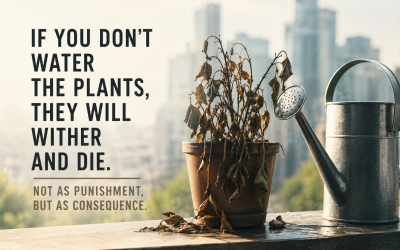 A good parent does not threaten a child: “Finish your food or I will punish you with hunger.” A good parent explains reality: if you don’t nourish your body, you will be hungry; if you don’t sleep, you will be exhausted; if you don’t water the plants, they will wither and die. Not as punishment, but as consequence. Perhaps this is precisely what the Torah is doing here. Not instilling fear, but cultivating responsibility.
The phrase “אִם-בְּחֻקֹּתַי תֵּלֵכוּ” -“If you walk in My statutes”, is often read as obedience. But “to walk” is not passive compliance, it is an ongoing, active movement. A way of being in the world. A moral posture. A commitment to live within a moral framework, not only ritual law, but the deeper architecture of ethical existence: do not steal, do not oppress, do not lie, love the stranger, protect the vulnerable, sustain the land. These are not arbitrary divine demands. They are the operating system of a functioning society. When we violate them, the Torah does not describe divine revenge, it describes social and existential collapse. “Your skies shall be like iron, and your land like copper” (Leviticus 26:19). We could read this as a supernatural curse. Or we could read it as a painfully accurate ecological forecast. When humanity exploits the earth without restraint, destabilizes climate systems, and ignores the limits of nature, the skies do, in fact, become unresponsive. The land does harden. This is not punishment. It is physics.
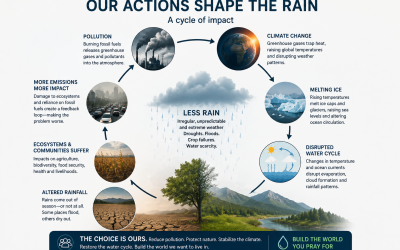 And yet, when I teach this idea, I am often met with a familiar objection: “But rain is not in our hands. The Torah says, behave well, and God will give you rain in its time.” But is it really beyond us? In an age where human activity alters climate systems, melts ice caps, and disrupts natural cycles, can we still claim that rain is purely divine territory? When we pollute the air, overheat the planet, and exhaust the soil, the rains do not come in their season, not because God withholds them, but because we have interfered with the very systems that sustain them. What once sounded like a supernatural promise begins to read like ecological literacy.
And what of war?- “וְנָתַתִּי שָׁלוֹם בָּאָרֶץ… וְחֶרֶב לֹא-תַעֲבֹר בְּאַרְצְכֶם”, “I will grant peace in the land… and no sword shall cross your land” (Leviticus 26:6). This is not a magical reward for ritual compliance. It is a social outcome. A society rooted in justice, empathy, and human dignity is far less likely to generate violence. Conversely, when fear replaces empathy, when power overrides morality, when the “other” is stripped of humanity, the sword inevitably follows. Not as punishment. As consequence. The Torah insists, repeatedly, obsessively, that we “love the stranger” (Deuteronomy 10:19). According to rabbinic tradition, this command appears no fewer than thirty-six times, far more than “love your neighbour” which appears only once. That is not incidental. It is diagnostic. The moral health of a society is measured precisely at the point where it encounters the unfamiliar, the vulnerable, the different. And when that moral fabric frays, the consequences are not metaphysical, they are painfully real.
In recent public discourse, there are those who suggest that if we “keep the Torah” God will reward us with economic prosperity or national security, as though covenant were a transaction. But this reading reduces Torah to a cosmic vending machine: insert commandments, receive blessings.

This is not covenant. This is magical thinking. The Torah is not offering us a deal. It is offering us a mirror. It is not asking for obedience, it is demanding maturity. Because a mature religious consciousness does not outsource responsibility upward. It does not respond to crisis by placing notes in walls while continuing harmful behaviors. It rolls up its sleeves. It asks difficult questions. It examines systems. It repairs.
This is a Judaism of action not of passivity. A Judaism that understands that when something breaks in the world, the first question is not “Why did God do this to us?” but “What have we done, and what must we now do differently?”
Parashat Bechukotai is not a theology of reward and punishment. It is a blueprint for cause and effect. A call to grow up spiritually and morally. To recognize that the world we inhabit is, to a large extent, the world we create.
If we want peace- we must build it.
If we want rain- we must protect the earth.
If we want security- we must practice justice.
Not because God will reward us. But because this is how reality works. So perhaps it is time to retire the image of a threatening God and embrace something far more demanding: A God who trusts us enough to tell us the truth.
Water the plants- or they will die. Not as punishment. consequence.
What is true for a plant is true for a world- So Build the World You Pray For
Shabbat Shalom