CEO, Sabra Ventures Ranch
The World Loves Its Dead Jews…But Living Ones? Not So Much.
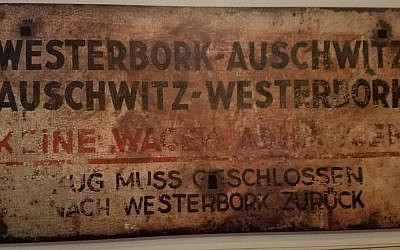
There’s something I’ve noticed over the years that’s hard to ignore. Twenty years ago, I visited the places in Europe where six million of my people were murdered. Every corner, every town, seemed to carry a monument, a memorial, a reminder of lives extinguished. And yet, this was an era when Jewish life itself was still fragile—muted, marginalized, often under threat.
Today, in Israel, I see world leaders, dignitaries, and friends walking the halls of Yad Vashem and Holocaust memorials across Europe. They listen to survivor testimonies and emerge visibly moved, speaking with sincerity about empathy, remembrance, and the moral imperative of “never again.”
I believe many of them mean it, in that moment.
But then something shifts.
When Jews—living Jews—defend themselves, whether in our homeland or abroad, too many of these same voices falter. They hedge. They equivocate. Some even side, implicitly or explicitly, with violent actors who openly call for our destruction.
Worse still, when Jews are attacked, the first question almost always seems to be: What did they do to deserve it? There must be context. There must be justification. There must be blame to assign.
And just as telling as what is said… is what is not.
Silence in the face of existential threats is never neutral. It creates space—for distortion, for moral confusion, and for those who would prefer a world where Jews are remembered, but not protected.
Layered on this is a set of narratives repeated so often they are taken as fact—about “colonization” and historical illegitimacy. But the historical record is more complex.
Decades before modern political Zionism, Jews were already the largest community in Jerusalem. In the mid-1800s, James Finn wrote plainly: “The Jews form the largest portion of the population of Jerusalem.” Estimates from that period put roughly 8,000 Jews, 4,000 Muslims, and 3,000 Christians. Even Mark Twain, visiting in 1867, described much of the land as sparsely populated and neglected in The Innocents Abroad.
None of this fits neatly into the simplistic narratives so often repeated today.
For perspective: Israel is roughly the size of New Jersey. Fewer than nine million people live here—less than 0.1% of the world’s population. Jews worldwide number only ~15 million, scattered across the globe. Yet attention, criticism, and pressure on our small nation are relentless. Meanwhile, billions of Muslims and Christians rarely see this level of scrutiny for their conflicts or their leaders’ actions.
The pattern is clear: the world loves its Jews… but living Jews? Not so much.
For me, this isn’t abstract. All of my children and grandchildren live in Israel. My mother barely survived Nazi concentration camps. She had every reason—more than most—to define herself through victimhood, to claim status, to remain in the shadow of what was done to her.
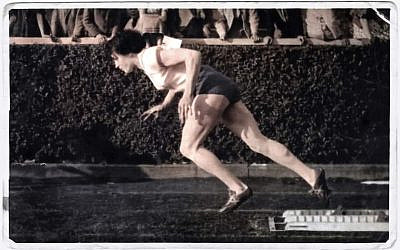
Instead, she did what Jews have done for generations: she rebuilt. She moved forward. She refused to be defined by what tried to destroy her. Not only did she resist the “victim Olympics”—despite having every right to—but she went on to compete in the actual Olympics in Melbourne, in track and field. That is the difference.
And that difference is alive today, even in the most ordinary moments.
It can feel like the world is deeply committed to remembering dead Jews… but far less comfortable with living ones who refuse to be defenseless—or who insist on agency, resilience, and self-determination.
This isn’t about identity politics. It’s about something far more basic: moral consistency.
If “never again” is more than a slogan, it must apply in real time—not just in retrospect, not just in museums, and not just when it’s easy. Silence is a choice—and history has shown what can follow when the world chooses quiet over clarity.
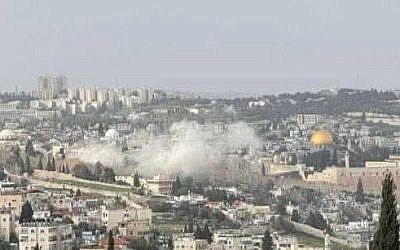
Last Friday, just across the street from us along our grandchildren’s walk to school, my shortcut to the Western Wall, the third Iranian missile attack on the Old City began. The first warhead landed literally in our neighborhood, mere steps past the Armenian Quarter, the Hall of the Last Supper, King David’s Tomb, and the Zion Gate—100 meters from the Al Aqsa Mosque. Last week, large missile debris fell on the grounds of the Church of the Holy Sepulchre, near the Temple Mount and the Muslim Quarter.
For perspective: missile debris can be as large as a Toyota Tundra—and is often explosive. Cluster munitions are as deadly as half-ton warheads, like the one that injured hundreds and killed more than ten just south of us last night.
We are living another moment in history. Yet much of the world news and social media coverage is so detached from the realities on the ground it is astounding. This is not political chess or economic maneuvering. It is another existential threat to our very existence.
And again, defending ourselves is often unpopular. The world seems content with more monuments to a Jewish past—another tragic, fascinating page in history.
But here, back in the homeland of my people for 3,500 years, for us, decidedly, that is not Ok. If the choice is between being popular and being alive, we choose the latter.
As Golda Meir said:
“I’d rather be alive and hated than dead and pitied.”
It’s a stark line—but history often leaves no other choice.
The hope is simple: that empathy for the past translates into clarity in the present. That remembrance is not just about honoring memory—but about recognizing responsibility.
Because “never again” isn’t a place you visit. It’s a standard you live by.
Am Yisrael Chai.
Related Topics
Related Posts