
They Flew Home to Vote. Now Comes the Harder Question
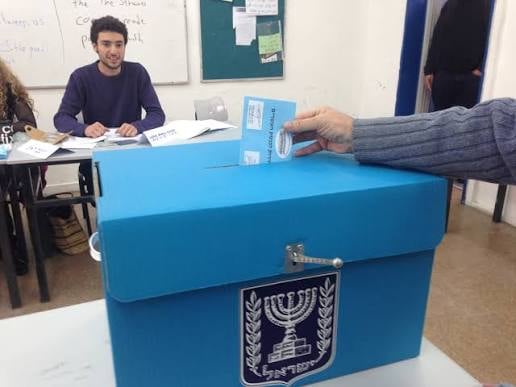
Whether expatriate Israelis changed the election may never be known. But their remarkable return exposed a question about citizenship that Israel should not forget once the votes are counted.
Last week, as tens of thousands of Israelis living abroad prepared to fly home to vote, I asked a deliberately provocative question:
If Israel is important enough for you to come home to choose its government, is it important enough for you to come home and share its burdens?
The votes have now been cast.
But, as I write this, Israel still doesn’t know who won.
Exit polls produced no governing majority. The official count continues. Hundreds of thousands of special ballots—including those of soldiers and reservists—must still be processed. Even when every ballot has been counted, the more important counting may only begin: Who can put together 61 seats and form a government?
That could take weeks.
And something else remains unknown.
Did all those Israelis who flew in from California, New York, London, Toronto, Melbourne and elsewhere actually make a difference?
Perhaps.
Perhaps not.
We may never know.
Unlike absentee ballots in some countries, their votes aren’t stamped “expatriate.” Once these Israelis landed, went to their assigned polling places and cast their ballots, their votes became indistinguishable from those of the Israelis who live here.
That makes this a good moment to return to the question—not because expatriates necessarily changed the result, but precisely because we don’t know whether they did.
This should never have been about whether their votes helped Benjamin Netanyahu, hurt Benjamin Netanyahu, elected Gadi Eisenkot or strengthened some other party.
It is about something more fundamental.
What does Israeli citizenship mean when Israel is no longer where you live?
The media interviews with returning Israelis made the question even more interesting.
Ayelet Frank left Israel in 1984 and has lived in California ever since. She returned for just two days specifically to vote—the first time in more than 40 years abroad that she had come back for an election.
Another California expatriate, Udi Pardo, left Israel in 1983. He told reporters that he had never previously made the trip to vote because he did not live here. This time, he said, the situation was different.
That is an extraordinary admission.
For years, his instinct was essentially the same one that motivated my original column: I don’t live in Israel, so perhaps I shouldn’t help determine the government under which other people must live.
Then came an election he considered uniquely important, and that principle gave way.
He was hardly alone.
Published interviews with returning expatriates overwhelmingly featured people demanding political change and opposing the present government. On one much-reported flight from San Francisco, every expatriate interviewed spoke of the need for change.
That does not prove that the “expatriate vote” was overwhelmingly left-wing. We have no reliable statistical breakdown of how these people voted, and some of those interviewed were considering candidates from Israel’s center-right.
So I wouldn’t make that claim.
But the reporting does suggest something worth considering: Many Israelis who had accepted living outside Israel suddenly decided that this particular election was too important to leave to the Israelis who live here.
And that brings us back to the uncomfortable question.
Can our principle really be: I should not interfere in the politics of a country where I no longer live—unless I feel especially strongly about the result this time?
Again, nothing about this is illegal.
These people are Israeli citizens. They came home. They voted according to Israeli law.
I am not suggesting that their ballots should have been rejected.
Nor is this about demanding military service as the price of voting. Many Israelis cannot serve, are too old to serve or contribute to the country in other ways. And many Israelis living overseas did return after October 7 to put on uniforms. They deserve enormous credit.
The issue is residence and responsibility.
There is something striking about the votes Israel is still counting.
Among the ballots that could yet change the allocation of Knesset seats are those of soldiers and reservists who voted through special polling arrangements—men and women who may have cast their ballots at bases and operational posts after spending months carrying the physical burden of defending the country.
Some expatriates, meanwhile, flew thousands of miles, voted, and within a day or two were back on airplanes heading to homes overseas.
Both votes count exactly the same.
Legally, they should.
But the election has given Israel an opportunity to ask whether citizenship should involve something more than possessing a passport and occasionally purchasing an airline ticket.
Perhaps the answer is that it shouldn’t. Perhaps citizenship is citizenship, full stop, and an Israeli should retain exactly the same political voice whether living in Jerusalem or California for 40 years.
But then let us say so openly.
And perhaps that leads to another question: If Israelis abroad retain precisely the same stake in determining our future, why make them buy an airline ticket at all? Why not permit general absentee voting and allow hundreds of thousands of Israelis permanently living overseas to participate in every election?
Israel has largely avoided confronting that issue.
This election should force us to.
The returning voters may ultimately have changed several Knesset seats. They may have changed none. They may have helped bring down a government, or the incumbent government may survive.
That isn’t what determines whether the question is legitimate.
In fact, if their votes turn out not to have affected the result, perhaps we can finally discuss the issue without turning it into another Netanyahu-versus-anti-Netanyahu shouting match.
The planes have begun carrying our visiting voters back to the countries where they live.
The rest of us are still here, waiting to learn who will govern us.
Whatever the final count says, that difference is worth thinking about.