Entrepreneur
This Jewish immigrant to the US built a summit to connect America’s innovators
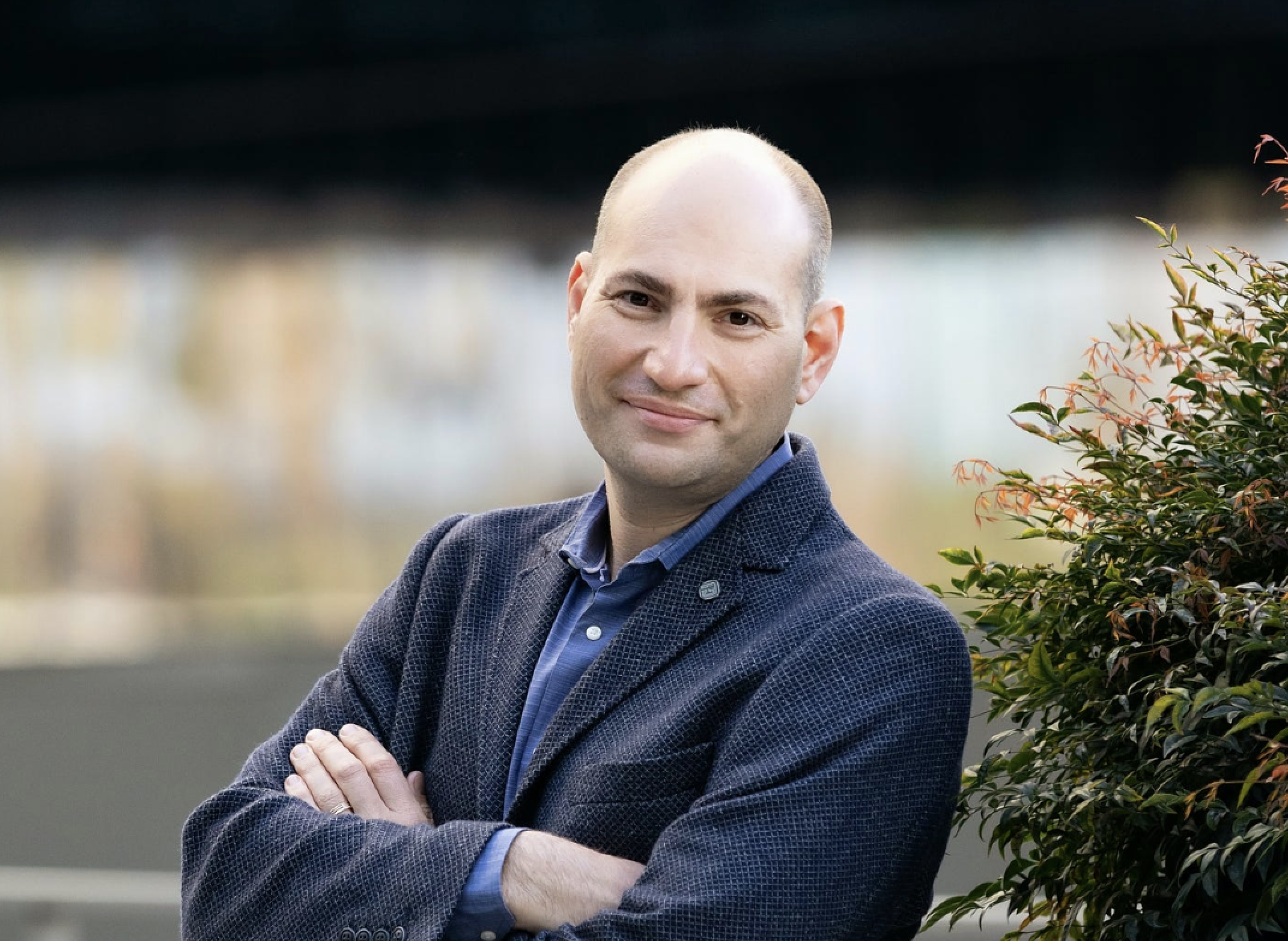
Eugene Malobrodsky (image free for use on a commercial platform in accordance with copyright law, courtesy of Eugene Malobrodsky)
Israel’s high-tech sector continues to defy expectations and founders are raising funds at an impressive rate. A report released this June showed that Israeli startups raised roughly $8.6 billion of capital in the first half of 2026, up 45% compared to the same time period last year.
Despite the ongoing growth of the local innovation ecosystem, it seems that an increasing number of startups are choosing to explore opportunities abroad. In 2022, 80% of startups were incorporated inside Israel but this figure has dropped sharply to just 55% according to data from Israel Advanced Technology Industries (IATI).
According to IATI, of the 45% of new startups incorporating outside Israel are looking to the US, citing easier regulations as the reason for the decision. In addition, the strength of the AI industry there acts as a further draw for Israeli founders in the AI and deep tech industries.
Although immigrant founders have founded or co-founded 44% of American unicorns, changes to migration pathways such as the H-1B skills work visas mean it’s becoming increasingly difficult for founders to relocate to the US.
For Jewish-Lithuanian entrepreneur and investor Eugene Malobrodsky, who has achieved success in the US as a serial entrepreneur and investor, the current backlash against immigration could weaken the influx of foreign talent and cause a dent in US innovation and job creation.
Eugene is a Managing Partner at One Way Ventures, a seed-stage VC fund that backs immigrant tech founders, where the team is working to ensure the US remains the top destination for talented founders and innovators who drive the US economy forward.
Last year, the fund hosted the inaugural edition of the One Way Summit, the flagship event for immigrant founders spotlights the positive impact of immigrant founders in the US.
The organization’s 2026 two-day summit in San Francisco this October aims to inspire others to continue believing in the US as the place to build something big, even when the noise around them causes them to doubt it.
As the head organizer, we sat down with Eugene to learn more about what’s in store at One Way Summit this October, the challenges that founders from Israel and other countries face when trying to launch ventures in the US, and the trends shaping this year’s agenda.
To start things off, could you tell us a little more about your role at One Way Ventures as a Managing Partner?
At One Way Ventures, I focus on finding the best founders in B2B SaaS, cybersecurity, SaaS, and AI/ML companies and work closely with companies such as Modo, Buddy.ai, Britive, Ribbon, and Helm.ai, among others.
When I joined One Way Ventures, I wanted to make it easier for founders in our portfolio to benefit from what others have learned by connecting them with a network of peers with similar backgrounds and to build a community of operators who are open to sharing their knowledge. In addition, we have created the Pathfinder Collective, where immigrant unicorn founders would provide guidance and act as mentors to the portfolio founders.
What were some of the motivations that took you from the Pathfinder Collective to now hosting an annual summit?
One Way Summit is the annual gathering for the visionary immigrant founders building over half of US unicorns. We give the stage to the world’s most successful global founders and VCs to showcase the immigrant edge and inspire others to do the same.
We see the One Way Summit becoming the event of reference for immigrant founders in the US, and anyone who believes in the power of cross-border entrepreneurship.
Our vision is to build a South by Southwest for immigrant entrepreneurship, culture and entertainment. When we launched the inaugural summit last year, we weren’t sure what to expect but I would’ve considered myself as failing if there were fewer than 350 people. In fact, nearly 500 founders and investors showed up, and the event sold out early.
Without us asking them to post anything, people went home and reflected on that day on LinkedIn. You realize the impact you actually make on people’s thinking.
Based on this, I understand that plans are even more ambitious for this year’s summit, with a target of 1,000 attendees for the two-day event. Could you tell our readers more about what’s on the agenda in 2026?
We have an incredible lineup of speakers this year, including Anna Makanju, Head of AI for Civil Society and Philanthropy at The OpenAI Foundation, who will also be joined by names like Severin Hacker from Duolingo and Cal Henderson from Slack.
I’m excited to connect with an amazing group of founders and investors joining this year. Another major development between 2025 and 2026 is the addition of our pitch competition. Here, we’re co-hosting this with Startup Grind and expect over 40 startups to participate from our partner ecosystem.
This year, the summit is taking place at the Commonwealth Club, San Francisco for a two-day event on October 28 & 29, 2026.
Are there any challenges unique to the immigrant founder experience that the summit will address?
The personal immigration story doesn’t come up because the people who don’t care about the journey only care about the destination. However, perception in the US is very important. You’re almost required to be more of a public figure.
When immigrants come to the US, they tend to fall into their own ecosystems – Indians with the Indians, Latinos with Latinos. You can do that on a friendly level, but you should be coming out of your comfort zone and going towards blending in with the bigger ecosystem.”
Getting founders to relate on a personal level to the story of the successful founder… that’s where it becomes more interesting.
In addition, a lot of immigrant founders are not good at packaging their pitch into a 90-second elevator pitch. You need to gain interest in the first 30 seconds and keep it engaged – almost like shooting dopamine, the kind of information the other party will be interested in.
Are there any external trends shaping the agenda this year?
When the Trump administration got elected and this whole rhetoric against immigrants started happening, I thought it was the best time to inspire people, tell them that this is still a place to build companies.
This was part of the impetus for launching the Summit last year and the trend continues. 2025 was the first instance of net negative migration in the US in 50 years. In addition, changes to policy mean that there has been a 38.5% drop in eligible H-1B visa registrations in the 2026-2027 window compared to the year prior.
Yet these policy changes fail to factor in the $5 trillion in value and hundreds of thousands of jobs created by the 59% US unicorns that were founded or co-founded by immigrants.
With One Way Summit, we hope to bring the narrative back to immigrants as a driving force of US innovation.
If we zoom out from the summit for a moment, what does One Way Ventures look for when deciding to back a new immigrant founder?
We want to see innovators who are dedicated to generating true large-scale impact in their industries, and who won’t give up until they’ve found a way to bring their product to the most people.
In terms of personality traits, resilience and that survival instinct are big differentiators. These help startups to persist by thinking outside of the box when things don’t go as planned.
When it comes to startup verticals, AI has been the hot investment commodity for years but returns from LLMs are waning. Do you believe this is true and are there other places where AI is creating value?
Even in the likelihood that the foundational AI market consolidates around a few players, these still won’t be returning at the multiples that will generate ROI to the later-stage investors.
Users will be spending their cash on AI applications that significantly impact their life. I can see a lot of the profits coming from the AI companies that are hyperfocusing on a specific industry niche and transforming its outcomes — such as new drug discovery, vertical enterprise applications, healthcare and even consumer applications.
Finally, could you share one piece of advice to other founders and VC firms?
The one thing that took me a while to learn, and sometimes I still catch myself doing, is how to ask questions instead of telling founders what to do.
Being an operator for so long, it’s easy to tell others what to do and not ask them enough questions for them to figure out the answer themselves.
For the founders, even when things seem to not go well, trying to set small goals and archiving them will combine into the overall goal. So don’t give up. In addition if the founders are not utilizing AI tools for their business they will be at a disadvantage compared to their competitors. It’s a must.
Related Topics
Related Posts