Documenting Hidden Jewish Histories and Legacies
Featured Post
This verse is carved on synagogues across America. Do we still believe it?
Citing Isaiah’s vision, 19th century rabbis declared, without apology, that Judaism had a message for all peoples
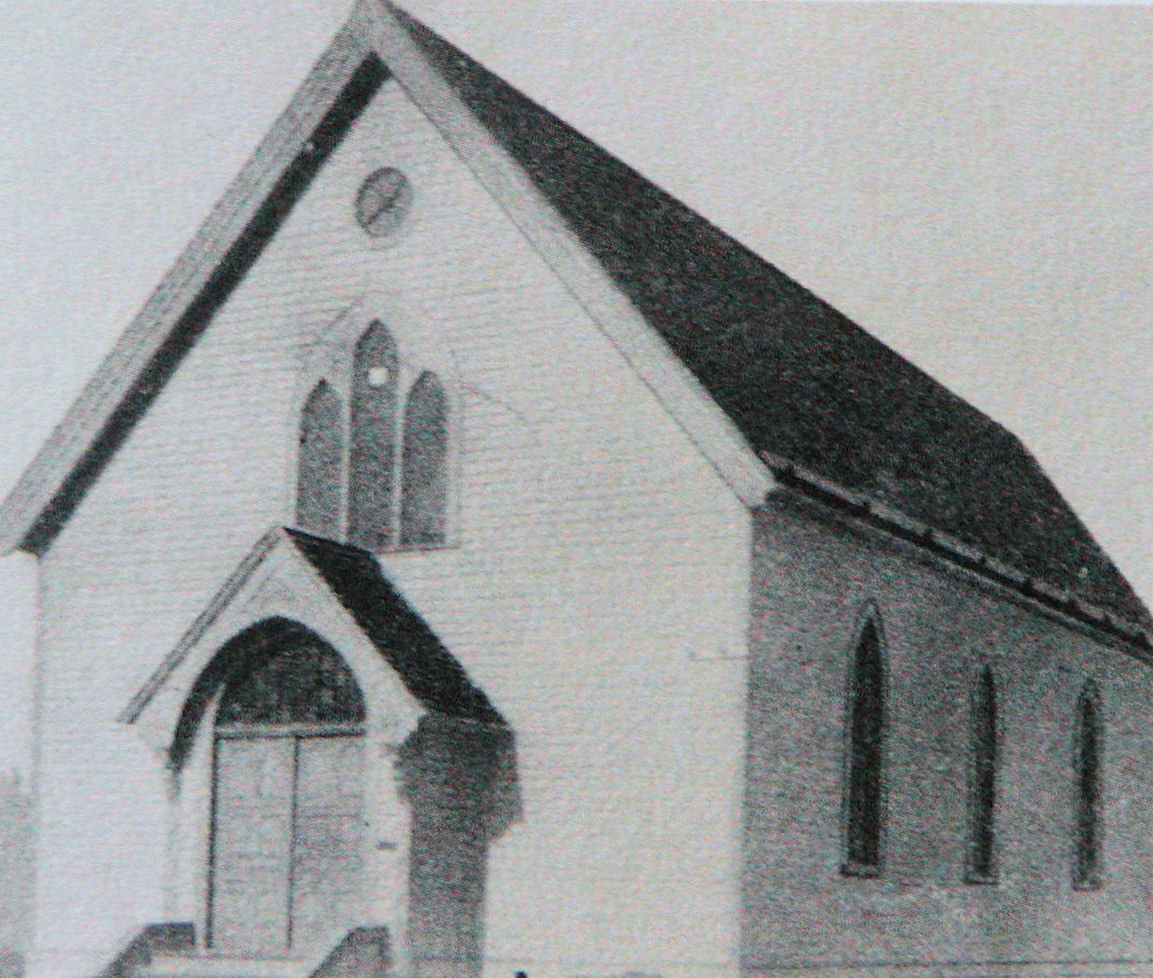
Mount Zion Hebrew Congregation, Saint Paul, Minnesota, c. 1875. Saint Paul’s first synagogue, and later the site of Rabbi Solomon Sonneschein’s 1880 Rosh Hashanah sermon, it embodied the growing presence of Jewish life in the American Midwest. Photo: By Kunz book, Public Domain, via Wikimedia Commons
Judaism once spoke confidently of welcome — to converts, to neighbors, to all humanity. On Shavuot, the holiday on which we honor Ruth, that legacy calls to us again.
In 1880, Rabbi Solomon Sonneschein stood before a crowd in Saint Paul and offered a striking vision of Judaism — not as a private inheritance, but as a gift to all people. “From the vessel of truth you now possess,” he declared, “fill all the others.”
Just two months earlier in Minneapolis, Rabbi Isaac Stemple, visiting from Washington, D.C., had delivered a Rosh Hashanah sermon proclaiming that Judaism was “the Mother of Christianity.” And this spiritual mother, he insisted, was not to be despised but celebrated: “This mother remembers well her duty to all of her daughters, inviting them to the universal shrine of worship.”
These weren’t internal addresses printed in temple newsletters. They were published in local secular newspapers, admired by the wider public, and delivered at packed services that welcomed non-Jewish guests. According to one report from Minneapolis, “every seat in the synagogue was occupied, quite a number of those present being Gentiles.” At a time when Jewish life was still establishing itself in the American Midwest, these rabbis were speaking with confidence and clarity—not just to Jews, but to the wider community.
The Minneapolis Rosh Hashanah sermon marked the opening of the city’s first synagogue, Shaare Tov, a Moorish Revival building on Fifth Street modeled after Cincinnati’s Plum Street Temple. When that wooden sanctuary burned in 1902, the congregation rebuilt in stone within a year. In 1928, the community, now known as Temple Israel, dedicated its present-day building—today the largest synagogue in Minnesota. Engraved across its façade is Isaiah 56:7: “My house shall be a house of prayer for all peoples.” At the dedication, Rabbi Albert Minda explained the choice plainly: “While this is a Jewish house of worship, it stands forth as an institution proclaiming the ancient Hebrew ideals of universal brotherhood and fellowship under the Fatherhood of God.”
That verse featured on synagogue buildings across the country—Flushing, Pittsburgh, Cincinnati, and even in smaller communities like Altoona, Pennsylvania and Springfield, Ohio—engraved in English, not Hebrew. The message was visible to all. It was offered to anyone. And it wasn’t just architectural. It was theological.
This was a Judaism that did not exist solely to minister to Jews, but to offer something universal: ethical monotheism, shared responsibility, and sacred welcome. It believed Judaism had something to teach others—not just to carry forward. It saw converts not as rare exceptions but as honored participants in a spiritual mission. It proclaimed those values out loud, in public, without fear.
A Personal Encounter with Forgotten Theology
As a convert myself, I have long been drawn to voices like mine—people who chose Judaism not to reclaim ancestry or marry into a family, but out of spiritual conviction. These two sermons struck me for their clarity. I had long believed Judaism was once more open. But I didn’t realize how publicly, how proudly, it had once been said in the United States. These weren’t fringe ideas. They were the founding theology of synagogues that still stand today.
And yet we forgot.
Over the late nineteenth and twentieth centuries, historical trauma reshaped American Jewish priorities. The pogroms beginning in the 1880s. The rise of antisemitism in the U.S. in the early 20th century. The Holocaust. The wars that defined Israel’s early decades. Slowly, the confident voice that once said “all are welcome” became more cautious, even silent. The Isaiah verse remained in some communities—but in others, it quietly faded after World War II, as new suburban synagogues were built that emphasized different sacred motifs.
Each year on Shavuot, we read the Book of Ruth—a convert’s story. And yet, in many Jewish spaces, people who choose Judaism still face unnecessary gatekeeping, suspicion, or exclusion. In Israel, debates over the Law of Return and recent controversies surrounding Colombian and Mexican Jews-by-choice reveal how difficult recognition can be. In the United States, where interfaith marriage has been the majority pattern for decades, converts are still too often treated as if they are entering through a side door—despite the fact that more people are converting to Judaism now than at any point since the Roman period.
This moment presents a choice. Judaism does not need to seek converts, but it can fully embrace those who sincerely seek to join. That embrace would not be new. It would be a return—to Isaiah’s vision, to Ruth’s courage, to the rabbis of 1880 who declared, without apology, that Judaism had a message for all peoples.
The first synagogue in Minneapolis was ruined by fire. But it rose again and eventually the prophetic verse was carved in stone on what is today one of America’s largest Jewish congregations.
The building still stands. The message is still proclaimed on the façade. The question is: do we still believe it?
Related Topics
Related Posts