
Journalist, Commentator on Middle East Issues
Three Years after October 7: Israel Is Stronger, But More Isolated and Divided
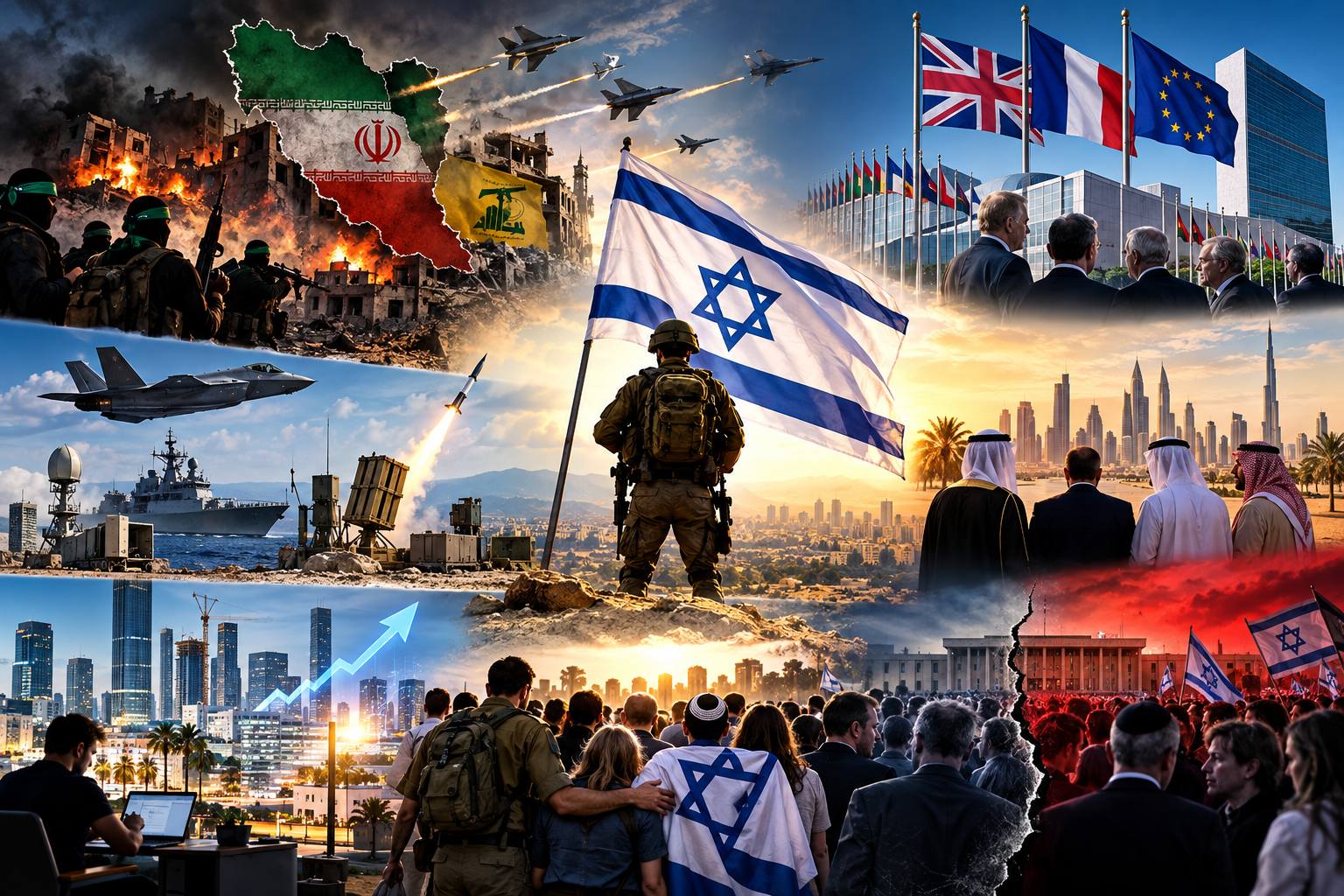
AI Creation (my prompt)
Three years after the October 7 attack, the Middle East has changed fundamentally. From an Israeli perspective, Israel moved from the initial shock to adopting a far more offensive security policy, and to a large extent succeeded in altering the regional balance of power. Hamas has suffered severe damage, Hezbollah has been weakened, and the infrastructure of the Iranian “ring” surrounding Israel has sustained significant blows. At the same time, Israel became directly involved in a confrontation with Iran, making the struggle against the Iranian threat a central element of its security doctrine.
On the military front, Israel demonstrated impressive intelligence, air and technological capabilities, while global demand for Israeli defense and security systems actually increased. Defense exports reached a record $19.2 billion in 2025, an increase of approximately 30% in a single year. This represents both an economic and political achievement, reflecting the continued confidence of many countries in Israel’s military and technological capabilities.
Yet alongside its military strengthening, Israel’s greater dependence on the United States has become increasingly apparent. Three years of war have demonstrated that Israel cannot conduct a large-scale regional campaign entirely on its own. It needs American munitions, interception systems and U.S. assistance in dealing with the most advanced threats.
On the diplomatic front, the picture is even more complicated. On the one hand, security ties with Arab states have not disappeared, and the Abraham Accords continue to provide a foundation for regional cooperation, particularly in the face of the Iranian threat. On the other hand, the war in Gaza has led to a significant erosion of support for Israel, especially in Europe. Britain, France and other countries recognized a Palestinian state in 2025, highlighting a diplomatic trend that is negative from Israel’s perspective.
Inside Israel, the price has also been heavy. Israeli society demonstrated an extraordinary capacity for mobilization, particularly among the reserve forces and civil society. At the same time, the rift in public trust in the government and state institutions has deepened. Public opinion polls point to a significant decline in confidence in the government, alongside sharp disagreement over responsibility for the October 7 failure.
The Israeli economy, by contrast, has demonstrated surprising resilience. Following the slowdown caused by the war, the Bank of Israel forecasts 4% growth in 2026, although the war continues to weigh on the labor market, the budget and human resources because of reserve duty and negative migration.
Ultimately, October 7 made Israel militarily stronger and strategically more experienced, but also more exposed to the diplomatic, economic and social costs of a prolonged conflict. The challenge in the coming years will be to translate military achievements into a stable diplomatic balance without losing the internal cohesion on which the strength of the Israel Defense Forces and national resilience depend.
Related Topics