Jewish values, leadership, and honest conversation
Three Years After October 7, We Remember
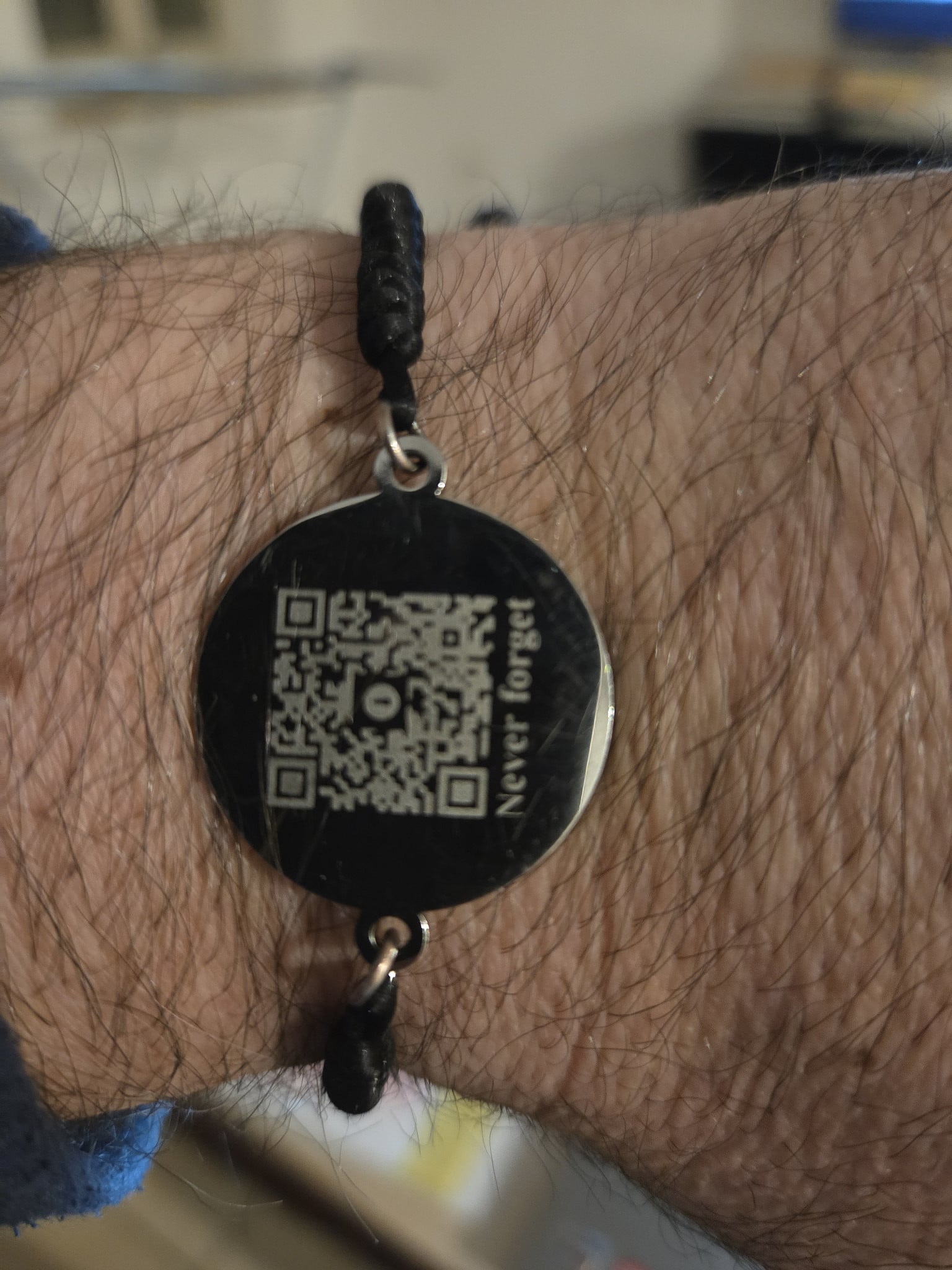
Stand with Israel: Never Forget. Scan to Remember.bio a listing of all the Israelis who fell since Oct. 7
A medieval parable about not letting go, and what bereaved Israeli families are teaching us about it.
Tomorrow marks three years since October 7. For many Jews, the anniversary has already come.
On the Hebrew calendar in the Diaspora, the massacre fell on Shemini Atzeret, the festival at the end of Sukkot; in Israel, that same day is Simchat Torah. This year the date, the 22nd of Tishrei, fell last Shabbat. At Beth Tzedec in Toronto, we recited Yizkor, the memorial prayer, on the Hebrew yahrzeit of the attack. On Wednesday, the civil calendar catches up.
That double anniversary has sharpened a question every bereaved community eventually faces: what does it mean to stay loyal to the dead?
Shemini Atzeret is one of the most mysterious days on the Jewish calendar. The Torah gives it almost no rituals. It calls the day an atzeret, usually translated “solemn assembly,” from a root meaning to stop or hold back. Israeli stop signs say atzor.
The medieval commentator Rashi explained the name with a parable. A king invites his children to a feast for a set number of days. When it is time for them to go, he says: “My children, please stay with me one more day. Your parting is hard for me.” Kashah alai preidatchem.
It is a striking image: God at the door, asking. And it is an uncomfortably precise frame for October 7. On the day set aside for “stay one more day,” more than 1,200 people were murdered and 251 were taken hostage to Gaza: in Kfar Aza, Be’eri and Nir Oz, in the town of Ofakim, and at the Nova music festival.
In the months that followed, the dead became a number, and the number became an argument. Haaretz journalist Lee Yaron resisted both. Her book, 10/7: 100 Human Stories, records who they were, one person at a time. Her aim, she has said, was to keep people “alive on paper.”
Among them is Moshe Ridler, a Holocaust survivor deported from his town in Romania on Simchat Torah and murdered eighty-two years later on a kibbutz near Gaza, on Simchat Torah.
Sujood Abu Karinat, a pregnant Bedouin woman from the Negev, was shot twice while being driven to the hospital. One bullet struck her unborn daughter and most likely saved Sujood’s life. The baby was delivered and died about ten hours later, the youngest victim of the attack.
Netta Epstein, 21, of Kfar Aza threw himself on a grenade tossed into the safe room where he was hiding with his girlfriend, Irene Shavit. She survived.
Tamar Torpiashvili, nine, of Ashkelon went into cardiac arrest brought on by fear during a rocket siren two weeks later. She died a week after that.
What has stayed with me most is what Yaron found when she went back to these families.
A year after her loss, Sujood gave birth to a healthy girl. She and her husband, Triffy, named her Malak, “angel.” During the war with Iran in June, the family had only a tin roof overhead. Their joy and their danger arrived together.
Netta’s mother, Ayelet Shachar Epstein, who lost her son and four other relatives, opened a training centre for volunteers who work with children with disabilities, the work Netta loved. She described a choice “to remember what we still have, to live for the living.”
Tamar’s mother, Manana Torpiashvili, went to pastry school and is developing a heart-shaped dessert she plans to name for her daughter. She told Yaron: “When I feel happy, I feel closer to Tamar. When I sink into grief, she drifts away.”
That sentence cuts against a common assumption: that loyalty to the dead requires sustained sorrow, and that joy is a small betrayal. Manana, who has every right to her grief, says the reverse.
Something similar has happened in my own congregation. Over the past three years, several Beth Tzedec families have given a newborn the name of someone murdered on October 7 or added such a name to a child they already had. Most, never met the person. They chose to carry a name the terrorists meant to erase. In Jewish tradition, naming a child for someone is the oldest way of asking the dead to stay.
The Talmud (Sukkah 48a) teaches that the obligation to rejoice reaches the final night of the festival because that night has joy before it. Joy at the threshold of loss is not invented on the spot. It is carried forward.
Rashi’s parable makes the same point. The king does not ask his children to stay and mourn. He asks them to stay at the feast.
Diaspora Jews come to this anniversary carrying our own weight. On Yom Kippur, a gunman came to the door of Sons of Jacob Synagogue in Belleville, Ontario. Constable Jeff Smith, who stood between him and the people inside, was critically wounded. Tomorrow many of us will spend the day at vigils and on our phones, absorbing grief and anger. That is right and necessary.
But three years in, the families who lost the most are showing the rest of us what lasting memory looks like. It happens at the table, with the lights still on.
So tomorrow, learn one name you did not know three years ago. Say it at dinner. Then let yourself be glad of the people around you. According to Manana, that is where her daughter is closest.
Whose name will you carry tomorrow?
(This post originated as a Yizkor Sermon. View it here.)
Related Topics