
Want to fight today’s anti-Israel propaganda? Remember yesterday’s
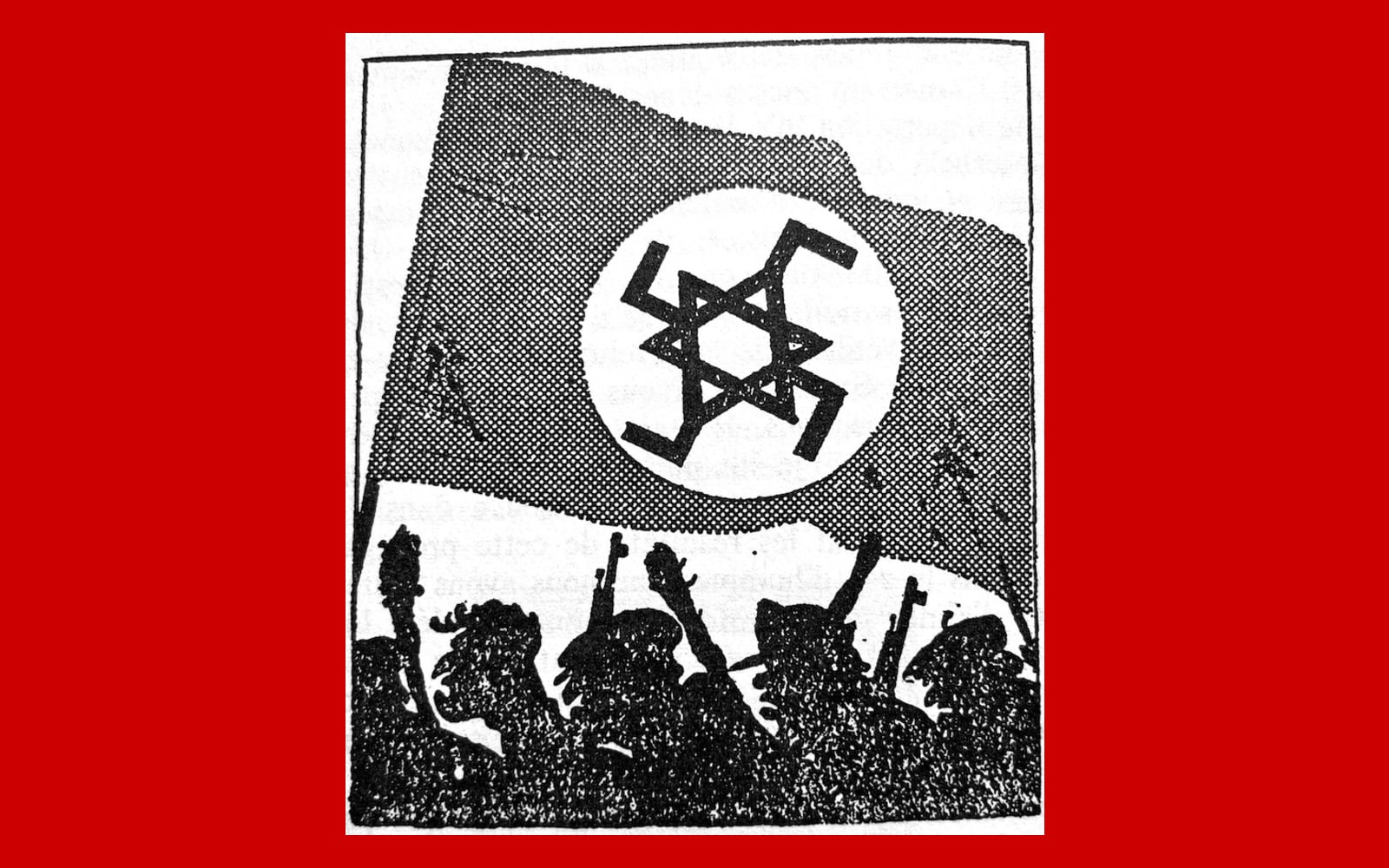
Since October 7, anti-Israel propaganda has been relentless. Wave after wave of manufactured images, fake news, and doctored statistics have swept through social and legacy media alike. The impact has been felt on multiple levels: it harms Israel directly and demoralizes diaspora Jews, many of whom feel compelled to join the chorus of Israel’s accusers to remain welcome in their societies.
Why Israel has seemingly ceded the narrative battlefield is unclear. But a more pressing question is why so many were shocked by the ferocity of the anti-Israel information assault.
This shock is puzzling, given how long the propaganda playbook has been in use. Anti-Israel disinformation is an enduring enterprise rooted in portraying Zionism as evil – an idea that springs from the much older conspiracy myth of Jewish power. Tropes equating Zionism with fascism and Nazism, or accusing Israel of genocide, have been recycled from conflict to conflict. Names and dates change, but the framework remains. Yet each time, we react as if we’ve never seen it before, watching helplessly as one onslaught follows another: “starvation,” “scholasticide,” “ethnic cleansing.”
Recognizing this dynamic is critical. Only by analyzing these patterns can Israel and the diaspora learn to anticipate them and get ahead next time.
Strategies that never change
The tropes themselves scarcely change: Zionism=Nazism, Zionism=racism, Israel as apartheid.
Beyond tropes, the methods also repeat. A favorite tactic is insisting that anti-Zionism and antisemitism are unrelated – a rhetorical maneuver that legitimizes antisemitic speech while dragging the public into endless argument.
Another is mirroring and reversal: projecting one’s own crimes onto the enemy. Hamas’s mass rape of Israeli women was inverted into baseless claims that Israeli soldiers were raping Palestinians. The charge of Israel committing genocide reversed Hamas’s explicitly genocidal aims. “False flag” conspiracy theories – that Israel orchestrated October 7 to justify invading Gaza – served the same purpose: to confuse, deflect scrutiny from the real perpetrator, and create moral equivalence.
Public pressure campaigns are another tool. Celebrities, unions, and officials are easy targets to condemn Israel. Alice Wairimu Nderitu, the UN’s former genocide-prevention adviser, revealed she had been “bullied” daily to declare that Israel was committing genocide. She displayed rare courage and refused.
Above all, the strategy is to keep the cycle going. As soon as one claim is exposed as fraudulent, another follows. In information warfare, feelings matter more than facts, and propagandists exploit this ruthlessly.
We were warned
Anti-Zionist tropes took root in the West after the Six-Day War, with the USSR and its Arab allies pushing them into left-wing groups and the Third World. Contemporary observers saw it clearly.
In 1971, sociologist Seymour Martin Lipset wrote in the New York Times that anti-Zionism had become “the most important expression of anti-Jewish sentiment in the West.” Across the New Left, Arab terrorists were hailed as heroes while Israel was cast as villain. The rhetoric was violent: a 1970 Black Panther article proclaimed, “All power to the people – death to the Zionist pigs.” Lipset noted that “Zionism” had become “a code word for Jew” and warned that leftist anti-Zionism was fueling antisemitism on the right – a dynamic on display again today.
The infamous UN resolution declaring “Zionism is racism” in 1975 entrenched these ideas further. By then, Jewish students in the UK were under pressure to ban Jewish societies from campus. The 1976 World Jewish Congress was sufficiently alarmed to organize a workshop on antisemitism and anti-Zionism, where it learned that Jewish students in Latin America were distancing themselves from Zionism under pressure from groups sympathetic to the Third World. The Congress concluded that antisemitism now frequently appeared “under the cloak of anti-Zionism” and urged people to oppose antisemitism that presented “in the guise of anti-Zionism.”
The 1982 Lebanon war brought more of the same. The British socialist press accused Israel of genocide, with one newspaper, edited by Ken Livingstone, a future mayor of London, depicting Menachem Begin in Nazi uniform, standing on a pile of bones in Beirut.
British Jewish socialist Steve Cohen – himself an anti-Zionist – was “horrified” by what he saw. In his 1984 classic That’s Funny, You Don’t Look Antisemitic, he dissected his comrades’ conspiratorial antisemitic discourse masquerading as criticism of Israel, noting how closely it matched propaganda coming out of the USSR.
At the inaugural event for a Middle East institute launched by the Zionist Organization of America in 1984, Israel’s ambassador to Washington, Meir Rosenne, warned that anti-Zionism was “the most venomous manifestation of antisemitism in the postwar world” and called for a “great international political education campaign against this criminal and obscene denigration of Zionism.”
Breaking the Groundhog Day cycle
The entrenchment of anti-Israel propaganda in the West was neither sudden nor hidden. Scholars, activists, and Jewish leaders recognized and documented it in real time, issuing warnings and urging education and organization. Yet Israel and the Jewish community largely failed to heed these warnings. The result is a perpetual Groundhog Day: every time Israel is at war, Jews wake up blindsided, scrambling to improvise counterstrategies on the go.
It’s time to break this cycle. Israel’s enemies see themselves as waging one continuous war whose ultimate goal is the annihilation of the Jewish state. Each conflict is another chance to recycle propaganda perfected over decades.
These tropes will return, along with strategies that further entrench them. We may never erase them – they are part of an age-old antisemitic matrix – but if we name them, expose them, and anticipate their redeployment, we will be far better prepared the next time around.
––